
Hope on the horizon

CLINICAL TRIALS AT MARKEY
PIONEER MRNA CANCER VACCINES
Two clinical trials underway at the UK Markey Cancer Center have the potential to change the way we treat pancreatic cancer and nonsmall cell lung cancer.
Markey – Kentucky’s National Cancer Institute-designated Comprehensive Cancer Center – is among an elite group of institutions offering groundbreaking new cancer vaccines that use the same mRNA technology behind the COVID-19 vaccines.
But unlike the COVID-19 vaccine and the HPV vaccine, which prevents the human papillomavirus infection that leads to cervical cancer, the pancreatic and lung cancer vaccines are designed instead to prevent cancer from recurring in people who’ve had their cancers removed with surgery.
The clinical trials bring promising new treatments closer to home for patients in the Commonwealth, where there are high rates of both types of cancer.
Harnessing the Body’s Immune System
mRNA, or messenger RNA, is a type of genetic material that can activate or block protein production in our cells. Scientists first discovered mRNA in the 1960s and quickly started working on ways to harness it.
The two mRNA vaccines are a form of immunotherapy, one of the four main types of cancer treatment along with surgery, chemotherapy and radiation therapy. Both vaccines are manufactured by BioNTech, the German company that partnered with Pfizer to create one of the two COVID-19 mRNA vaccines in 2020. The COVID-19 pandemic accelerated the growth of mRNA technology, but researchers have been working on mRNA flu vaccines and other therapies for years.
mRNA vaccines work by training the body to recognize an invader – like a coronavirus or cancer – and create defenses to fight it off. The vaccines do this by teaching the body to identify cancer-specific proteins and activate the immune system to kill those proteins.
Outsmarting Lung Cancer
“Cancer is clever,” said Zhonglin Hao, MD, PhD, medical oncologist, medical director of Markey Cancer Center’s Clinical Research Office, and the Donna and William Shively Professor in Translational Clinical Oncology. “It finds ways to escape the immune system’s surveillance.”
The mRNA vaccine in the nonsmall cell lung cancer trial outsmarts cancer cells by teaching the immune system to recognize six different tumor markers associated with nonsmall cell lung cancer. Those tumor markers are responsible for 85% of all lung cancer cases, said Hao, who is leading the trial at Markey.
The vaccine is being studied in the phase I trial to assess its safety and efficacy on a small group of patients. The target enrollment size is 130 across seven countries. Researchers are studying how the vaccine works alone and combined with other treatments, including chemotherapy and immunotherapy, for preventing relapse after surgery or in stage 4 cancer.
Nearly half of all lung cancers are stage 4 at diagnosis. Hao hopes the vaccine can prolong lives and increase the quality of life for many of those patients.
Early results from the trial show the vaccine can slow or even stop tumor growth. “With the improvement of mRNA technology, the overarching goal will be to get a dose of the vaccine so that the immune response is mounted against the cancer cells and is sustained for a long time,” he said.
What makes the vaccine exciting is that it targets markers that are common across many lung cancer patients, according to Hao. “This treatment could potentially help a broader population of patients while still maintaining the precision of mRNA technology,” he said.
A Possible Grand Slam for Pancreatic Cancer
While the lung cancer vaccine targets common tumor markers, the phase II clinical trial for pancreatic cancer is a different approach. Once surgeons remove the tumor, BioNTec creates a personalized mRNA vaccine that’s unique to the patient’s tumor.
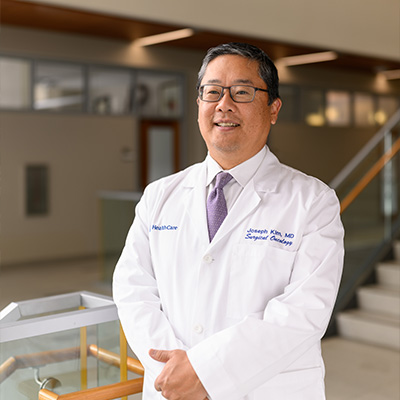
“Cancer has come up with devilish strategies to block the immune system from killing cancer cells,” said Joseph Kim, MD, Markey Cancer Center chief of surgical oncology and principal investigator for the pancreatic cancer trial. “This is a way to potentially overcome that. It allows the body’s own defenses to work as well as it can to fight the cancer.”
Although there are effective therapies for many types of cancers, pancreatic cancer remains particularly difficult to treat. The five-year overall survival rate is only 13% and recurrence rates are as high as 80% after surgery.
“Pancreatic cancer is one of those diseases where we’ve made little, if any, progress over the last couple of decades,” Kim said. “This represents a potential major breakthrough, especially considering that even after successful surgery, many patients experience recurrence due to microscopic disease that isn’t visible through imaging.”
Patients in the trial are tolerating the treatment and doing well. “We are hopeful that it is going to be a grand slam and that it will provide our patients with the longest reported survival for pancreatic cancer,” Kim said.
A Leader in Clinical Trials
Markey is one of only 17 U.S. sites for the pancreatic cancer trial and one of five for the lung cancer trial. The selection for these important vaccine trials is a testament to the institution’s elite designation as one of only 57 Comprehensive Cancer Centers in the nation and Markey’s well-established clinical trials program. Markey researchers were selected in part for their reputation and experience recruiting patients to participate in previous cancer clinical trials.
Hao is hopeful for the future of these cancer vaccines. Vaccination has helped humanity win wars against pathogens and it could do the same for cancer, thanks to the kind of research happening at Markey. “The population exploded after we learned how to prevent smallpox and other infectious diseases,” Hao said. “I hope that if this approach is successful at providing therapeutic treatment for cancer, we’ll be much closer to either eradicating cancer or letting the cancer live with us, like we do with diabetes, so cancer won’t kill us anymore.”