
Blending Science and Support to Ease the Treatment Journey

ONCOLOGY PHARMACISTS PLAY
A VITAL ROLE IN CANCER CARE
The Oncology Pharmacy team at the UK Markey Cancer Center does so much more than just dispense medications. These highly specialized pharmacists are an integral part of a cancer care team that delivers advanced treatments to make a significant impact on patients’ lives.
Not only do they have deep knowledge and expertise managing complex cancer therapies, but they also provide expert guidance with compassionate leadership. It’s the kind of pharmacy team you’ll only find at Kentucky’s National Cancer Institute-designated Comprehensive Cancer Center.
Leaders in Patient-Centered Care
When a person receives a cancer diagnosis, a whole team of providers assembles to evaluate options and develop a personalized care plan. Oncologists lead the way, nurses offer care and kindness, and radiation oncologists and surgeons provide treatments. Oncology pharmacists are equally vital: They’re the medication experts who navigate the everexpanding landscape of cancer drug therapies.
As the research pipeline and number of approved drugs grows each year, treatment decisions and monitoring become much more complex. There is a lot to consider: Medications that treat cancer — such as chemotherapy, targeted therapies, immunotherapies and other treatments — each have their own sets of dosing schedules, potential drug interactions and side effects. Many cancer drugs require specific steps for preparation, storage and administration to maintain their stability and effectiveness. Additionally, a person’s unique genetic makeup can influence their response to a medication, and over time, cancer cells can develop resistance to certain drugs. Plus, many newer drugs are costly, making financial considerations a significant factor in treatment decisions.
Our Team
Smaller hospitals might have one pharmacist on staff. Markey has more than 100 medication experts working together solely for cancer patients. Some are the pharmacists who see cancer patients over the course of their treatment, while others work behind the scenes.
Here’s what the whole team looks like:
- Clinical pharmacy: Clinical pharmacists work in outpatient and inpatient settings, offering medication expertise and guidance to the entire care team and patients.
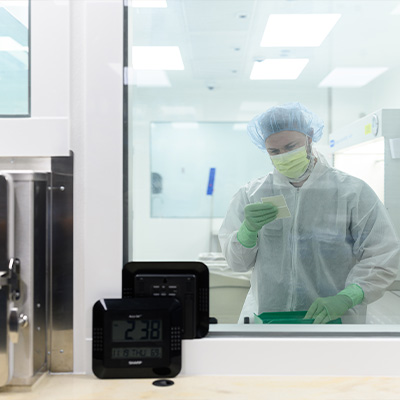
- Infusion services: This high-volume group compounds outpatient infusion therapies in highly specialized, clean rooms designed for sterility and employee protection from potentially harmful products.
- Formulary management: This team reviews current and new therapy options and coordinates all the details related to offering them to patients.
- Clinical research: This group helps identify patients for clinical trials and ensure study guidelines are met. They also support the Markey Molecular Tumor Board.
- Investigational drugs: This team procures and dispenses experimental drugs for clinical trials. Their vital tasks include placebo matching and maintaining the integrity of blinded studies.
- Financial: They manage the administrative and financial aspects of cancer drug treatment, including prior authorizations, insurance claims and co-pays.
- Support for the Markey Cancer Center at Lexington Clinic: A team of pharmacists works at the Richmond and Turfland locations of the Lexington Clinic. This collaboration includes dedicated services for purchasing, storing, compounding and administering medications.
Clinical Pharmacists: Delivering Advanced Treatments
Clinical pharmacists are the ones patients interact with the most. These pharmacists play a multifaceted role, developing treatment plans, weighing medication options and managing treatment side effects.
“We jump in and sit down one-on-one and talk through any issues that patients are having. And it really helps,” said Allison Butts, PharmD, BCOP, the Markey clinical coordinator of Oncology Pharmacy.
The clinical pharmacy team supports patients throughout their entire treatment journey by providing education, medication counseling and care. They also manage a patient’s pain, work closely with home infusion services and ensure successful treatment for people taking oral medications at home.
For many patients, cancer treatment means a mix of outpatient visits, hospital stays and emergency room trips. Markey oncology pharmacists make that experience as smooth as possible. “Our pharmacists know what’s needed when. They’re the glue that holds a lot of those pieces together,” said Pharmacy Director Philip Schwieterman, PharmD, MHA.
Providers value the knowledge of pharmacists as drug-specific experts. “Clinical pharmacists have a vast amount of knowledge surrounding staging, specific lines of therapy and optimizing doses to avoid toxicity,” Schwieterman said.
Supporting Kentucky’s Community Hospital Pharmacists
Pharmacy services are an important part of the UK Markey Cancer Center Affiliate Network. The network is a collaboration with medical staff at member community hospitals throughout Kentucky.
Emily Boots Sekkath Veedu, PharmD, MPH, is the pharmacy support services liaison for the affiliate network members. In her role, she provides a bridge between the community hospitals and Markey. In some cases, the community hospitals don’t have oncology-trained pharmacists, but their membership in the affiliate network provides them with that expertise when they need it.
Sekkath Veedu fields questions about drugs and dosages and ensures hospitals have access to Markey oncology pharmacy specialists. She also provides regular updates on the latest guidelines and protocols, medication research, and other news.
“Some of the sites are very small hospitals with small pharmacy teams that are doing everything, not just oncology,” Sekkath Veedu said. “The providers do a great job of trying to keep up with everything.”
With support from Markey, the affiliate network hospitals provide the latest cancer treatments and clinical trials to people in their hometowns. UK Pharmacy Services and the affiliate network recently hosted the 6th Annual Kentucky Hematology/Oncology Pharmacy Symposium. Pharmacists from two community hospitals — Baptist Health Lexington and UK King’s Daughters in Ashland — shared their experiences with providing BiTE (Bispecific T-cell Engager) therapy. This innovative immunotherapy uses engineered T cells to combat cancer.
“The MCCAN mission to serve rural Kentucky is having a positive impact on the lives of people in those communities,” Sekkath Veedu said. “By teaming up with the affiliate network pharmacists, we’re making advanced treatments more accessible.”