
From Data to Diagnosis

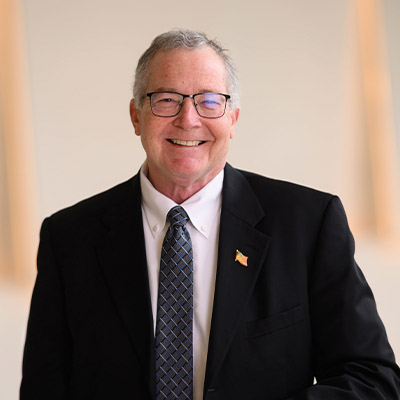
Above: Tama The, MD, shaped by his unique vantage point in emergency medicine, comprehends the consequences when healthcare systems fail.
AI’S GROWING ROLE IN BRIDGING KENTUCKY’S CANCER CARE GAPS
Pediatric emergency medicine physician Tama Thé, MD, brings a rare combination to healthcare’s Artificial Intelligence (AI) revolution. The assistant professor of emergency medicine at the University of Kentucky and AI research fellow with the NBME, a self-described “tech nerd,” chose a career in medicine so that he could apply his love of math and physics to saving lives. Now, he’s working on projects that combine medicine, clinical informatics and artificial intelligence to completely transform care.
Shaped by his unique vantage point in the emergency department, Thé has witnessed the consequences when the healthcare system fails.
That broad perspective has positioned Thé to see AI not as an end goal, but as a powerful tool to address Kentucky’s most pressing healthcare challenges. Already demonstrating its value across the cancer care continuum, AI is helping to find tumors through advanced imaging analysis before the naked eye can pick them up. It is matching patients to targeted therapies and clinical trials based on their unique genomic and medical profiles.
It’s also supporting clinicians as they navigate the exponentially growing universe of cancer research. With thousands of cancer-related papers published in peer-reviewed medical journals annually, AI systems can synthesize this flood of information in seconds, pinpointing relevant studies and treatment options that might take a human researcher hours or days to uncover.
For a state grappling with high cancer burden, widespread rural geography, and severe physician shortages, AI applications offer hope for bridging gaps in care.
“Improving access to care, increasing quality and bettering outcome measures have been the Markey Cancer Center Affiliate Network’s core focus since its inception,” says Timothy Mullett, MD, MBA, FACS, medical director for MCCAN. “AI can help us go further by addressing longstanding barriers, helping to identify at-risk patients earlier, enabling greater remote support and handling large volumes of data that we rely on to guide treatment decisions and follow trends.”
According to the Rural Health Information Hub, 107 of Kentucky’s 120 counties are considered health professional shortage areas, showing a critical need for primary care physicians and advanced practice providers. The shortage becomes even more acute for oncologists and subspecialists, whose availability in rural areas is significantly limited. Given these constraints, AI doesn’t replace scarce specialists — it multiplies their impact.
Dr. Thé is leading several early initiatives that demonstrate this potential. Through a state university partnership with the Cabinet for Health and Family Services for access to Medicaid claims data, his team is working to identify every person in Kentucky who is due for cancer screening. Their prototype, built with Microsoft, features a voice agent that is contextually aware of a patient’s history, can automatically dial their number, start a conversation, explain what screenings are due, and eventually schedule appointments.
He is also working with a company that has developed a smart pill bottle that tracks when patients take their medication. Dr. Thé is designing AI software to automatically reach out via phone or text if they have missed a dose. If a patient hasn’t taken their medications for several days, the healthcare team will receive notification so that they can follow up to ensure the patient isn’t experiencing side effects and understands why and how to take their medicine.
In education, Thé notes that AI’s potential is equally transformative. To prepare the next generation, he is co-leading a crosscampus collaboration with Dr. Katherine Thompson of the College of Arts and Sciences. Together, they are piloting an AI literacy course for UK undergraduates that includes 10 modules covering everything from AI awareness and prompts to hallucinations, ethics and creative applications. The course culminates with students proposing AI-powered solutions to problems in their own communities.
While some express concerns that AI will erode critical thinking skills, lead to medical errors or displace physicians, Thé and others don’t agree. “I am convinced that no physician is going to lose their job because of AI,” he says.
Medical oncologist Doug Flora, MD, editor-in-chief of AI in Precision Oncology and executive medical director of oncology services at St. Elizabeth Healthcare, shares this view. “AI is a way for us to leverage technology to buy back time so that cancer care can get more human again,” he says.
His brother, Daniel Flora, MD, PharmD, a hematologist/oncologist at St. Elizabeth Healthcare, sees practical applications in his daily work. “It could be that I’m looking for a patient’s pathology report from 2018 or tracking down the result of a blood test,” he says. “Automating these tasks would let us dedicate our attention to the patient.”
For Thé and the Flora brothers, the AI vision is clear. It is, ultimately, the great equalizer in medicine, as a technology that will democratize expertise and raise the standard of care across the board.
“We’ll see physicians becoming dramatically more productive, freeing them to focus on complex decision making and human connection,” Doug Flora says.