
Constipation
Constipation is a common digestive concern in children — and it can be challenging for both kids and their families. At Golisano Children's at UK, our pediatric gastroenterology specialists understand how constipation can affect a child’s life, from stomachaches to missed school days.
Untreated constipation can lead to more serious issues in kids like painful bowel movements. That’s why it’s important to recognize issues early and offer consistent care.
Here, we walk you through what constipation looks like in kids, what causes it and how it can be treated.
What is constipation?
Your child may be constipated if they are:
- Having fewer bowel movements (BMs) than usual
- Having hard stool (poop) for two or more weeks
When your child is constipated for a few days, the stool might fill up the bowel and cause it to stretch. When the bowel gets stretched, it does not work as well.
If constipation isn’t treated, it can get worse. The longer stool stays inside the lower bowels, the larger, harder and drier it becomes. This makes it difficult and painful to pass the stool, and this pain might cause your child to hold back the stool. This will make things even worse.
Why do children get constipated?
Your child might experience constipation due to:
- A change in their daily routines
- Withholding. They might hold back pooping if they:
- Don’t want to use a strange bathroom
- Don’t want to stop playing to go to the bathroom
- Don’t want to poop if it could be painful
- Changes in their diet or not enough fiber or fluids
- Not getting enough exercise
- Potty training
- Stress
- Recent illness
- Medication side effect
What are the symptoms of constipation?
These are some signs of constipation:
- Hard, dry stools that are hard to pass
- Painful bowel movements
- Stomachaches
- Dirty or stained underwear (accidents can happen when soft stool leaks around the hard stool)
- Changes in appetite
What is fecal soiling?
Children with constipation might have accidents in their underwear. This is called encopresis or fecal soiling.
Encopresis happens when a large amount of stool in the rectum pushes down on the anal sphincter muscles to the point where they can no longer hold in the stool. The rectum stretches and does not tell the child’s brain that it is time to have a bowel movement.
This means children often unknowingly have accidents where liquid stool leaks around the large, hard mass of stool because they cannot control the leak. This condition will only improve when the constipation is treated.
How is constipation treated?
There are three parts to treating children with constipation: medicine, behavior changes and diet changes. Each part is important.
Medicine
- Your child might need a “cleanout” or “washout” with high-dose laxatives if there is too much stool in their colon.
- Your child might need ongoing treatment (maintenance therapy). This lets the stretched bowel return to normal and begin working to move stool along again.
- It might take weeks or months to get to a normal bowel movement pattern.
- This therapy will continue until a regular bowel movement routine is set and maintained over time.
Behavior changes
For this treatment to work, your child must avoid withholding behavior. It is important that your child establishes and keeps up a normal bowel movement habit.
Encourage your child to:
- Sit on the toilet for five to 10 minutes after meals.
- Sit on the toilet any time they have an urge to have a bowel movement.
- Work on their toilet posture. Your child’s knees should be above the waist when sitting on the toilet. If your child’s feet do not touch the floor, have your child put their feet on a step stool. See steps below.
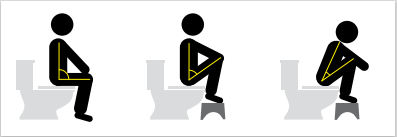
- Sit
- Elevate
- Eliminate
Diet changes
Eating a balanced diet and drinking plenty of fluids (water is best) can help relieve your child’s constipation.
The American Academy of Pediatrics recommends the following for water intake in a healthy child:
- Children ages 1-3: 4 cups
- Children ages 4 -8: 5 cups
- Girls ages 9-13: 7 cups
- Boys ages 9-13: 8 cups
- Girls ages 14-18: 8 cups
- Boys ages 14-18: 11 cups
1 cup = 8 ounces
Half of the food your child eats should be fruits and vegetables.
How will you know if the treatment worked?
Here are some signs that treatment was successful:
- Your child should have one to two soft, pasty stools at least every other day.
- Your child should not have to think or worry about going to the bathroom. It should be a routine.
- Your child should stop having stool accidents or dirty underwear.
Be patient. It might take six to 12 months for your child to get back to a regular bowel movement routine.
What are some warning signs that my child needs medical help?
Your child might need medical help if they experience any of the following:
- Constipation that began in the first few days of life
- Swollen belly, especially in infants
- Poor growth
- Symptoms continue even after following proper treatment plan
When should I call my child’s doctor?
If your child’s constipation persists, causes significant pain or doesn’t improve with diet and behavior changes, it may be time to call your pediatrician or a pediatric gastroenterologist. Our GI specialists at Golisano Children's at UK can help identify underlying causes and provide expert care tailored to your child’s needs.
Call your child’s doctor if your child has:
- No bowel movement after cleanout medicine
- Fewer than three bowel movements a week or stool continues to be hard
- More than three bowel movements a day or stools are very loose or runny
You should also reach out if you have any other questions or concerns about your child’s constipation.