UK HealthCast: UK HealthCare Launches Dedicated Lung Care Service
UK HealthCast is a podcast series featuring interviews with UK HealthCare experts on a variety of health-related topics.
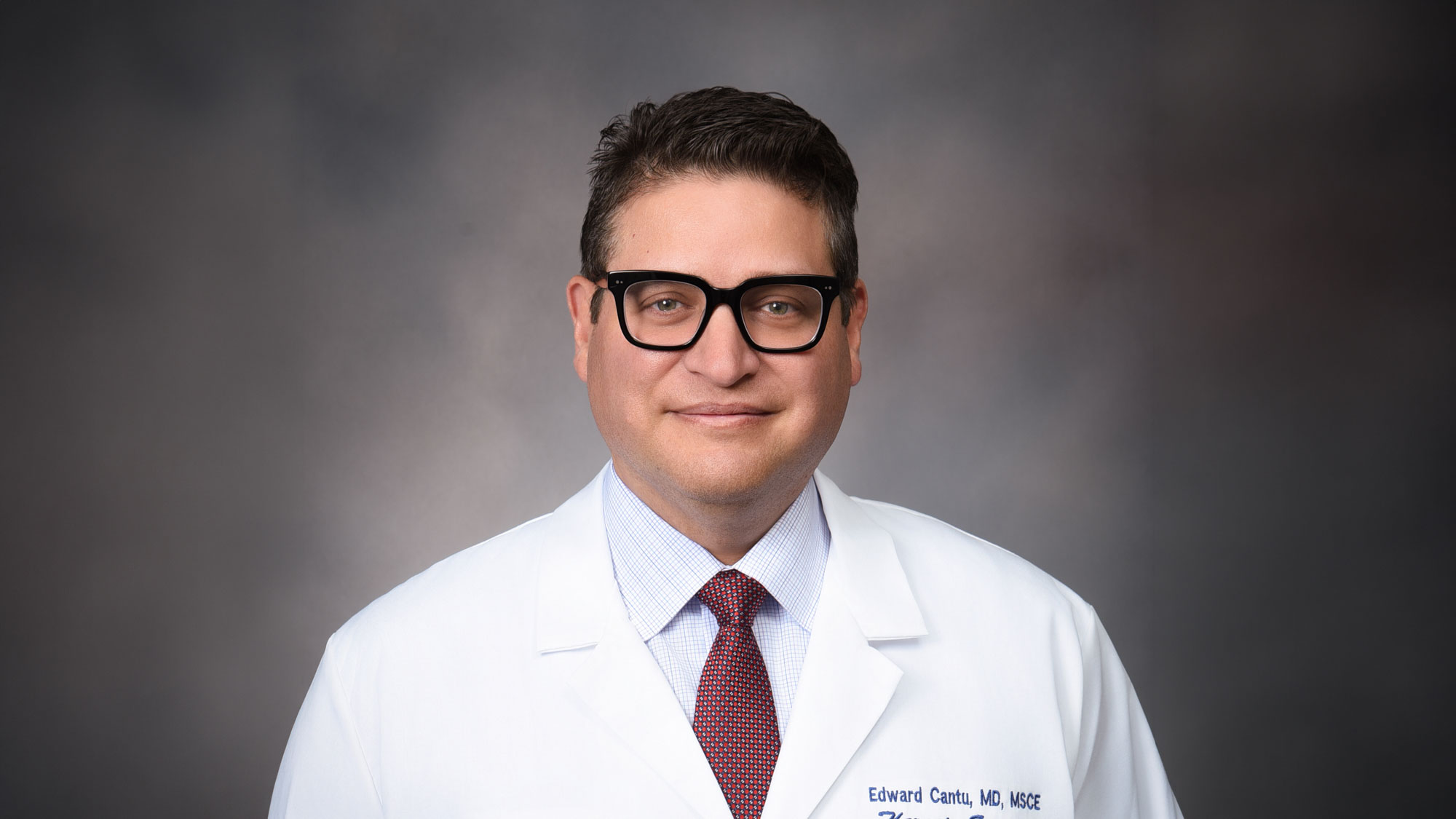
We’re working to expand access, innovation and support for people living with lung disease across Kentucky. On this episode of UK HealthCast, Dr. Edward Cantu, UK HealthCare’s director of the lung service line and lung transplant, shared his background and his vision for advancing lung health across the Commonwealth.
Dr. Cantu joined UK HealthCare after 15 years at the University of Pennsylvania, where he increased the number of patients treated while maintaining excellent outcomes. He cared for more than 500 transplant patients during his time there, gaining a depth of clinical experience that he’s now brought to Kentucky.
Listen to Dr. Strup’s conversation below. For key takeaways from that conversation, continue reading.
What comprehensive lung care means
For Dr. Cantu, lung care is about much more than performing procedures.
“Comprehensive lung care to me means that we're not just technicians,” Dr. Cantu said. “We are focused on the patient experience and the patient's caregivers.”
That means identifying needs early, supporting families and creating a care environment that is not intimidating or overwhelming. His goal is for patients, when they’re several years removed from their treatment, to “look back and think that they had a good experience.”
Kentucky’s geography underscores the need for that approach. Nearly 90% of patients referred to UK HealthCare for a restrictive lung disease — any lung disorder that reduces the volume of air that our lungs can hold — live outside of Lexington, and many travel two hours or longer to receive treatment.
These factors make increasing accessibility and improving coordination with local providers across the state critical. Dr. Cantu and his team are working to lower barriers to entry, developing stronger collaboration with referring providers and using tools like telemedicine to keep more routine care close to home whenever possible.
Treatments before and leading up to lung transplant
Advances in clinical trials and medical therapies often offer earlier, less invasive options than lung transplant if patients can get connected to them in time.
Dr. Cantu emphasizes that delaying the need for surgery can be powerful. Even though transplant outcomes are better today than in previous decades, surgery introduces risks such as infection, rejection and cancer due to lifelong immunosuppression.
“Lung transplant has much better outcomes today than in previous decades,” Dr. Cantu said. “But still, there are limitations. And so, the longer we can delay transplant for patients, the better they'll do long-term in terms of longevity. Always at the root of our mission is to give the best quality and length of life possible for our patients. And sometimes, you know, it's better without surgery. I hate to say that, but it is true.
“I think that we have a responsibility to our patients to give the best care possible. And to do that, we need to educate referring providers and our community about what's out there. And that's something we've been doing.
Survival after lung transplant averages five to seven years, though many exceed that. Dr. Cantu’s first transplant patient at the University of Pennsylvania is still doing well 15 years later. His hope is to achieve the same at UK HealthCare.
Building a premier lung center for Kentucky
Dr. Cantu believes UK HealthCare is uniquely suited for building a top-tier national lung center.
“There's a lot of opportunity,” Dr. Cantu said. “I think the faculty and the staff here are truly remarkable. When I came to visit and saw the impact that we could have on the Commonwealth, because Kentucky has the highest rate of lung disease in the United States, I saw the opportunity for us to create an infrastructure that not only would help with lung transplant, but could help with all of lung disease. …
“There are challenges in every health system. And what I saw here was only opportunity, opportunity to create something special for the commonwealth and to create something that I think would leave a lasting legacy for UK."
The lung service line currently focuses on pulmonary nodules and transplant, but work is already underway to expand into areas like sleep medicine, asthma and cystic fibrosis. Dr. Cantu’s long‑term vision includes growth in research, education, clinical trials, industry partnerships and advanced therapies.
He emphasizes the role that collaboration with community providers plays in all of that. If patients can be treated locally, UK HealthCare wants to support that. If they need advanced care, UK will be ready.
“They get high quality care locally, but they get outstanding advanced therapies access here at UK.”
At the heart of the program is one message: “We’re here to help.” Dr. Cantu wants every patient to receive the highest quality care and never feel alone navigating lung disease. His vision is simple and far‑reaching for everyone in the Kentucky.
“Our goal ultimately is ‘better breathing, better quality of life’ through innovation, education, and clinical excellence,” Dr. Cantu said.