
Determined to discover
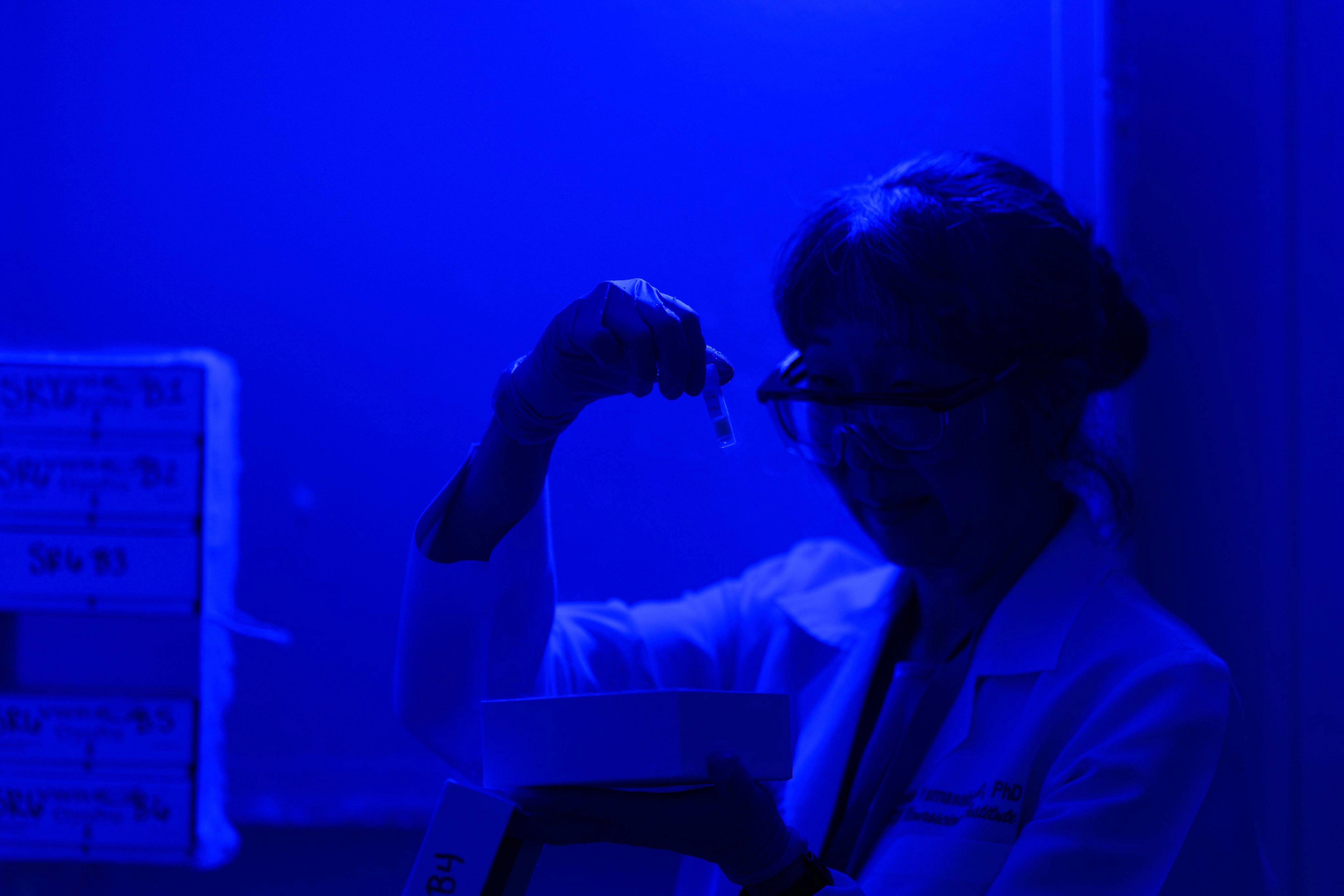
In an era of shifting priorities and complex challenges, the University of Kentucky continues to demonstrate leadership in advancing neuroscience research. Whether navigating regulatory changes, workforce challenges, funding shortages, evolving federal procedures or other barriers affecting institutions nationwide, UK’s neuroscience community has responded with renewed determination to emerge stronger than ever.
“We’re excited about our path forward as we continue our research submissions, develop creative strategies to support our work and deepen our partnerships,” said Dr. Larry Goldstein, chair of the Department of Neurology, co-director of UK Kentucky Neuroscience Institute (KNI), co-director of UK’s Neuroscience Research Priority Area (NRPA) and neurologist-in-chief for UK HealthCare.
“By remaining focused on impacting the health of people in Kentucky and beyond, we will forge ahead.”
The NRPA: A strategic anchor in challenging times
Established in 2019, the Neuroscience Research Priority Area (NRPA) supports 320 faculty and hundreds of trainees across the university. That network has grown, even as the research landscape has become more complex.
“We are innovative and leveraging our resources the best we can,” Goldstein said. “Our externally funded clinical trial research continues to perform well, bringing innovative therapies to our patients, and we look to our strengths to position ourselves to remain competitive.”
The NRPA remains dedicated to fostering projects across campus. These programs, though fewer in number this year, continue to provide essential seed funding that helps researchers launch new ideas and advance their work:
- Pilot Grants – Three awards of $25,000 each for one-year projects.
- Equipment Grants – Up to $25,000 for new equipment or upgrades.
“The NRPA is also collaborating with the Office of Undergraduate Research to fund one undergraduate student as part of the CURE Fellowship during the summer of 2026,” said Laura Muzinic, MS, NRPA project manager and Statistical ‘Omics Research Collaborative (S’ORCe) program manager.
For Goldstein, who has always believed that science advances through the minds and hands of dedicated researchers, a temporary slowdown in professional development initiatives has been particularly challenging.
“My job is to allow our faculty to be productive, to give them the support they need to fulfill their own career goals,” he said. “We want to retain and promote our talented people. We are in the people business.”
This commitment extends beyond faculty to staff like Muzinic, who discovered a unique solution to help keep research moving forward.
“I found another position at UK, so I am working part- time with the NRPA and part-time with S’ORCe,” she said.
As a 20-year UK employee who values her work, her stake in maintaining her position runs deep. Additionally, she and her husband, who also works at UK, have children nearing college age. “It’s also about showing them determination and resilience.”
Goldstein’s and Muzinic’s philosophies exemplify the kind of commitment that makes initiatives like the NRPA-funded NeuroBank possible. Although future operational support will depend on available resources, the NeuroBank remains an essential tool. By supporting this vital resource, the NRPA is enabling researchers to build an unprecedented repository of biological samples from patients living with a wide range of neurological conditions.
The NeuroBank’s collection serves as an invaluable foundation for scientific discovery. In the past year, the addition of samples from consented healthy subjects has been essential, enabling researchers to compare their work to control samples — a critical component of meaningful research outcomes.
Translational research: The long game continues
Translating laboratory discoveries to bedside treatments has always been a marathon, not a sprint.
“We have made great progress in recent years. For example, our treatment of acute stroke has undergone a major revolution with clot-busting drugs and now the routine clinical use of throm- bectomy,” Goldstein said. “Our capacity to treat some previously untreatable disorders, such as spinal muscular atrophy in children, has enabled children who would have once died to live close to normal lives. New treatments in epilepsy include new devices and medications. Without that fundamental and clinically applied translational research, none of these therapies would be available.”
Initial studies funded by the NRPA not only have produced important findings in their own right, but have also opened new avenues of scientific inquiry, exemplifying how investment in research creates a multiplier effect. Examples include:
- Keith Pennypacker, PhD — CATSS Collaborative Group (Center of Advanced Translational Stroke Science) and related work leading to a $3.5 million NINDS grant to Jordan Harp, PhD, for “Predictors and Biomarkers for VCID versus Cognitive Recovery after Stroke Thrombectomy in Rural Appalachia.”
- Jonghyuck Park, PhD — Data from his pilot project informed the proposal leading to a P20 program grant for the “Center of Biomedical Research Excellence in Pharmaceutical Research and Innovation.”
- Justin Fraser, MD — BACTRAC, col- lecting and evaluating blood and tissue during cerebrovascular procedures.
- Jordan Harp, PhD — INDICATE, a substudy of BACTRAC examining biomarkers and cognition after thrombectomy.
- David Dornbos III, MD — Investigating perfusion patterns and their influence on the biochemical environment during thrombectomy.
The NCRU: Efficiency when it matters most
The Neurology Clinical Research Unit (NCRU) has taken on added importance as researchers navigate the practical realities of conducting complex studies in today’s environment. Managing more than 50 active clinical neurology and neurosurgical trials, the NCRU helps investigators make strategic decisions and remain efficient in the face of evolving requirements.
“We assist with all elements of research, such as the development of a budget, guidance for IRB (Institutional Review Board) submissions and the estab- lishment of a structure for a trial that ensures the complex requirements for clinical studies and human research participants are met,” said Dr. John Slevin, vice chair for research in the Department of Neurology and medical director of the NCRU.
Looking forward with determined optimism
Despite the obstacles facing academic research nationwide, there is a palpable sense of resilience among KNI researchers.
“The health challenges for Kentuckians haven’t gone away because the research landscape is harder to navigate,” Goldstein said. “There are always uncertainties in our field — whether it’s a change in Medicaid coverage for our patients, new regulatory requirements or a shift in how research is funded. Through it all, the ambition of our faculty and students to develop new treatments has not diminished. We’re not just optimistic — we are determined.”