UK HealthCast: The Future of Breast Care in Kentucky
UK HealthCast is a podcast series featuring interviews with UK HealthCare experts on a variety of health-related topics.
Breast cancer care has changed dramatically over the past two decades. Treatments are more precise, surgeries are less invasive and patients have more options than ever before. Yet for many women, navigating the uncertainty that begins with an abnormal mammogram remains challenging.
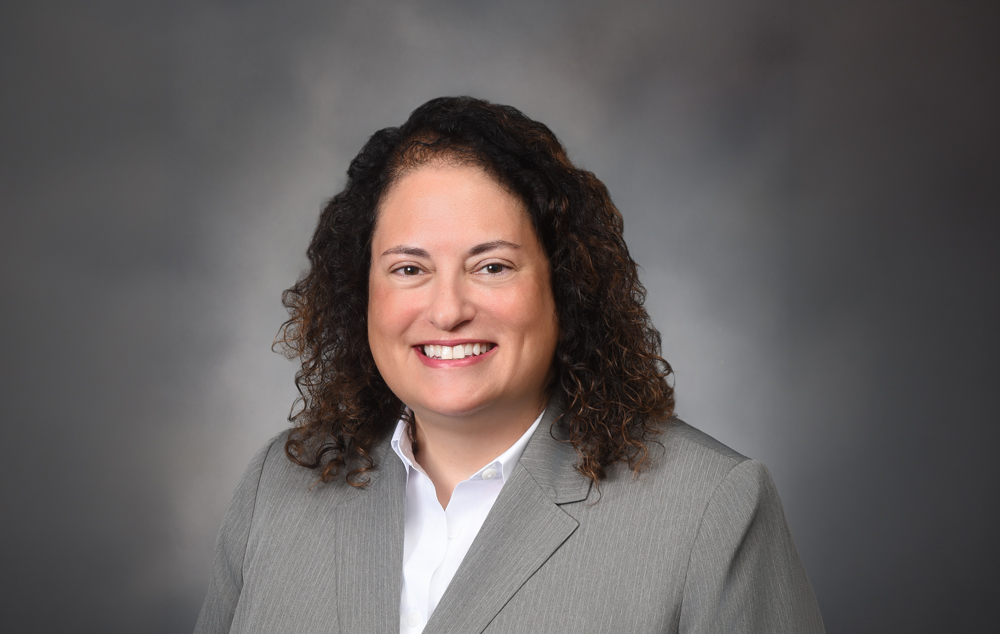
Dr. Julie Lang, section chief of breast surgery and medical director of the Comprehensive Breast Care Center at the UK Markey Cancer Center, is focused on making that experience better for patients across Kentucky. Her vision includes faster access to diagnostic care, expanded clinical trials and innovative surgical techniques that bring the latest advances in breast cancer treatment to the Commonwealth.
Dr. Lang recently joined UK HealthCast to discuss the present and future of breast care in Kentucky. You can listen to Dr. Lang’s conversation below. For key takeaways from that conversation, please continue reading.
Reducing delays in diagnosis and treatment
The waiting period between a screening mammogram and follow-up testing can be one of the most stressful parts of the breast cancer journey.
One of Dr. Lang’s top priorities is reducing the time between an abnormal screening mammogram and the next steps in care. Shortening that interval can help patients get answers sooner and, when needed, begin treatment more quickly.
"We will ensure that our breast center is prioritizing the needs of patients and primary care doctors to get patients access into our breast care center in a timely manner," Dr. Lang said. "When a woman goes for a routine screening mammogram, this should be very straightforward. We should be able to provide timely notification to patients about results so that people are not waiting. The waiting often is the hardest part for our patients."
A team approach to breast cancer care
Breast cancer treatment rarely involves a single specialist.
That collaborative approach is one of the reasons Dr. Lang chose a career in breast surgery. At Markey, that team-based model brings specialists together to develop personalized treatment plans based on each patient's needs.
The team may include breast surgeons, medical oncologists, radiation oncologists, breast imaging specialists, pathologists, genetics experts, social workers and integrative medicine providers. Having all those resources available in one comprehensive cancer center allows patients to receive coordinated care throughout treatment.
Markey is also the only center in Kentucky with four fellowship-trained breast surgical oncologists.
Expanding access to advanced treatments and clinical trials
Clinical trials play a critical role in improving cancer care. Many of today's standard breast cancer treatments were once available only through research studies.
Dr. Lang has spent much of her career leading clinical trials and translational research efforts focused on breast cancer. She plans to continue expanding those opportunities at Markey.
“Medicine is always striving to do better, and nowadays we actually have highly effective therapies that were not available previously,” Dr. Lang said. “So we're seeing durable or prolonged survival in many more patients than in the past. Clinical trials are what have brought that to us, so we seek to have a diverse portfolio of clinical trials for our patients.”
For patients with advanced or metastatic breast cancer, clinical trials may provide access to therapies that are not otherwise available. Research studies can also help identify new approaches for earlier-stage cancers, potentially allowing patients to avoid more extensive treatments.
For example, some patients who once would have required a mastectomy may become candidates for breast-conserving surgery after receiving chemotherapy before surgery.
"It's only by having these types of clinical trials available can we progress the field and have better options for our patients," Dr. Lang said.
Her goal is to establish Markey as Kentucky's leading destination for advanced breast cancer clinical trials.
Bringing new options to Kentucky
Robotic nipple-sparing mastectomy, a recently approved procedure, is currently available at only a limited number of centers nationwide. Dr. Lang and fellow breast surgeon Dr. Irada Ibrahim-Zada are working to bring the procedure to UK HealthCare.
The technique uses robotic technology to perform surgery through small incisions placed away from the breast, often near the armpit. According to Dr. Lang, the approach can offer several benefits, including improved surgical precision, reduced visible scarring and enhanced preservation of nipple sensation and blood flow.
One of the most significant changes in breast cancer treatment over the last two decades has been a shift away from more aggressive therapy when research shows it is not necessary.
“We've seen de-escalation,” Dr. Lang said. “For example, in surgery, there are some patients that we can omit checking lymph nodes, whereas in the past, much more radical surgeries were done. So, guided by clinical trials, we've seen a progressive improvement in outcomes for breast cancer patients, while at the same time, we've been able to de-escalate or remove certain parts of treatment where we can, where it did not actually produce better results.”
Clinical trials have demonstrated that some patients can safely avoid procedures that were once routine. Similar changes have occurred in radiation oncology, where treatment courses that once stretched across six weeks can now be completed in just a few days for some patients.
Collaboration between breast surgeons and plastic surgeons continues to improve cosmetic outcomes when reconstruction is needed.
"We plan the incisions together," Lang said. "We make a flight plan so we know what the other specialist is thinking, and we work together. … The collaborative nature of the specialty, it really benefits the patients.”
Looking ahead
Breast cancer remains one of the most common cancers affecting women. Approximately one in eight women will develop breast cancer during their lifetime.
Advances in research, treatment and early detection continue to improve outcomes. Dr. Lang has witnessed “remarkable” improvements firsthand throughout nearly two decades in practice.
“Treatments have gotten less invasive, and outcomes with care by the medical and radiation oncologists have gotten better with fewer side effects as well,” Dr. Lang said. “If a patient had a family member who was treated in decades past, they should know that what treatment looks like today might be a little bit different. The future of breast cancer care is really very bright.”