
From childhood dreams to Alzheimer's discoveries
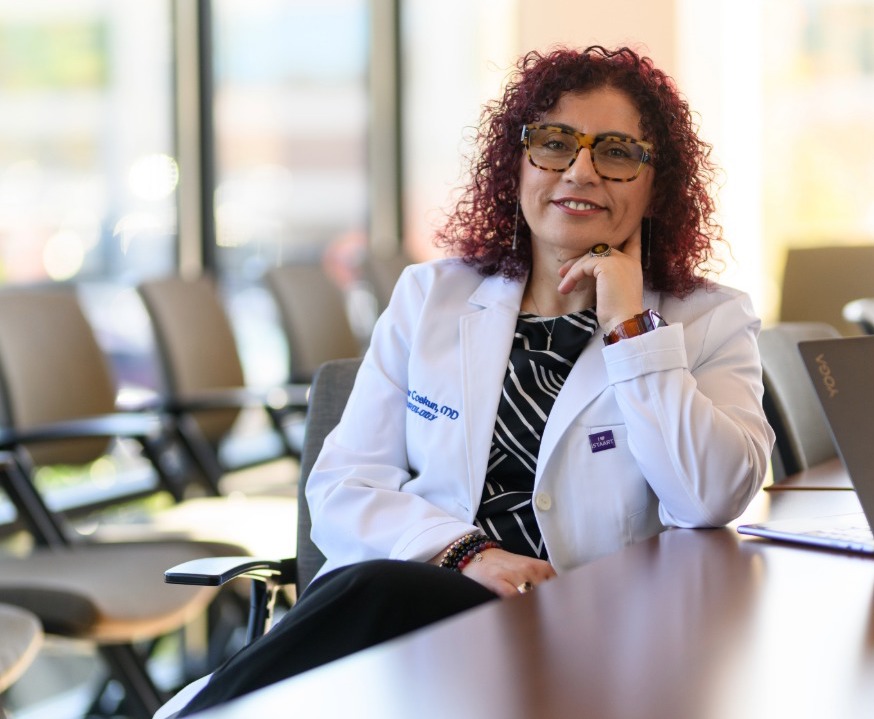
Dr. Pinar Coskun began imagining her medical career long before she ever set foot in a classroom. While other children played house, she performed make-believe surgeries on her dolls and led “field expeditions” in search of herbs she believed could reverse aging.
Born and raised in Turkey, Dr. Coskun grew up believing she would become a doctor. “It almost sounds like a classic story,” she said, “but my path was anything but classic.”
At Ankara University School of Medicine, her curiosity found a new terrain. The emerging fields of genetics, molecular medicine and epigenetics electrified her. “I wasn’t just fascinated, I was puzzled,” she said. “I wanted to know why wrinkles form, why skin sags and why hair grays. I imagined becoming a doctor, the kind who might one day discover and bathe in the Fountain of Youth.”
It was also where she met her husband, Dr. Volkan Coskun. “We were just two med students dreaming outside the box,” she recalled. “Research, to us, was the path to helping not just one patient, but entire communities.”
Their shared dream sent them across the world. In 1995, Volkan mailed dozens of letters to U.S. researchers to seek opportunities in medical research. One of those letters opened the door to Emory University. “It was a brave leap,” she said. Today, that leap has carried them far: he serves as associate director of Clinical Technology Innovations at Vertex Pharmaceuticals, while she has built a life of teaching, discovery and patient care at the University of Kentucky.
Instead of pursuing residency immediately after medical school, Pinar followed her early obsession, the biology of aging. At Emory and later the University of California, Irvine, she spent nearly 20 years studying mitochondrial DNA, oxidative stress and neurodegeneration. Her first mentor, Douglas Wallace, PhD — who discovered the maternal inheritance of mitochondrial DNA and its link to human disease — shaped her scientific worldview.
Eventually, Pinar felt a growing pull toward the clinical world. She completed her neurology residency and a geriatric neurology fellowship at UK’s Sanders-Brown Center on Aging, under the mentorship of Dr. Greg Jicha, a leading figure in Alzheimer’s research who directs the Clinical Core of the UK Alzheimer’s Disease Research Center (ADRC) and serves as site principal investigator (PI) for the Alzheimer’s Clinical Trial Consortium (ACTC) and multiple dementia trials.
Dr, Jicha’s mentorship helped shape her path from mitochondrial scientist to clinician-scientist, connecting molecular insights with human stories unfolding in her clinic daily.
Today, she serves as associate PI for the ACTC and associate clinical core director for the ADRC — roles that allow her to bridge research, teaching, clinical trials and real-world patient care.
“UK is one of the rare places where I get to do everything I love in one home,” Pinar said. “We’re entering an extraordinary era. We’re not just slowing the disease with new drugs; we’re now evaluating the same therapy in clinical trials to determine whether early intervention in cognitively normal but amyloid-positive individuals, can prevent Alzheimer’s before symptoms even begin.”
Pinar carries her mentor’s lessons with her every day. “They both taught me something essential,” she reflected. “Knowledge is contagious. The more you teach, the more minds you ignite. That’s how we build cures — together.”
She now mentors the next generation of physician-scientists, many of whom she hopes will push the boundaries further than she ever imagined as a child searching for anti-aging herbs.
As the aging population grows and Alzheimer’s becomes one of the defining medical challenges of our time, Pinar believes the answer lies where science and empathy meet.