
UK HealthCast: Understanding sarcoidosis
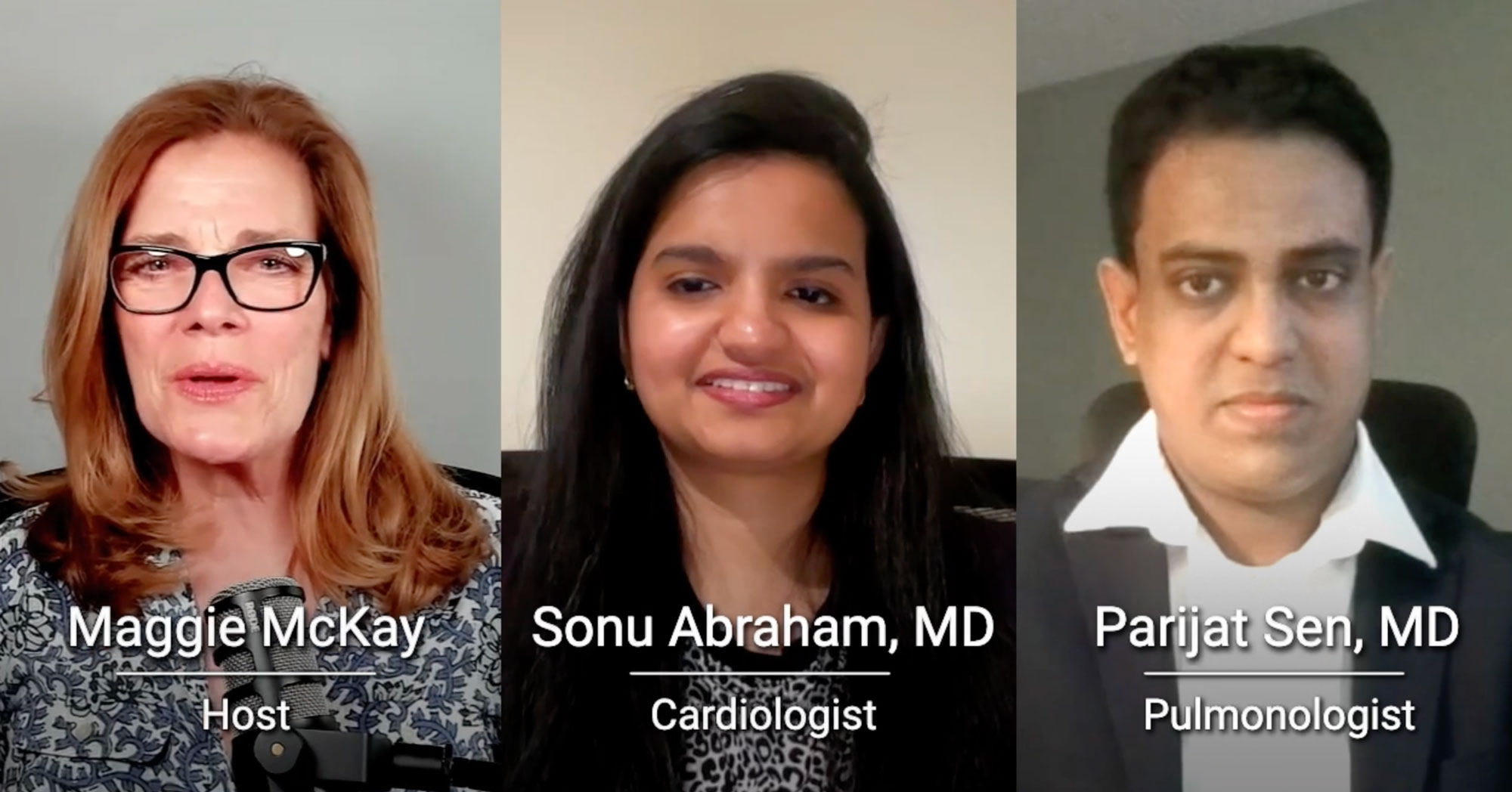
On this edition of UK HealthCast, Dr. Sonu Abraham and Dr. Parijat Sen explain what sarcoidosis is, how it affects people and what UK HealthCare can do for patients.
Dr. Abraham is an advanced heart failure and transplant cardiologist at UK Gill Heart & Vascular Institute with a special interest in hypertrophic cardiomyopathy and infiltrative cardiomyopathies including cardiac sarcoidosis.
Dr. Sen is an assistant professor of medicine whose interests include interstitial lung diseases, sarcoidosis and serves as the director of UK’s Sarcoidosis Clinic.
You can watch their interview below or listen on your favorite podcast app. Keep reading for key takeaways from their appearance.
What Is sarcoidosis?
Sarcoidosis is a chronic disease that causes long-term inflammation, or swelling, in the body. It can affect many different organs, but it most often shows up in the lungs. Other parts of the body that can be affected include the skin, heart, eyes, joints and even the nervous system.
Doctors believe sarcoidosis happens when a person’s immune system goes into overdrive. While there is a genetic link — meaning it can run in families — it usually needs a trigger from the outside.
“We feel that there's some sort of an external exposure, which could be an infection, or something in the environment, which sets off this abnormal chronic inflammation in the body,” Dr. Sen said. “So yes, there's a genetic link, but there has to be some sort of an external trigger as well which are probably the risk factors that we worry about.”
Who does sarcoidosis affect?
Sarcoidosis is considered a rare disease, but there are still over 200,000 people with it in the U.S. alone.
People of any age can get it, though certain genes and environmental factors might increase a person’s risk. It doesn’t mean that if a parent has it, their child definitely will — but the chances may be slightly higher.
How does sarcoidosis affect the heart?
When sarcoidosis affects the heart, it’s called cardiac sarcoidosis. In this case, groups of white blood cells (called granulomas) form in the heart muscle. This can cause serious problems like dizziness, fainting, a racing heart, chest tightness and trouble breathing.
Sometimes sarcoidosis can block the heart’s electrical signals, leading to something called "heart block," which may require a pacemaker. Dangerous heart rhythms may need a defibrillator. Since symptoms can look like other heart problems, doctors have to be extra careful to spot cardiac sarcoidosis early.
“The subtle progression of cardiac sarcoid can delay diagnosis which is why it's very important to have high degree of suspicion,” Dr. Abraham said. “An example would be like, suppose a patient comes into the emergency room, a very young man, 38-year-old, for example, comes in with lightheadedness and dizziness and has heart block. There's no real reason why a 38-year-old should have heart block. And so, this should trigger in your mind, ‘Okay, I should look for cardiac sarcoid and screen for that in this particular patient.’”
How Is sarcoidosis diagnosed?
Diagnosing sarcoidosis depends on where it shows up in the body. If the lungs are affected, doctors often find it when they see enlarged lymph nodes or small spots (nodules) on a lung scan. Usually, a biopsy — where a small piece of tissue is taken and studied — is needed to confirm sarcoidosis.
For the heart, doctors might start with an EKG to check the heart’s rhythm. They might also use special scans like a cardiac MRI or a PET scan to look for signs of inflammation. Regular heart checks are important for anyone with sarcoidosis, even if they don’t have heart symptoms.
How Is sarcoidosis treated at UK HealthCare?
UK HealthCare has a special sarcoidosis clinic with a team of lung doctors, heart doctors, rheumatologists, and others working together. They are also involved in important research to find better treatments. If needed, they even offer heart transplants for patients with very serious heart disease caused by sarcoidosis.
Currently, the main treatment for sarcoidosis is steroids. Steroids can calm down the inflammation, but they come with side effects like weight gain, high blood pressure, diabetes and weak bones.
Doctors try to move patients to other medicines if they need long-term treatment, but these drugs can also lower the body’s ability to fight infections. That’s why researchers are working hard to find better, more targeted treatments that won’t cause so many problems.
Living with sarcoidosis
Life with cardiac sarcoidosis depends on how serious it is. Some people with mild disease can live normal lives. Others with more serious disease may struggle with fatigue or worry about their heart devices, like defibrillators.
Doctors encourage patients to stick to their medications, eat healthy, exercise moderately, and get support for their mental health. Living with a chronic disease can be tough, but support groups and counseling can make a big difference.