A strong foundation for improved outcomes
With the rise in cardiovascular disease globally, researchers are pushing to close the gap between laboratory investigation and clinical implementation. “Academic medical centers aren’t just supposed to be following clinical guidelines. We are responsible for taking the lead in establishing new guidelines,” says Ken Campbell, PhD, the director of the translational research for the division of cardiovascular medicine who also serves as core director for UK’s Center for Clinical and Translational Science.
As such, accelerating therapeutic advances in heart disease management, promoting cardiovascular innovation and creating breakthrough developments is a priority for physician-scientists at the Gill Heart & Vascular Institute.
“We have an opportunity and, more than that, an obligation to look after our state, and we are in a position to have an influence more than any other hospital,” Dr. Campbell says. “This gives our work a sense of purpose.”
Whether a scientist is in the laboratory, working in pre-clinical development or leading clinical trials, there’s a pervasive collaborative spirit that drives progress at UK, says Alan Daugherty, PhD, DSc, associate vice president for Research Core Facilities. “We have an environment here that is very collegial. When you combine the right people with access to sophisticated equipment, appropriate facilities and administrative support, you end up with very productive labs and, ultimately, advances in patient care.”
The role of the CV-RPA
The success of UK’s scientific, translational and clinical research program also comes partially from its structure, he believes, with multiple pathways in which to pursue exploration and investigation. For example, the Cardiovascular Research Priority Area (CV-RPA), as one of seven research priority areas identified in the UK Strategic Plan, puts the spotlight directly on Kentucky’s number one killer — cardiovascular disease. The CV-RPA focuses on researching and developing new ways to prevent, diagnose and treat cardiovascular conditions, which is essential for improving public health.
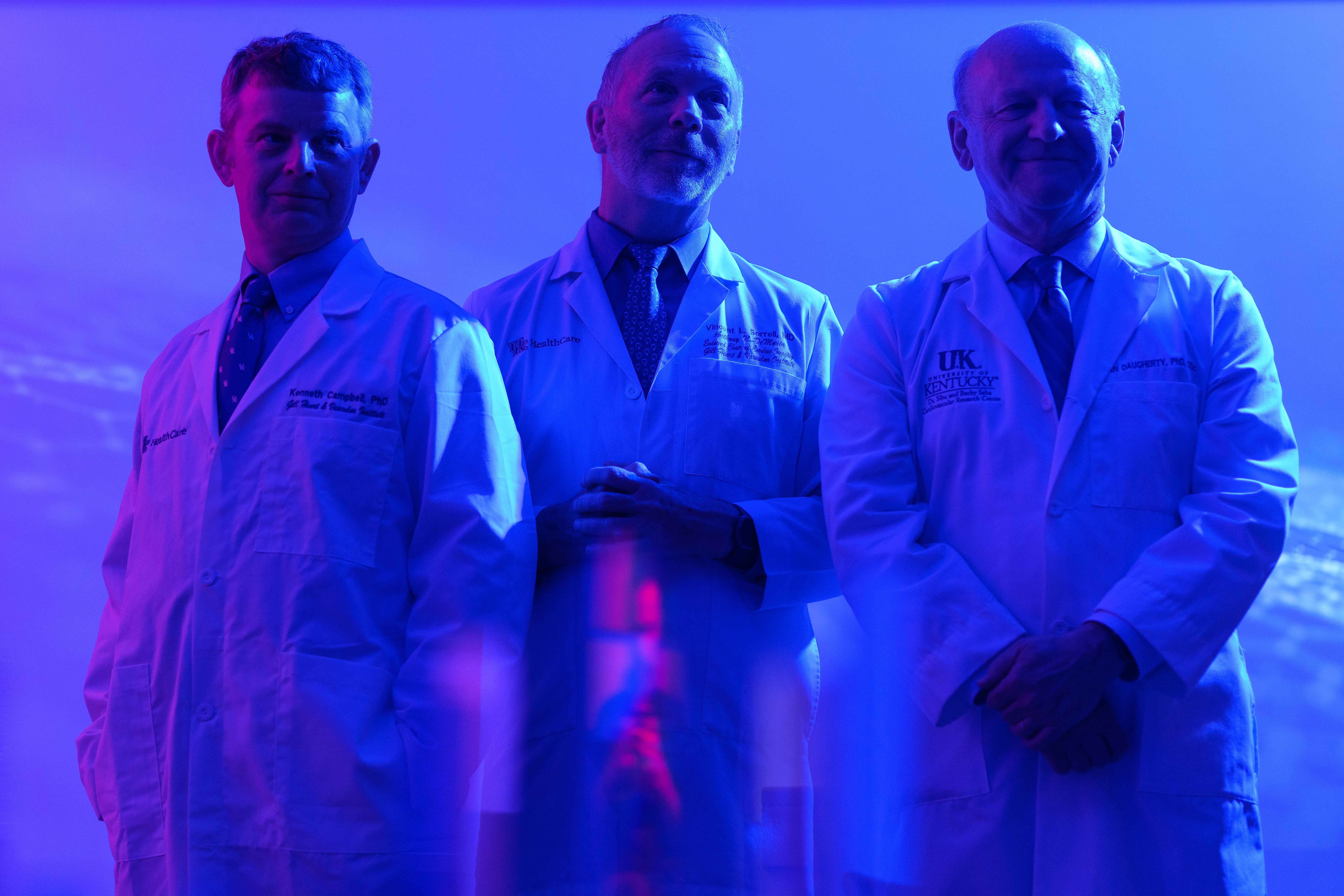
Daugherty and co-director Vincent Sorrell, MD. “My overall vision is to raise the bar of health care across the state as it pertains to cardiovascular disease," Dr. Sorrell says. “In order to make that happen, we continue to offer high-quality care, we recruit experts, we recognize that the need for education continues for a lifetime, and we help faculty carve out time for research.”
The cutting-edge, interdisciplinary research supported by the CV-RPA helps physician-scientists better understand the causes of cardiovascular diseases at a molecular, cellular and systemic level. The research is crucial for uncovering new biomarkers, therapeutic targets and innovative treatments.
Promoting cross-college projects, the CV-RPA also provides grant preparation assistance, a compilation of internal and external funding sources, and is a training ground for fellows, residents and graduate and undergraduate students.
Moving science to the bedside
Working collaboratively with the CV-RPA is the Gill Heart & Vascular Institute Section of CV Research. Complementing CV-RPA’s translational research efforts, its clinical trials help move laboratory discoveries into real-world clinical applications. Among the current trials are:
•ATRIUM – A Phase 3, Investigator Initiated, Randomized, Double-Blind, Placebo-Controlled Study to Evaluate the Efficacy Randomized Double-Blind, Placebo Controlled Study to Evaluate the Efficacy and Safety of NTLA 2001 in Participants with Transthyretin Amyloidosis with Cardiomyopathy. Gill Heart & Vascular Institute is the only Kentucky location offering the trial.
•FACT-CRT – Factors Associated with Response to Cardiac Resynchronization Therapy in Heart Failure Patients with Non-LBBB ECG Pattern.
•REBIRTH — The Randomized Evaluation of Bromocriptine In Myocardial Recovery Therapy study.
EXCEL – A new pathway for research funding
In 2024, a new university initiative also began boosting “transformative transdisciplinary research,” in the words of Robert S. DiPaola, MD, provost. Dubbed the EXCEL (Executive Clinical Expert Leadership) Research Initiative, the call went out to faculty across all colleges on campus for proposals from teams with innovative projects that will change lives and improve communities.
Five EXCEL proposals received funding. “We are excited that two of the winning projects came from cardiology,” Dr. Campbell says.
One is the MERIT: Behavioral Interventions for Smoking Cessation study, featuring a small monetary award for each week of patient success (confirmed by a nicotine swab). The other is an artificial intelligence project that is using chest CTs to identify patients at risk of heart attacks before symptoms occur. (Read more about the two CV EXCEL projects in the following pages.)
Additionally, the cardiovascular division is assisting with a third EXCEL project by providing clinical expertise in cardiovascular magnetic resonance (CMR) on weekends and evenings for a study that is investigating the hearts of children who are overweight or obese.
Offering a variety of ways for physicians to participate in research ensures that there are opportunities suited to their diverse skills, interests and goals, said Jennifer Isaacs, clinical and translational research services director. “We have made great strides in the last year in getting better connected with the physicians and building awareness of the research initiatives,” she says.
While the challenges of finding direct clinic time and time for research is not new, it’s an issue that continues to get attention at UK. “Our core facilities have changed drastically and two years ago relocated so that now you can just go down an elevator and have access to very sophisticated equipment,” Dr. Daugherty says. “This is the place for academic success, for research, for care that is improving patient outcomes.”
It’s also a place where recruiting top-tier talent continues to be a fundamental strategy. “Our cardiologists come here for more than a good income,” Dr. Campbell says. “They like the academic medical center environment, they enjoy teaching fellows, they have found a collaborative space, they like working with a specific group of patients and they want to do research and have support for their research. All of that is possible her.”