
Preventing and treating eye injuries in children
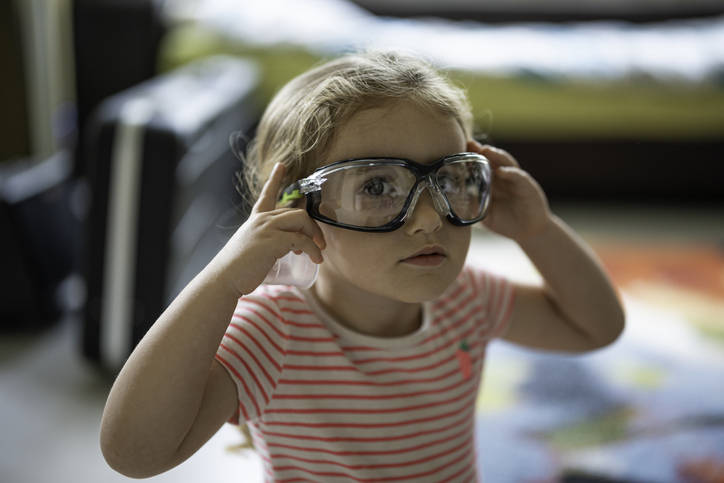
Eyes are amazing, but sometimes injuries can happen.
August is Children’s Eye Health and Safety Month. It’s good to keep your eyes in mind year-round, but this is an especially good time to make sure they’re feeling and working at their best. Dr. John Franklin recently joined us to provide some helpful advice on preventing eye injuries and what to do if your child has possibly had an injury to one or both of their eyes.
Protecting vision in children
Vision is critically important for most of our daily activities and provides a way for us to learn, interact, travel, play and experience the world. Eye injuries come in many different forms, so being aware and taking the right precautions can help ensure kids’ vision is preserved and all those activities can be enjoyed.
There are a several ways you can help kids protect their eyes. The most commonly discussed is using protective eyewear. Regular eyeglasses can offer some safety, and when prescribed by an eyecare professional, they should be worn to make sure your child sees as well as possible. This by itself can help a lot because it’s easier to avoid an injury when you can clearly see the danger.
Sometimes, more extensive protection is required when an activity is presents a greater chance of injury to your eyes. This includes:
- Safety glasses
- Face shields
- Sports helmets
- Visors
Make sure your children know the correct way to use any safety equipment, that they know when it should be used, and monitor that it’s being used every time when they participate in those activities.
More eye-safety tips to know
- Encourage kids to speak up if they notice any change in vision. Routine eye exams can be useful, but if they notice something is different, get it checked out. An eye exam may help them see better or could find problems that need to be addressed.
- Keep germs away! Kids should wash their hands before putting them close to their eyes. This is especially true if they are putting in or removing contact lenses. Eye infections can cause more damage than most of us realize, but in many cases can be easily prevented with good hygiene.
- Use sunglasses. We often think about protecting our kids from the sun in terms of using sunscreen. This is a great practice, and protecting their eyes from the sun is equally useful. UV radiation can damage the surface of the eye and is thought to contribute to cataracts and macular degeneration. Sunglasses can block up to 100 of these dangerous rays, so get those shades on when they are outside!
What happens if an eye injury does occur?
If a child experiences an eye injury, it’s important to know what to do and how to give some “first aid.” Here are some common injuries and how to respond if they happen to your children.
- Dirt or sand in the eye: Flush with water and do not rub. Rubbing can lead to a corneal abrasion (scratch on the eye) that is painful and gives a place for an infection to occur.
- Chemical in the eye: Flush with a heavy amount of water for at least 10 minutes and seek help from a doctor immediately. Some chemicals can quickly lead to permanent injury and a dramatic decrease in vision, especially cleaning fluids that are found in many homes.
- Blunt injury (like getting hit with a baseball): These types of impacts cause damage quickly, but could also lead to delayed damage as well. When an injury like this first happens, it can be helpful to use a cold compress to reduce the swelling around the eye. If the impact is hard enough, structures inside the eye can broken or torn, or the swelling could be severe enough to put pressure on the eye. Seek help from an eyecare professional after a blunt injury.
- Sharp object: Seek immediate medical attention. If a sharp object, like a pencil or wire gets stuck in the eye, do not pull it out. Gently cover the area if possible and go to the emergency room immediately.
Even with summertime winding down, let’s take time to think about children’s eye safety and how we might protect them. Eye injuries can happen any time of year and in many situations. Preventing these injuries and knowing what to do if they happen can help make sure our kids continue to experience the gift of vision throughout their lives.