Unfazed
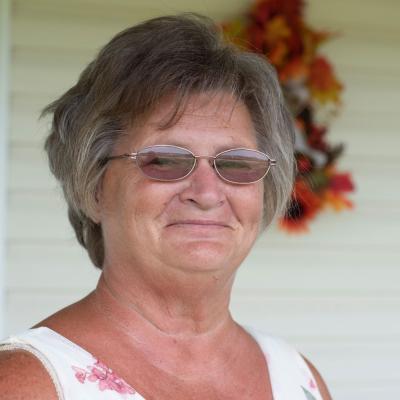
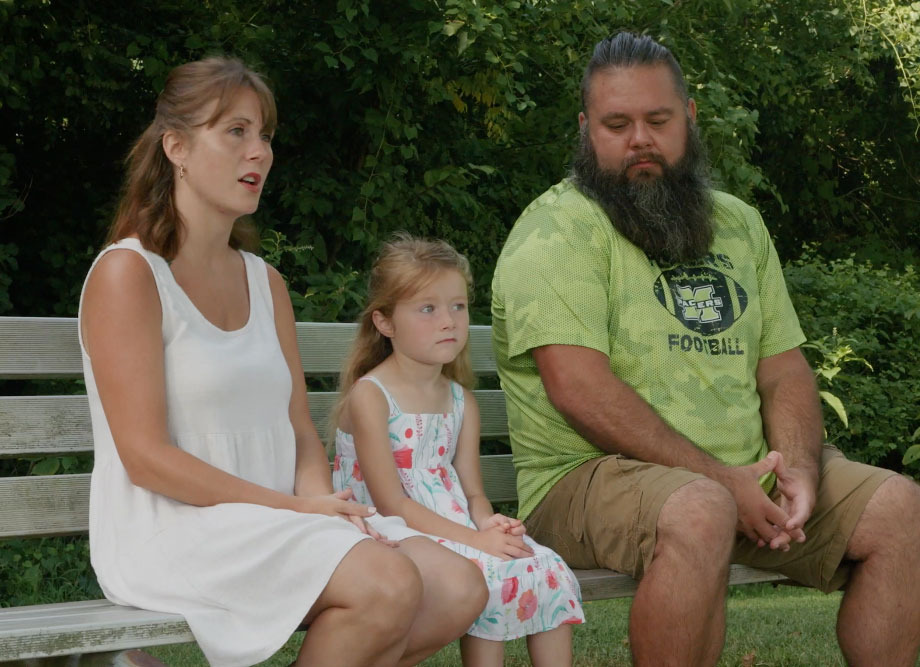
On a quiet February evening in 2024, Jamie Newton’s phone rang. The voice of Bertha, her mother in law, trembled on the other end.
“We’re in a wreck.”
Jamie and her husband, Joshua, exchanged a puzzled look. “OK, can’t you all go around it?” she asked.
“No,” Bertha said. “We are the wreck.”
Their then 3-year-old daughter Isabelle — “Izzy” to everyone who knows her — was staying with her grandparents in Irvine, Ky., when she experienced a febrile seizure and had to be transported to UK HealthCare’s Albert B. Chandler Hospital.
Thanks to the effort of a paramedic, Izzy was uninjured in the crash and delivered to Chandler Hospital via an assist from Madison County EMS. Normally, Izzy would be discharged from the hospital a few hours after a seizure but, due to the crash, she had to stay a couple days for additional monitoring.
A year later, Izzy’s family made a choice that has made those ambulance rides less of a fixture in their lives and given back more of her childhood.
’Above and beyond’
In 2021, Jamie and Joshua found Izzy after her first seizure in the middle of the night.
She’d vomited in bed and the entire left side of her tiny body was weak and not moving. An ambulance rushed her from Baptist Health Richmond to Golisano Children’s at UK, beginning years of care under UK HealthCare’s pediatric neurology and neurosurgery teams.
That first hospital stay became a blur of CT scans, MRIs and spinal taps as specialists worked to determine a cause and rule out worst-case scenarios. Izzy’s veins were so tiny that her care team needed to use needle sticks requiring ultrasound guidance to help place IVs.
“They went above and beyond, but it was definitely scary,” Jamie said.
Doctors discovered Izzy had roseola, a common viral infection in babies and very young children. Typically, it causes a sudden, high fever lasting a few days that, after it breaks, is often followed by a rash. Most kids recover at home in about a week, but febrile seizures can happen. Izzy’s first seizure caused Todd’s paralysis, a temporary form of paralysis that can last up to 48 hours.
As Izzy grew, so did the seizures. Some lasted longer than five minutes. Some required emergency intervention. But she and her family adapted.
Medication became routine, as did hospital visits. Through it all, Izzy found reasons to smile: stickers, cards, gifts from her parents’ colleagues at Madison Southern High School, and the undivided attention that comes with being a child in a room full of nurses.
A new possibility
After her ambulance accident in 2024, a new MRI revealed the underlying cause of Izzy’s persistent epilepsy: mesial temporal sclerosis, a hardening of brain tissue in the part of the brain located behind the temples. This is commonly associated with severe early life seizures and likely was a consequence of the roseola infection earlier in her youth.
The discovery, though, opened the door to the possibility of surgery to remove the hardened tissue. Since Izzy still had breakthrough seizures, often prolonged despite use of anti-seizure medicine, her care team believed surgery would be the best path forward to encourage fewer and less severe events
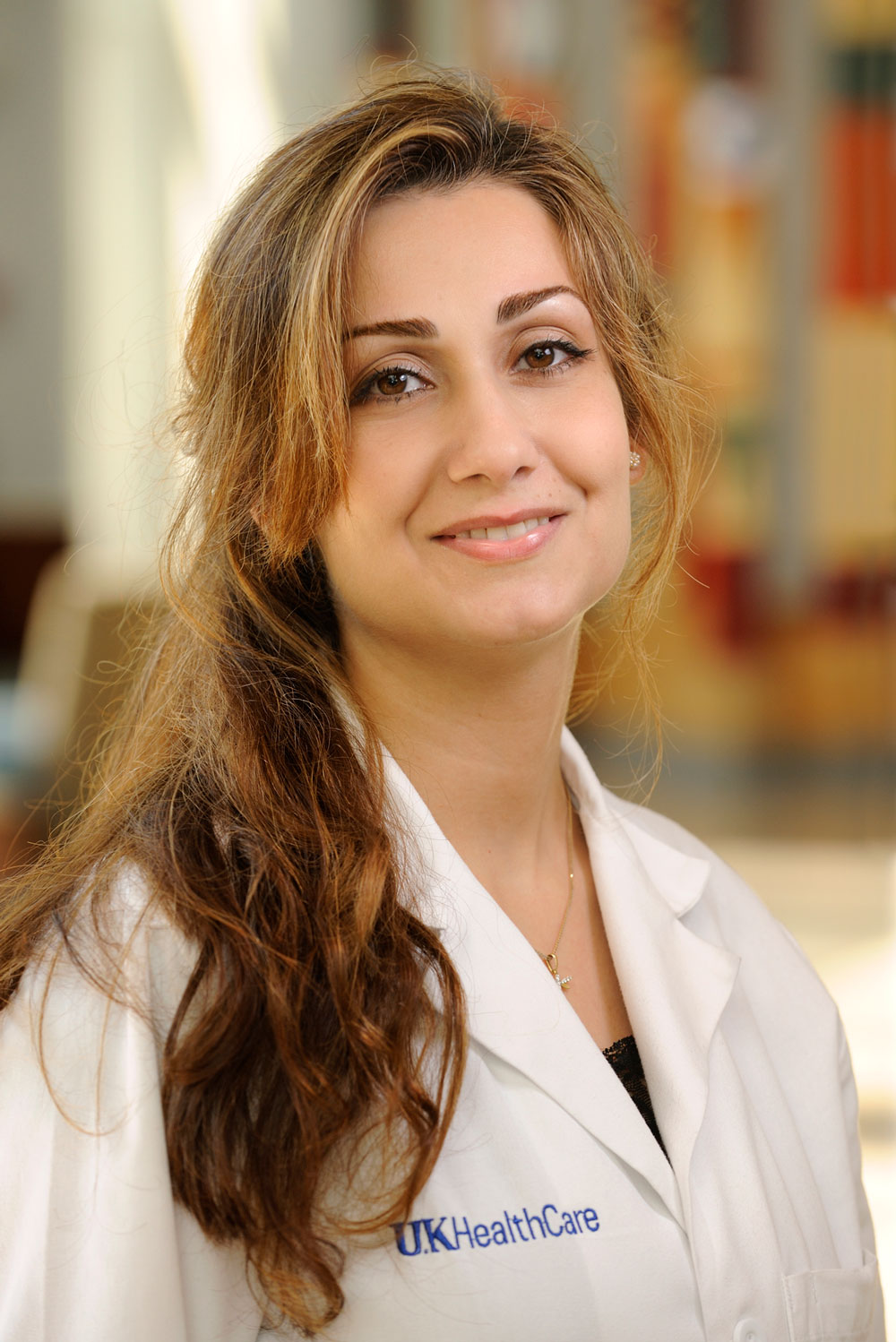
“I deal mostly with pediatric epilepsy, and the pediatric patients are not small adults,” said Dr. Zahra Haghighat, Izzy’s neurologist at the UK Kentucky Neuroscience Institute. “We are talking about a little human who is experiencing the golden period of their life, learning, developing their cognitive function. It’s very crucial to have as normal growth as possible.
"I understand, as a parent, it’s very hard to say, ‘OK, I’m gonna do brain surgery on your kid.’ It’s not like that. We have an in-depth discussion. It might be hours of extra visits and after-hour discussions over the phone, talking to them about what we think and, more importantly, the thing parents most want to know about, the outcome of removing different parts of the brain. Everything is individualized, and decisions are shared in full with the family. Because family support is very important with patients like Izzy.”
After discussions with Dr. Haghighat’s team as well as Dr. Farhan Mirza, who would be her surgeon, the Newtons were confident that brain surgery was the right choice for Izzy. Nobody was more ready for it than her.
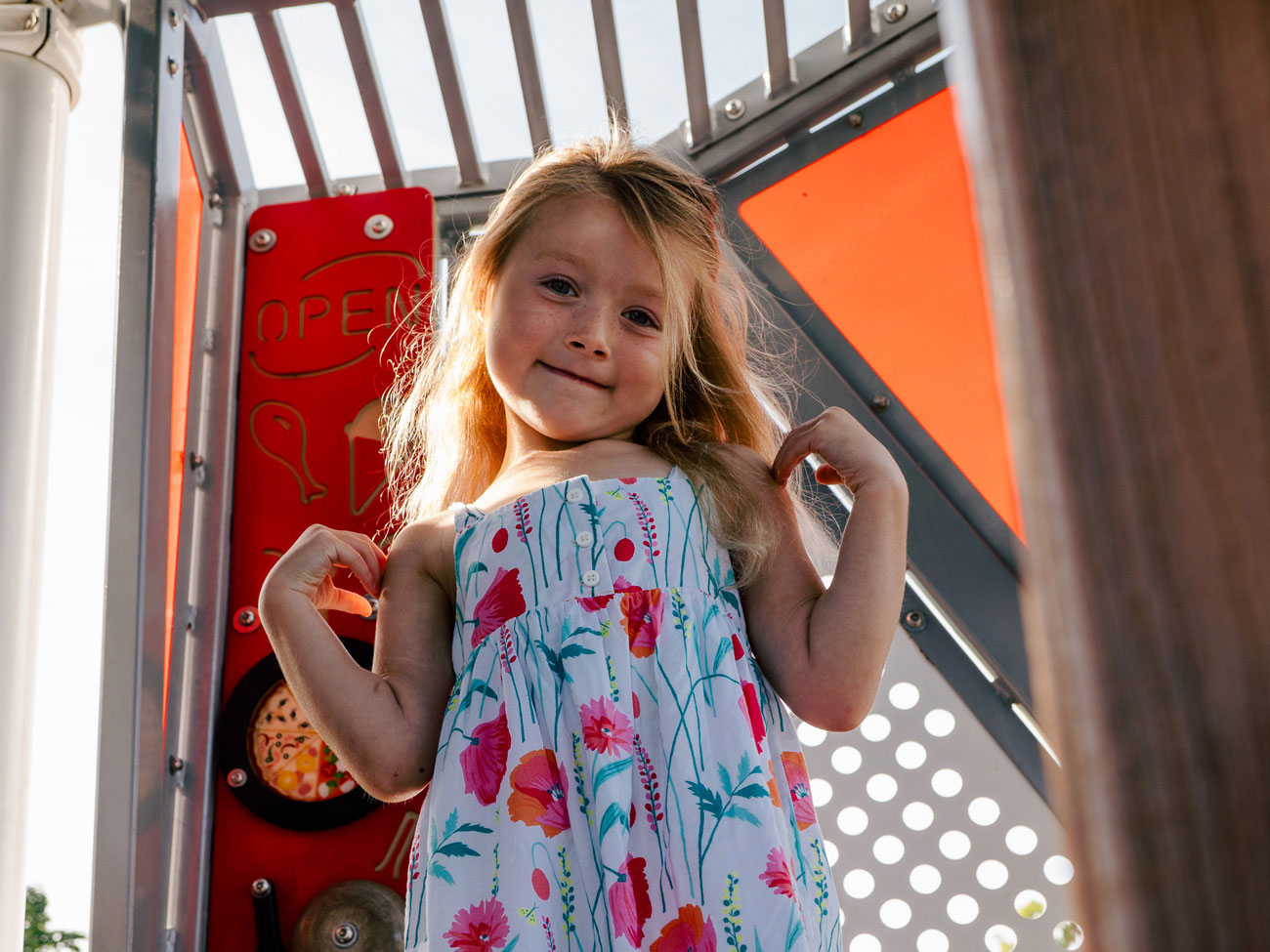
“She’s the bravest kid I’ve ever met,” Jamie said. “Nothing fazes her.”
A successful surgery
In January 2025, almost a year after an ambulance accident that helped spark a life-altering decision, Izzy had a a right anterior temporal lobectomy and amygdalophippocampectomy (in which the amygdala and parts of the hippocampus are removed). The surgery was incredibly successful: Izzy was discharged quickly and was recovering back at home within 24 hours.
Since her surgery, Izzy has had the flu and other illnesses that, in the past, would have been ripe for seizures, and they’ve not occurred. She made it about eight months without a seizure before having a breakthrough event in September 2025, a few months after her fifth birthday. She experienced another breakthrough seizure in May 2026 but did not require an emergency-room visit. Doctors determined it was likely the result of a recent growth spurt; Izzy’s anti-seizure prescription wasn’t at a high enough dose to match.
Izzy started kindergarten in 2025 as a local celebrity, already adored by the teachers who’ve followed her journey. Her older brothers watch over her with pride. And Jamie and her husband are beginning to think about a future where Izzy may possibly be medication free altogether someday.
Even in the worst case scenario, Izzy’s seizures should remain fewer and not as harsh on her.
“No matter what, this has greatly improved her life,” Jamie said. “She would have started to see delays, issues with memory, things like that. No matter what, her life is far improved because of the surgery.”
Since the operation, Izzy’s medical team has told her story at conferences and other events to help spread awareness of the impact early surgical intervention can have when appropriate for young patients. Izzy and her parents didn’t just make her own quality of life better; their bravery will help kids just like her.
“We were more grateful than anything that they might be able to use this to help others or that she could be a success story to share with other families who might be apprehensive,” Jamie said. “We were blessed that this was an opportunity she could have, and if it helps anyone else as well, that’s wonderful.”