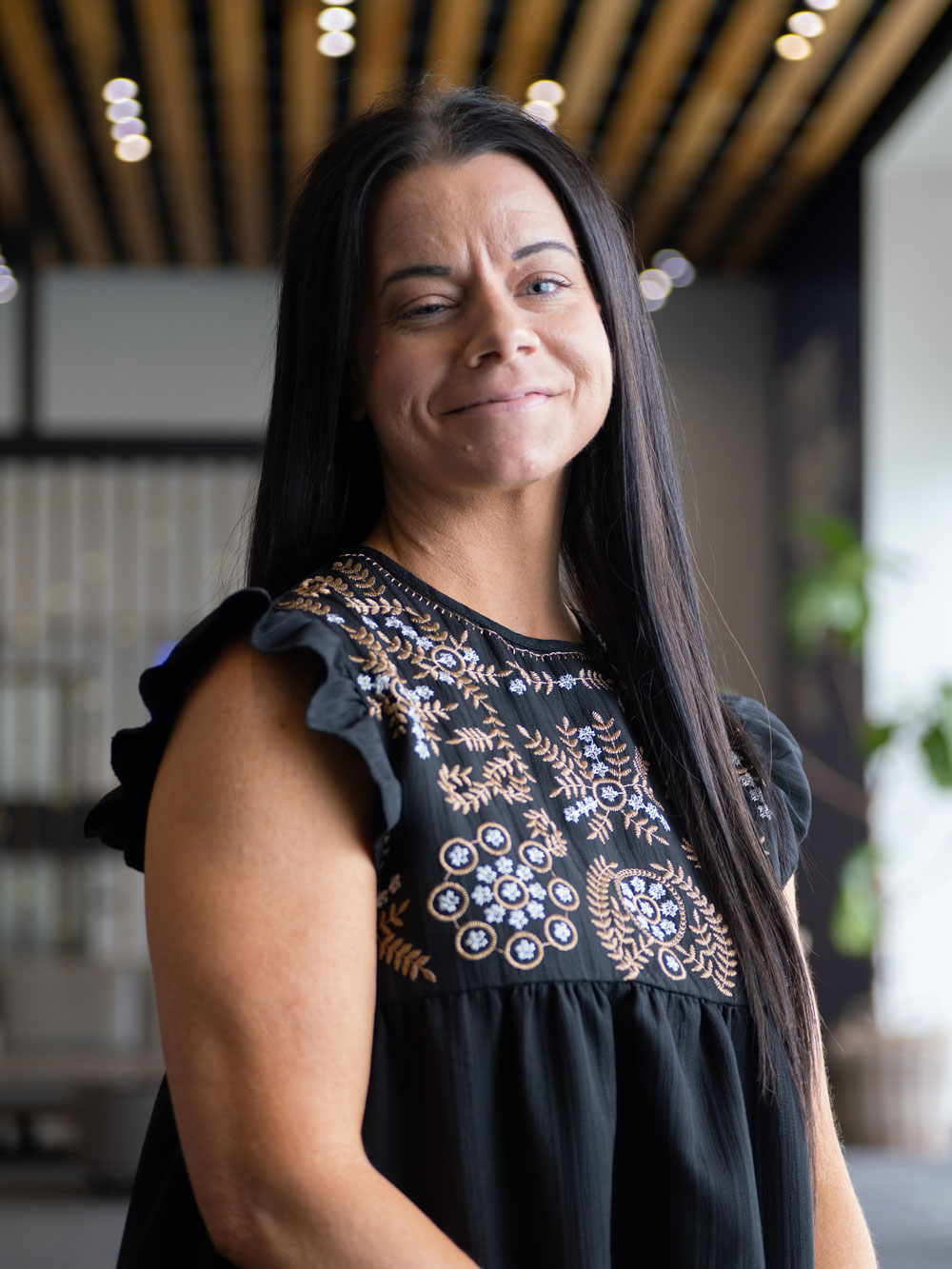
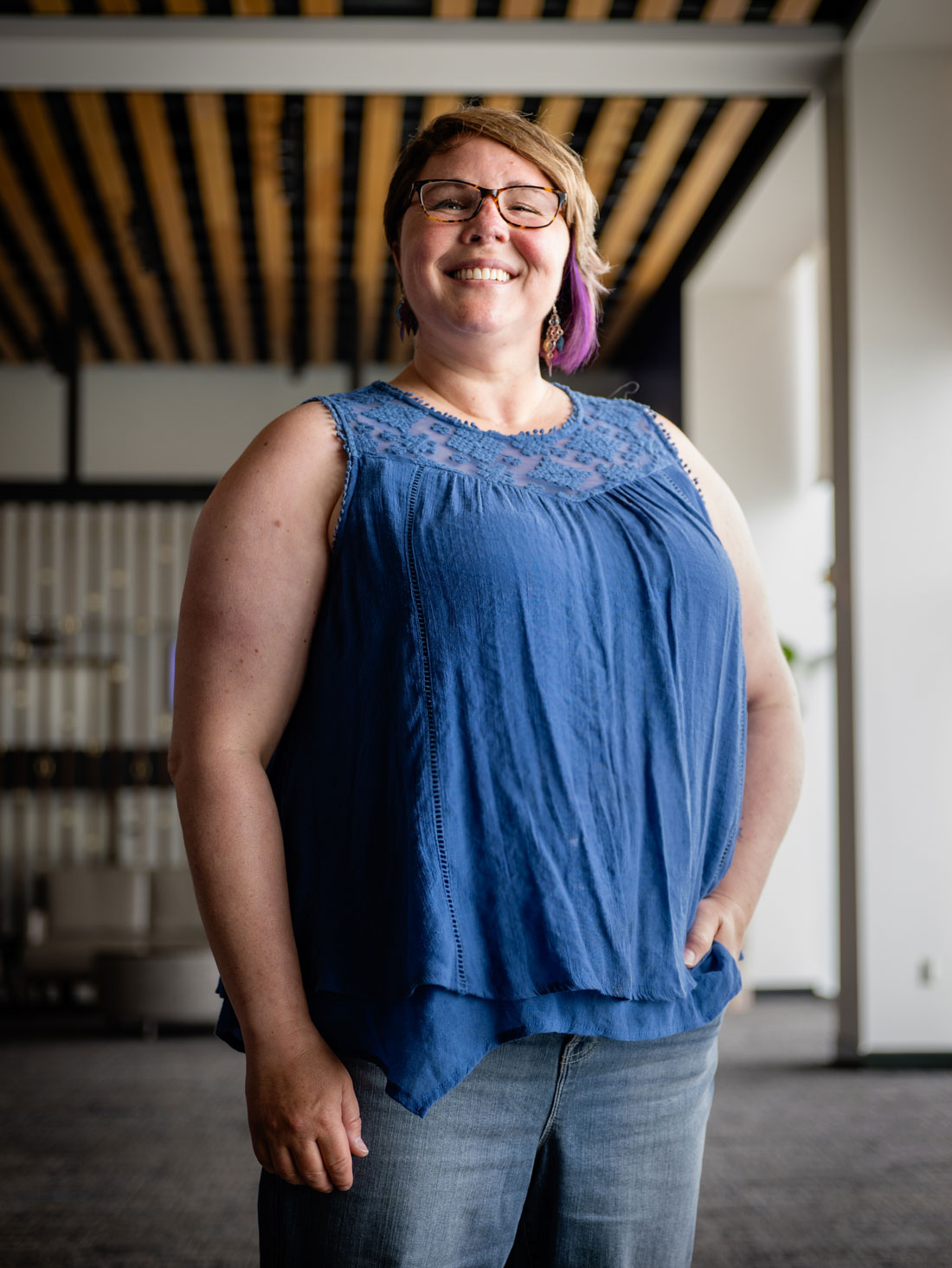
National Trauma Survivors Day 2025
UK Albert B. Chandler Hospital is the only Level I Trauma Center dedicated to Central and Eastern Kentucky. This means the trauma program at UK HealthCare is equipped to handle the most serious emergencies.
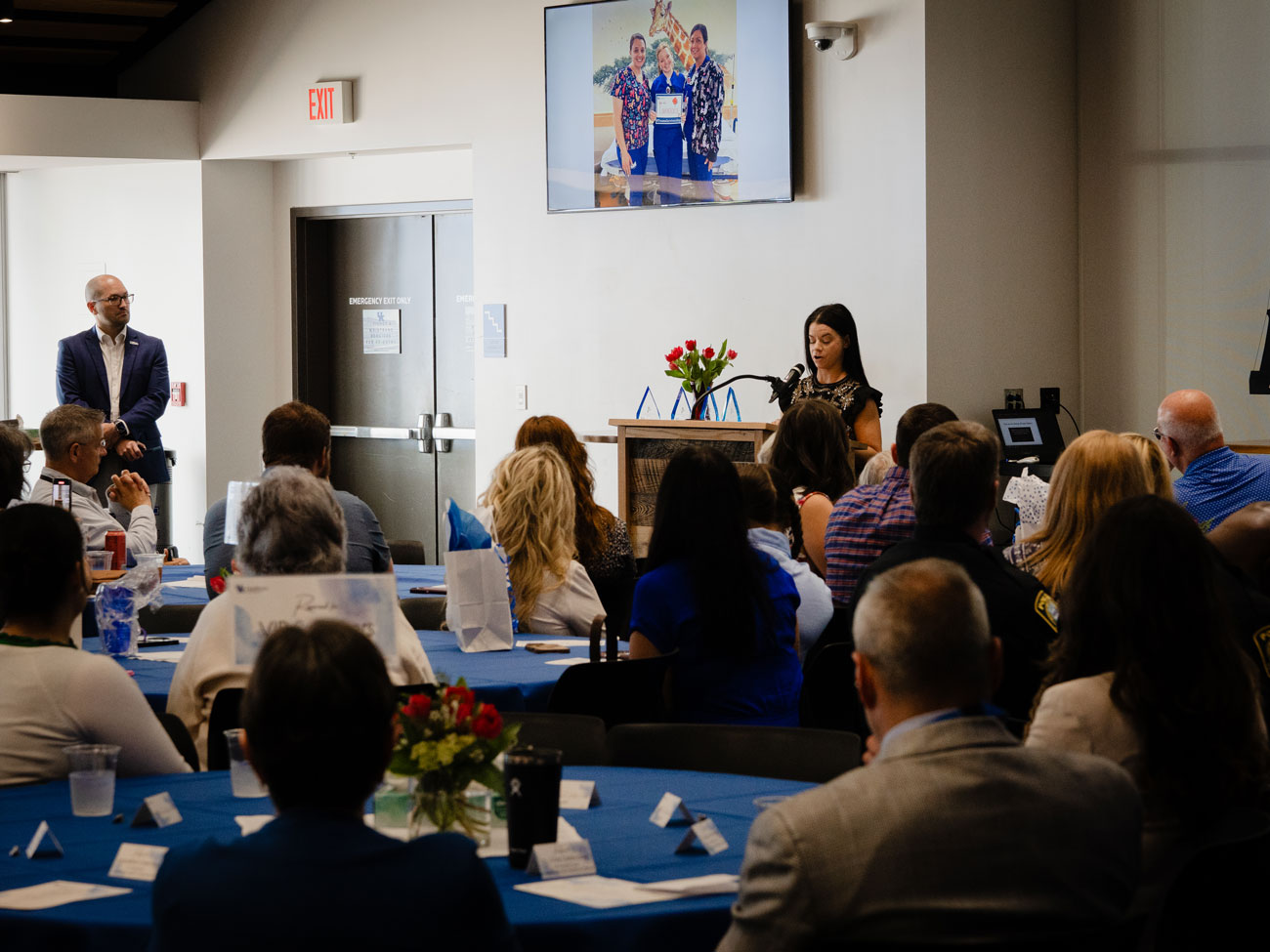
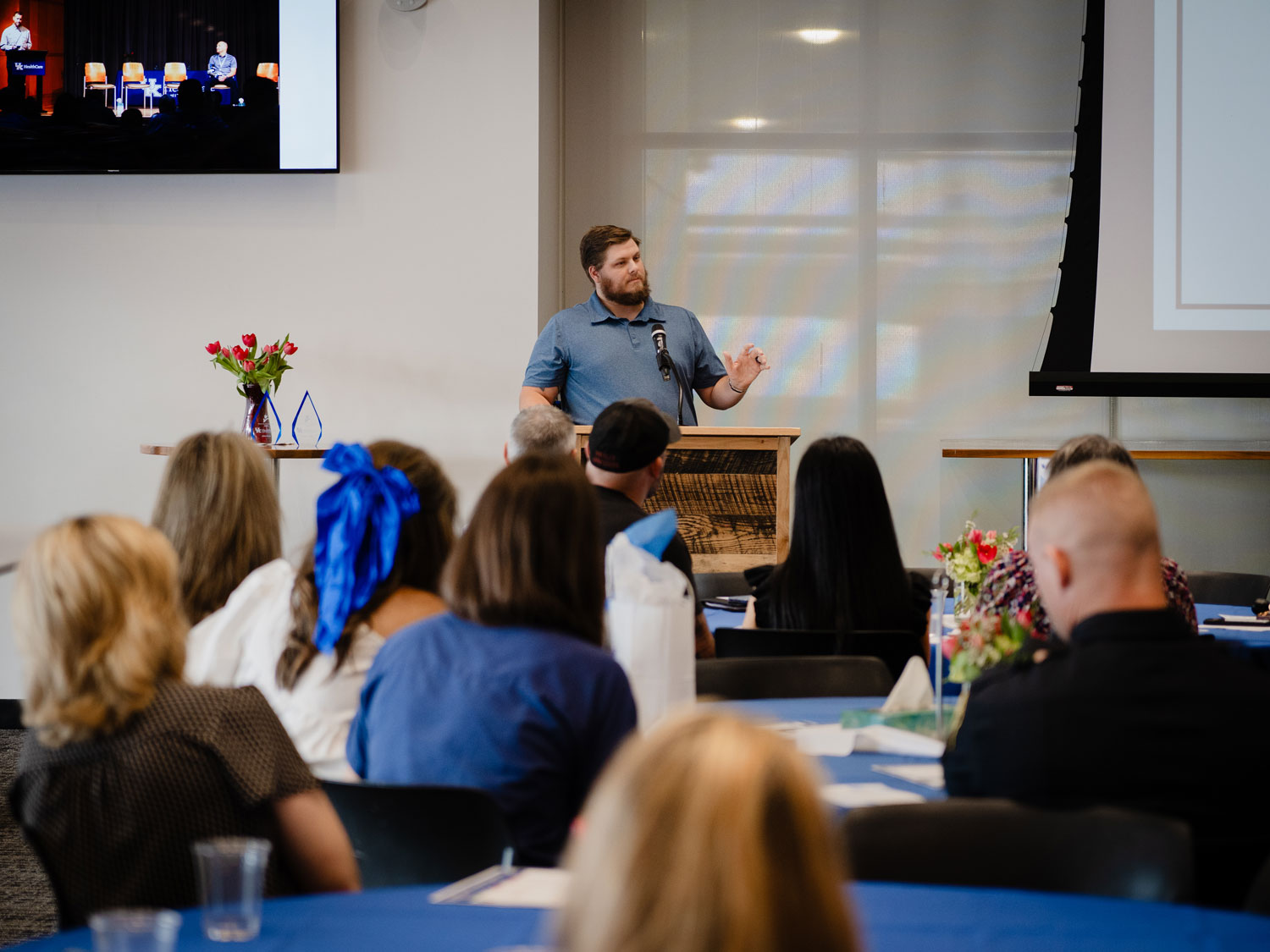
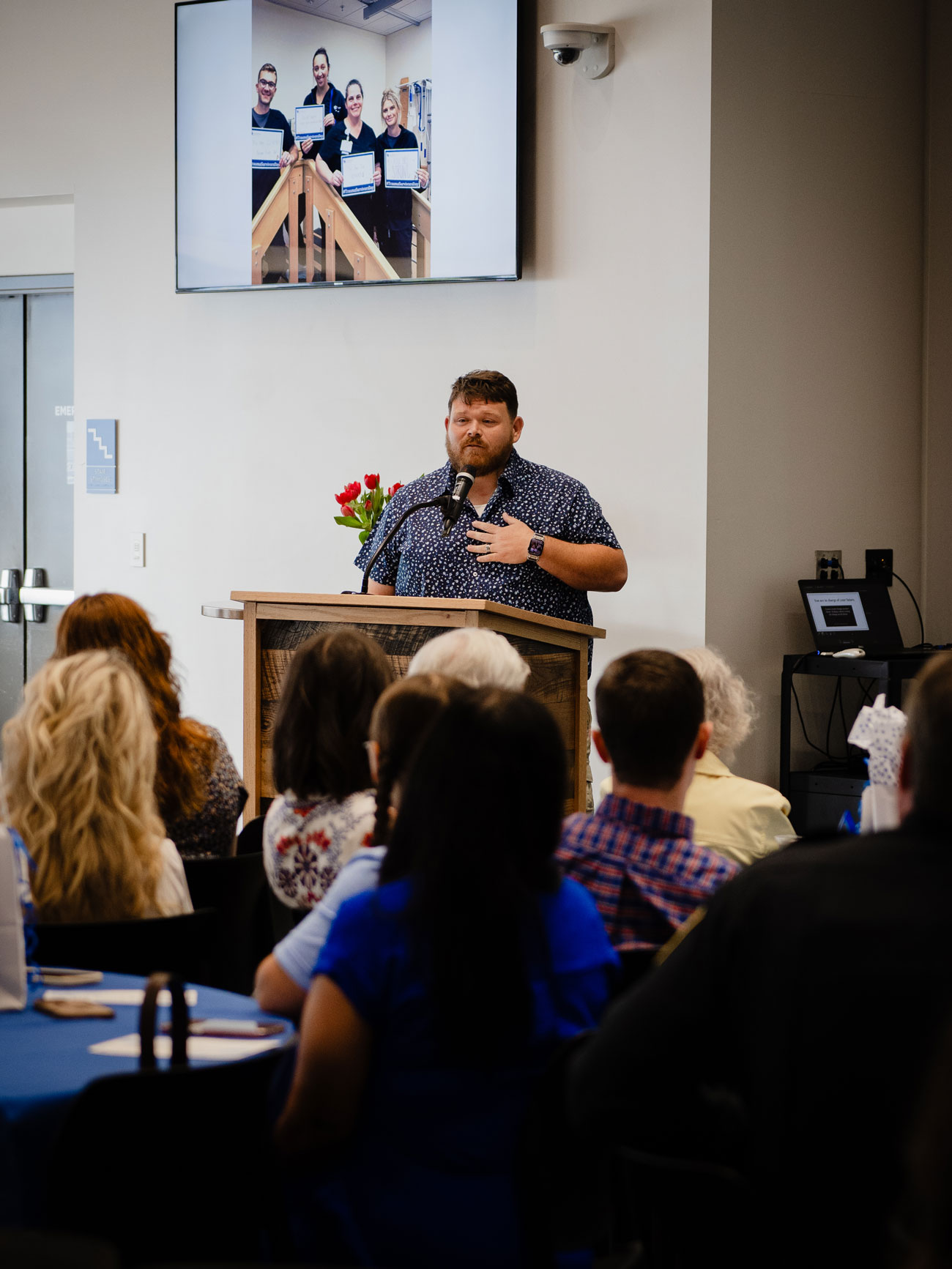
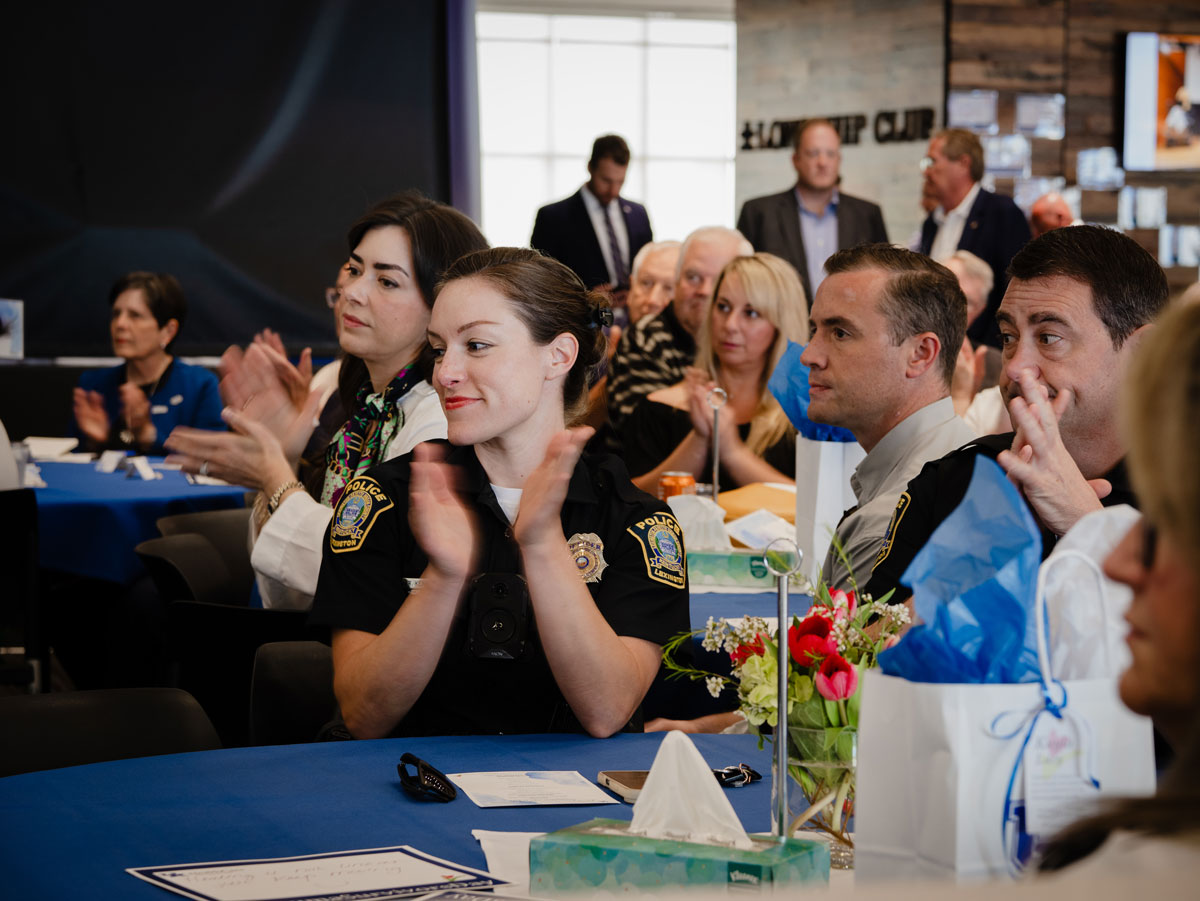
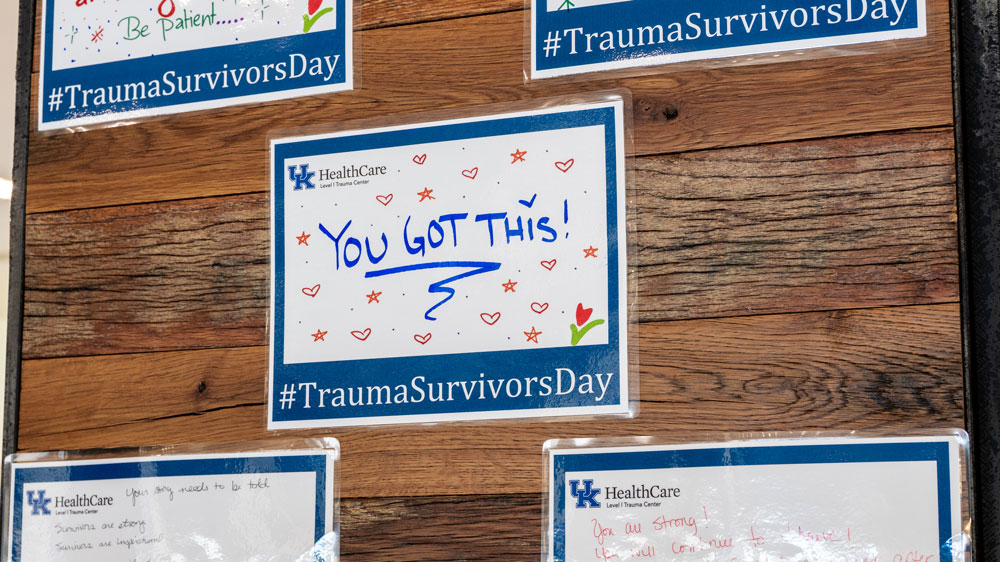
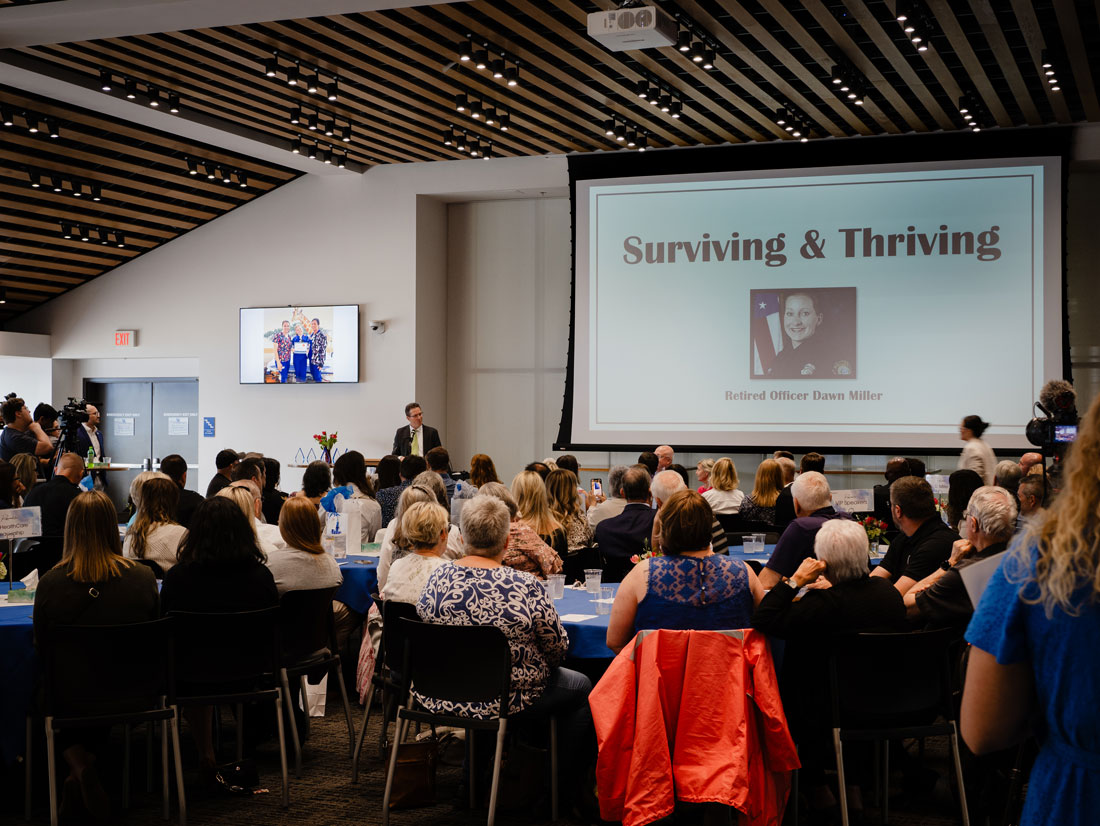
Every year in May, in conjunction with National Trauma Survivors Day, UK HealthCare invites past trauma survivors who've come through our emergency department to be honored during a special event where survivors get to:
- share their stories
- celebrate the family, friends and providers who made their survival possible
- and form a community with other survivors of trauma
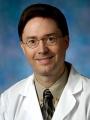
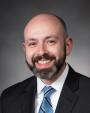
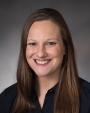
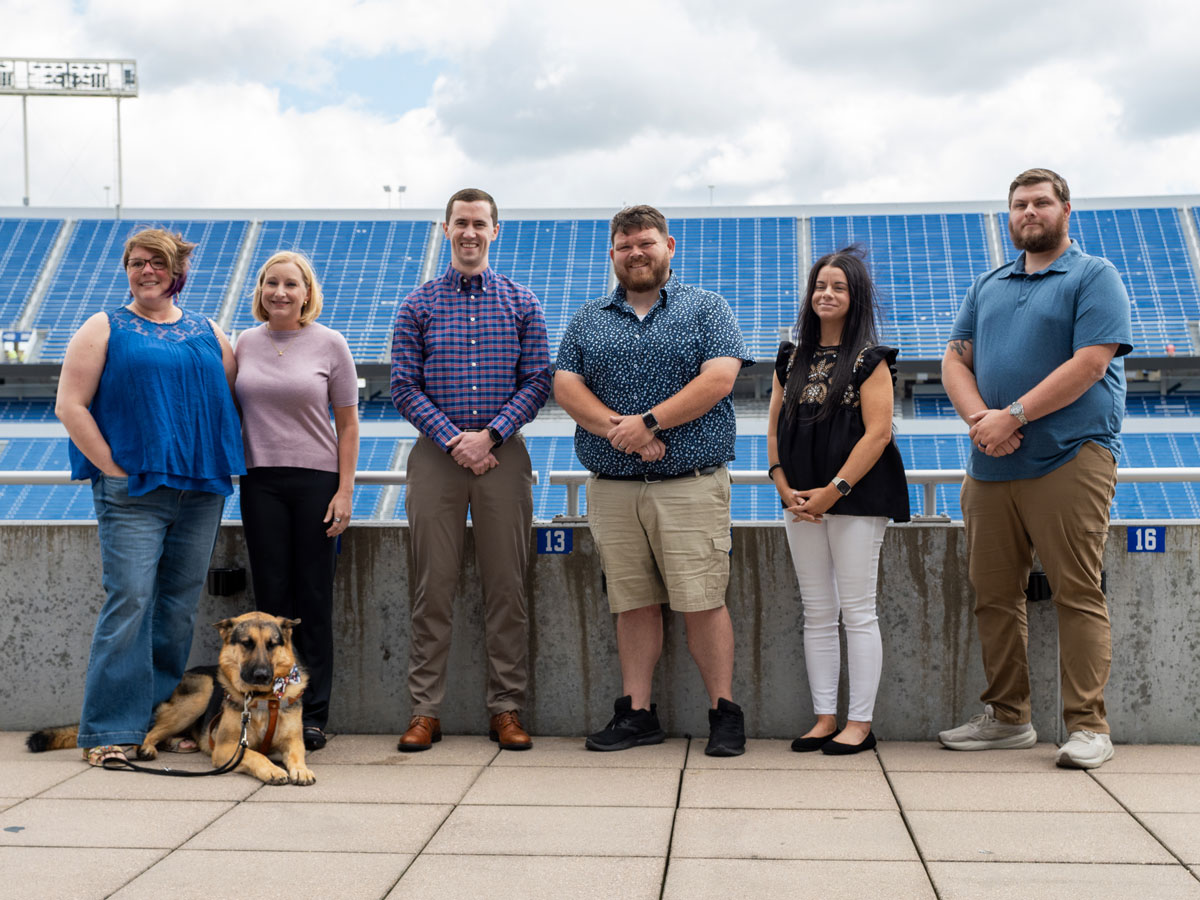
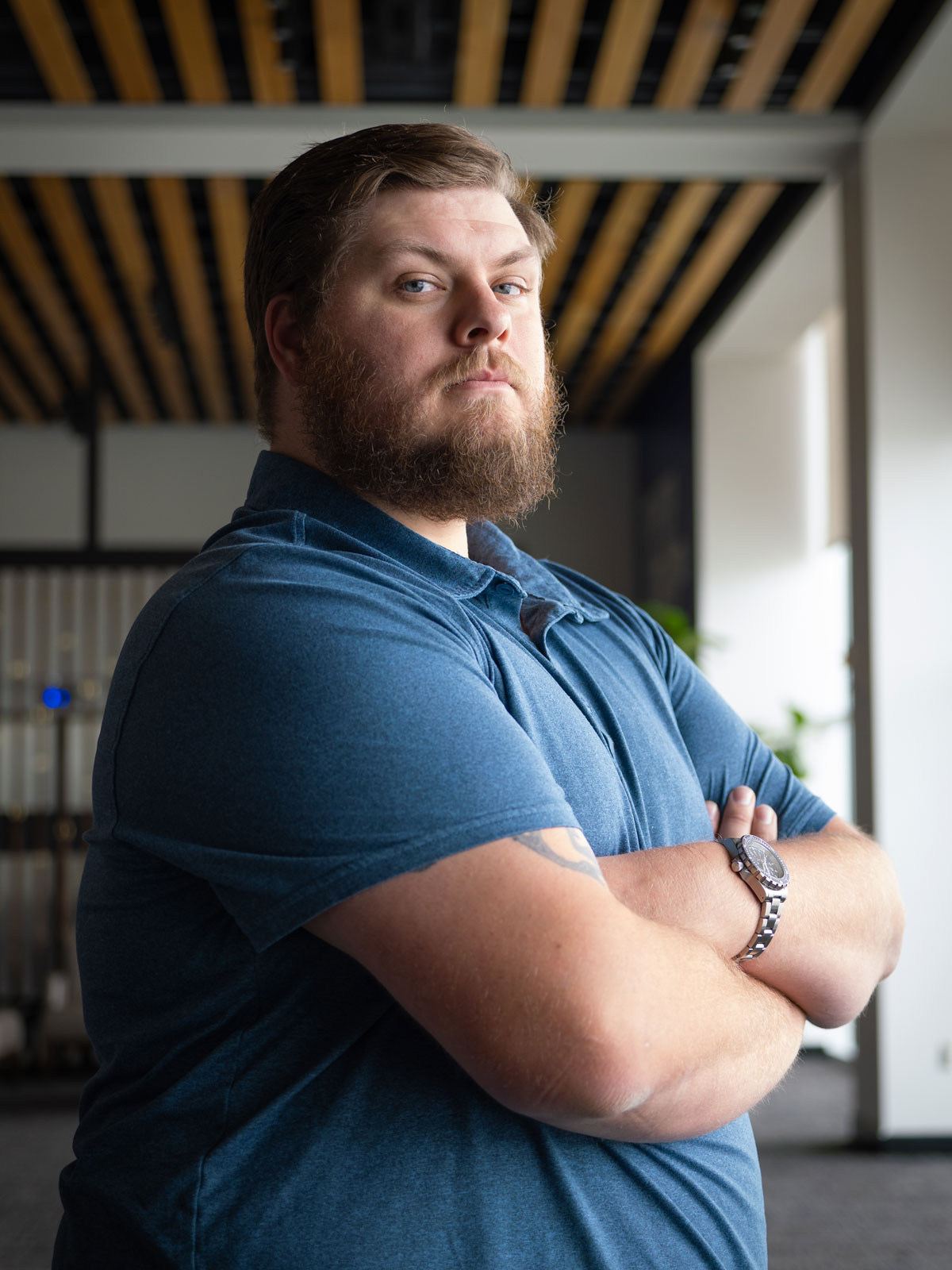
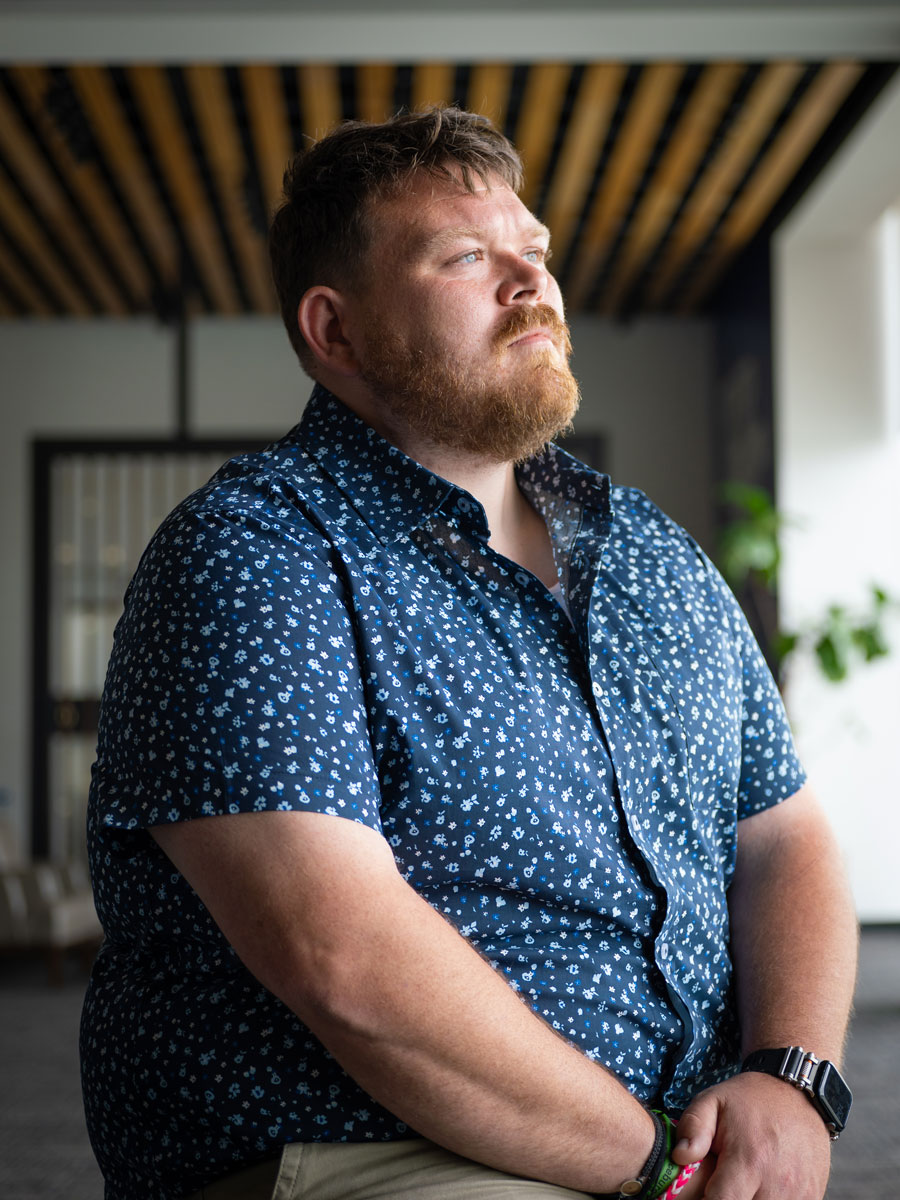
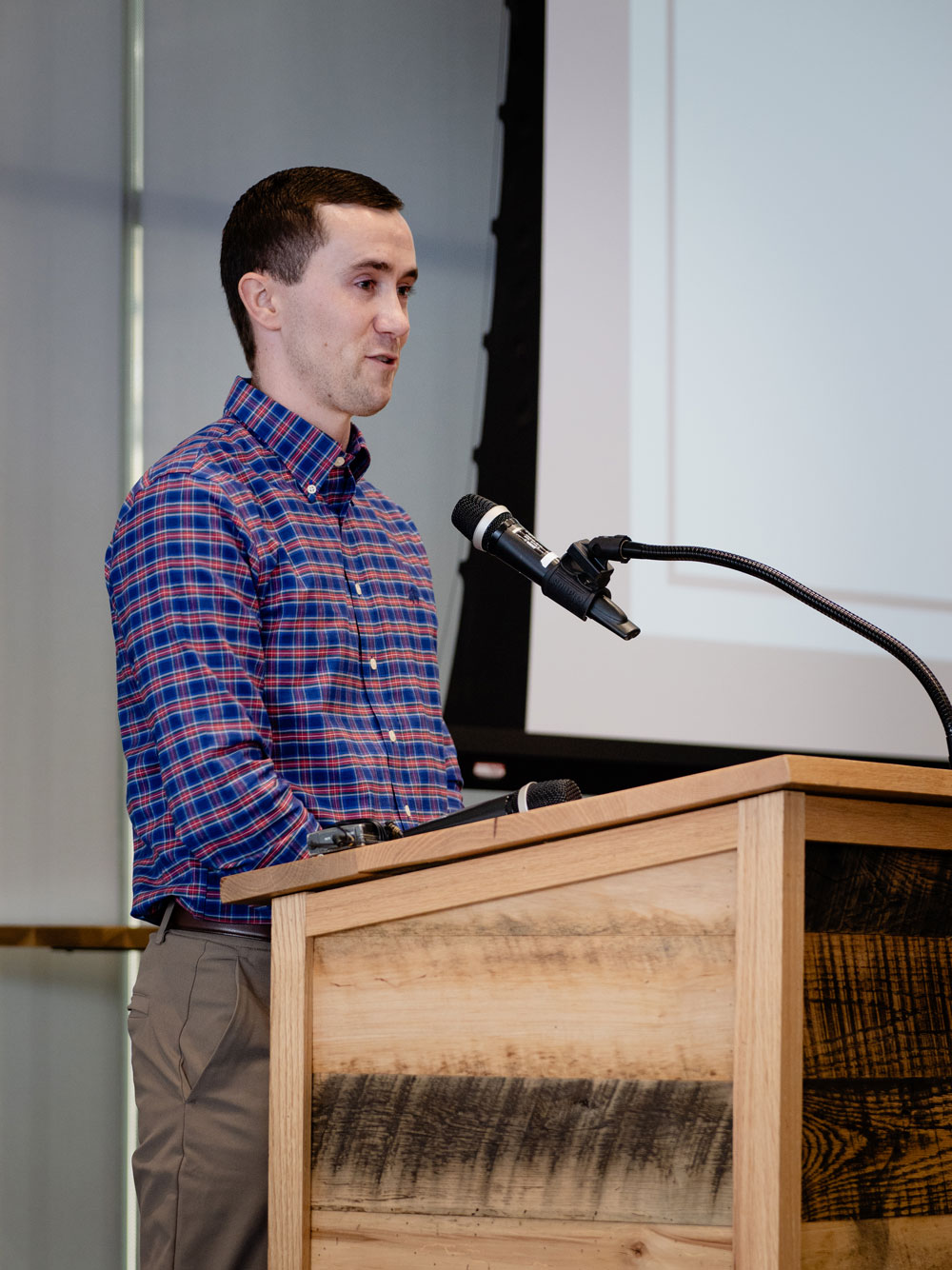
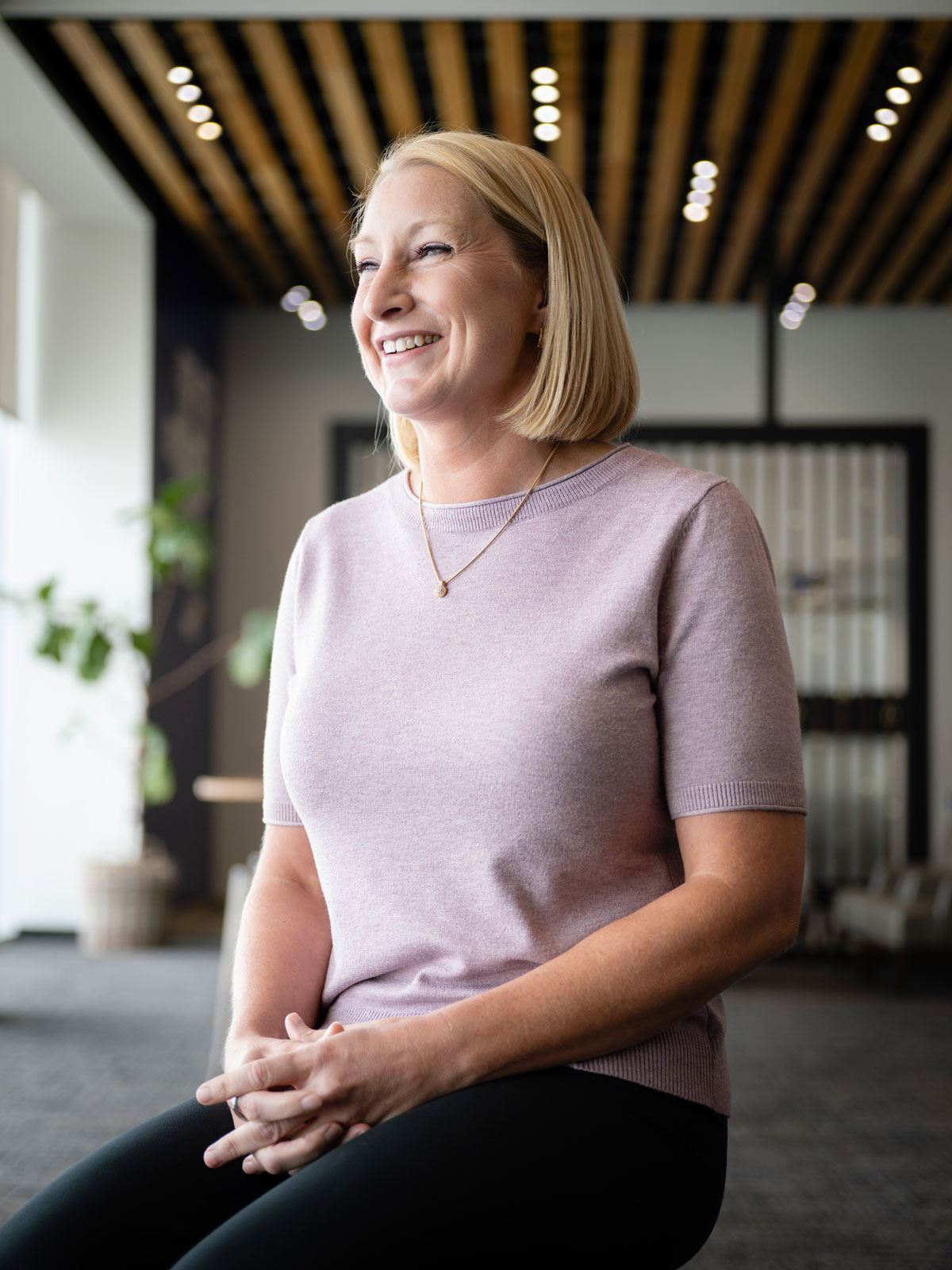
Below you'll meet six survivors — John Arvin, Zach Cotton, Vince Gouge, Dawn Miller, Karen Poynter and Katie Rhea — who shared their story at this year's event. We thank them for sharing their stories of perseverance.
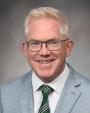
John Arvin
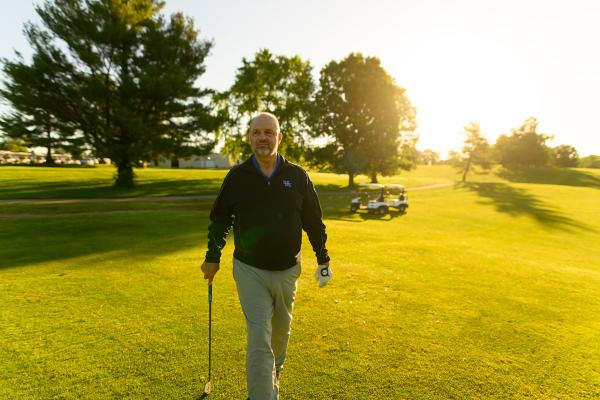
On Feb. 27, 2024, John Arvin was unrestrained in the back of an ambulance, heading to UK’s Albert B. Chandler Hospital with a 3-year-old girl who needed surgery, when it rolled over during an accident.
John was unrestrained because he was there to help: he’s a paramedic based out of Estill County. His instincts kicked in immediately after the crash.
“I stayed conscious through the whole thing,” John said. “And my first thoughts were ‘I’ve gotta get up from where I’m at and start helping people.”
But John couldn’t get up. He was paralyzed on his left side.
“I tried so hard to get up,” John said. “To go from being the help to being helped is not fun.”
EMS arrived on the scene and got all parties to their original destination. John suffered several spinal injuries, including a complete tear of the nerve root in his cervical spinal nerve 8 and a partial tear of the root in his thoracic nerve 1. After surgery, he spent a couple of weeks in the trauma ICU before going home in a wheelchair.
John was home for 15 days before he was back in the hospital. While helping his 10-year-old daughter attend a horseback riding lesson, his chair got stuck in some gravel. He urged his wife and daughter to go ahead while he dealt with what seemed like a brief hurdle. He then passed out in his chair and woke up at UK HealthCare, where doctors discovered a large pulmonary embolism.
Dr. John Gurley performed the cannulation — the placement of tubes in the large veins and arteries — for John’s temporary placement on ECMO. ECMO is a life-support system that did the work of John’s heart and lungs while the clot was treated. He was on ECMO for four days and discharged a couple weeks later.
John, who has regained mobility, is no longer able to serve in the field but continues to help people as a dispatch officer.
“Every day is hard,” John said. “I can’t do the things that I used to do. … Don’t give up. There’s people who need you whether you are who you were or not. People still need you. The world still needs you.”
Zack Cotton
“We’re not victims. We’re victors.”
On January 27, 2017, Zack Cotton and a friend were messing around with guns at his home in Lawrenceburg.
Zack , who is now an animal control director, had never been a fan of firearms but was starting to learn about them to bond with his father. He and his friend were racing to disassemble and rebuild the guns, one of which had a bullet in its chamber.
That gun accidentally fired two feet away from Zack and barreled a bullet into the right side of his face. It came through the left side of his neck. Zack was sure he was going to die.
“I stood straight up, ran to my laundry room and I asked God to forgive me,” Zack said.
He remained conscious enough to recognize the deputy who arrived on the scene, and to lift himself onto the stretcher when EMS followed. Against paramedics’ advice, Zack refused to lie down all the way through an eight-minute helicopter ride to UK’s Albert B. Chandler Hospital.
Zack’s airways closed not long after his parents arrived at UK HealthCare. Multiple surgeries followed that night: his right jaw was destroyed, his voice box “looked like hamburger meat,” and it wasn’t clear that he would be able to ever breathe on his own again.
But Zack not only breathes on his own today but speaks as clearly and loudly as ever. A traumatizing event has reaffirmed his faith and belief in all that’s good in the world.
“My parents were prepared for the worst,” Zack said. “ … That last day, when they were gonna send me home, God told me to grab my trach(eotomy) hole and said, ‘Speak.’ And now you can’t get me to shut up.
“If it wasn’t for the people at UK to be diligent and do everything in their abilities, I wouldn’t be here today.”


Vince Gouge
As a pediatric resident at UK HealthCare, Vince Gouge was used to grueling days and sleepless nights. But nothing could have prepared him for what came on Oct. 28, 2023.
Vince and his wife, Kaylee, also a resident at UK HealthCare, were driving home from a family gathering in Versailles when their car was struck head-on. The impact pinned Vince inside the vehicle, breaking both his tibia and femur, shattering his face and fracturing his skull. Kaylee, largely unscathed physically, saw her husband slumped unconscious beside her, his blood pooling in the cup holders. She thought he was dead.
EMS arrived quickly. Kaylee’s father, also a physician, was on the scene within minutes. Vince was rushed to UK’s Albert B. Chandler Hospital where surgeons spent four hours reconstructing his face. His leg required a graft using a rotated calf muscle and skin from his other leg. Vince also had a moderate traumatic brain injury and severe concussion. He spent 10 days in the hospital followed by extensive rehab.
“The day that I was discharged from rehab would have been the three-year anniversary of my running streak,” Vince said. “At the time of the wreck, I had run at least one mile over 1,000 days in a row.”
Recovery was slow. Additional surgeries followed, including one to treat a bone infection. Vince, then in his second year of residency, couldn't walk, work or live independently. Home modifications were needed. Kaylee, while processing her own trauma, became his full-time caregiver.
“She was an absolutely amazing caretaker and truly did everything around our home and for me for months on end,” Vince said. “ … Her bedside manner is amazing.”
Vince and Kaylee are on the cusp of applying for fellowships. He is walking, back at work and fighting to run again. He still deals with daily leg pain and swelling. But he’s free of follow-ups and close to achieving a new goal: running one mile at least five days a week.
“It’s something you definitely never hope to be a part of, the patient side of things,” Vince said. “ … But seeing firsthand and experiencing the power of what our surgeons can do? It’s been pretty unbelievable.”
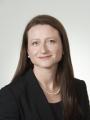
Dawn Miller
Officer Dawn Miller was driving home after a late shift with the Lexington Police Department on April 12, 2021. She’d picked up an overtime shift for the next day and was heading home to catch a few hours of sleep. She doesn’t remember much after spotting headlights coming at her on New Circle Road.
Dawn was hit head-on by a driver who was going the wrong direction on the inner loop of New Circle. The other driver didn’t make it. Dawn almost didn’t, either.
It took firefighters 30 minutes to cut her from the wreckage. Her legs were pinned. Her pelvis was shattered. Her ankle, femur, ribs, arm and collarbone were broken. She had a torn aorta and other internal injuries. Her pelvis had taken such force that her left leg was shoved five inches into her hip.
Doctors at UK Albert B. Chandler Hospital performed several surgeries over the course of multiple days to save her life. Dawn experienced a stroke, caused by blood clots released from all her internal damage, during her second day of a two-week stay at UK. She then continued her recovery at Cardinal Hill Rehabilitation Hospital, where she spent a month.
“They initially thought I wasn’t going to live,” Dawn said. “Then they thought I probably would never walk again. I’m so glad no one told me these things until much, much later. I was oblivious, so I just did whatever they would tell me to do and kept at it.”
After leaving Cardinal Hill, Dawn was able to stay in a hotel near police headquarters, where she could take her wheelchair to the office to be with her found family. A latecomer to the force, she had entered the police academy at 36.
Following the accident, Dawn regained her ability to walk. But she no longer felt like she could physically do what she swore to do: protect people. Dawn retired but currently works at the station part-time as a clerk.
“That keeps me connected with lots of people that I know,” Dawn said. “ … I suspect eventually I’ll figure out another career path, but for now it gives me a lot of flexibility so that I can go to counseling, do physical therapy, workouts and all of the stuff I need to do to get emotionally, mentally and physically back on track.”
Karen Poynter
Karen Poynter’s car hit a guardrail on April 15, 2024. It launched and flipped multiple times before landing. If not for a driver behind who saw it, Karen may not have made it alive from Somerset to UK’s Albert B. Chandler Hospital.
EMS arrived within five minutes and arranged for Karen’s flight to Lexington. By the time she came to six days later, she had already undergone seven surgeries. Both legs were severely injured, but even more concerning was the trauma to her abdominal organs: two-thirds of Karen’s large intestine had to be removed, and a stent was placed in her abdominal artery to prevent a rupture. She also required a large vacuum-assisted closure (VAC) over her abdomen and an ostomy bag, which doctors hoped would be temporary.
Upon learning all she endured, Karen was shocked but grateful.
“I don’t remember much from the first week after waking, but I remember thanking God for sparing my life and being amazed when just trying to consider everything Dr. (Meir) Meerkov, Dr. (Andrea) Doud, Dr. (Danielle) Detelich and others went through that night I was brought to the hospital, and how hard they fought to save my life.”
Karen spent 45 more days in the hospital, undergoing more surgeries and befriending many nurses.
“One great thing about being in a hospital for a lengthy stay is you get … the pleasure of meeting some amazing nurses,” she said. “I had a pretty difficult wound VAC that I know made their job extra tedious and stressful, for them to change it every other day, but their main concern was always me.”
After two months confined to bed, Karen began learning to walk again. By January of this year, she had her 16th and final surgery: abdominal wall reconstruction and ostomy reversal. At a follow-up in April, Karen was cleared.
“Hearing that made me a little sad,” she said. “A year ago, there was this stranger that stayed up all night operating on me. She had spent the last year methodically coming up with the best plan … to help give me the best future. Dr. Detelich and so many others became so important to my life, it was definitely bittersweet to thank her, tell her ‘bye,’ and walk out of that office for like — hopefully — the last time.”
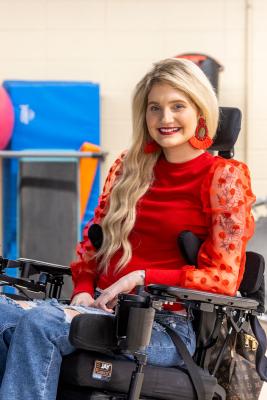
Kati Rhea
“I was stuck laying there under the ATV with my face smashed.”
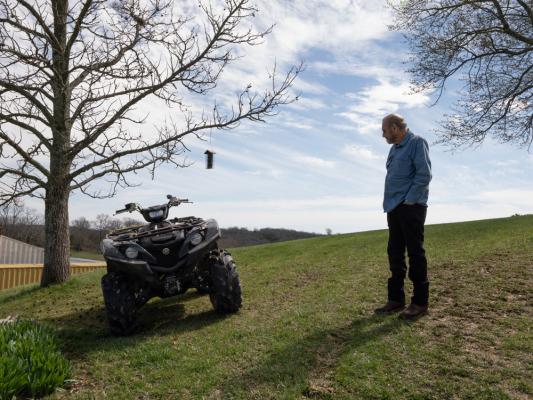
Kati Rhea and her fiancé, Todd, were preparing their farm to host their wedding. They were riding across the property in a utility terrain vehicle that had a flat tire, discovered only once it got snagged by a gopher hole. Kati and Todd were launched skyward.
Todd landed away from the UTV, but Kati ended up underneath it. The roll bar struck her across the eyes. Todd pulled her from the wreckage and, with the help of a neighbor, got her to a main road from where she could be airlifted to UK Albert B. Chandler Hospital.
Kati’s face was shattered — doctors described it as having turned to “pea gravel” — and her vision was gone. One eye was destroyed and blood flow to the other was so restricted that her sight level was like “looking through a straw underwater.” If she hadn't had a tiny auxiliary blood vessel found in less than five percent of people, it too would have been completely lost.
Kati was unable to return to her job as a police officer in Lexington. More than 70 would-be employers were uninterested, skeptical that a blind woman could meet their needs. “People treat you like you’re broken,” Kati said. “They think you can’t do anything.”
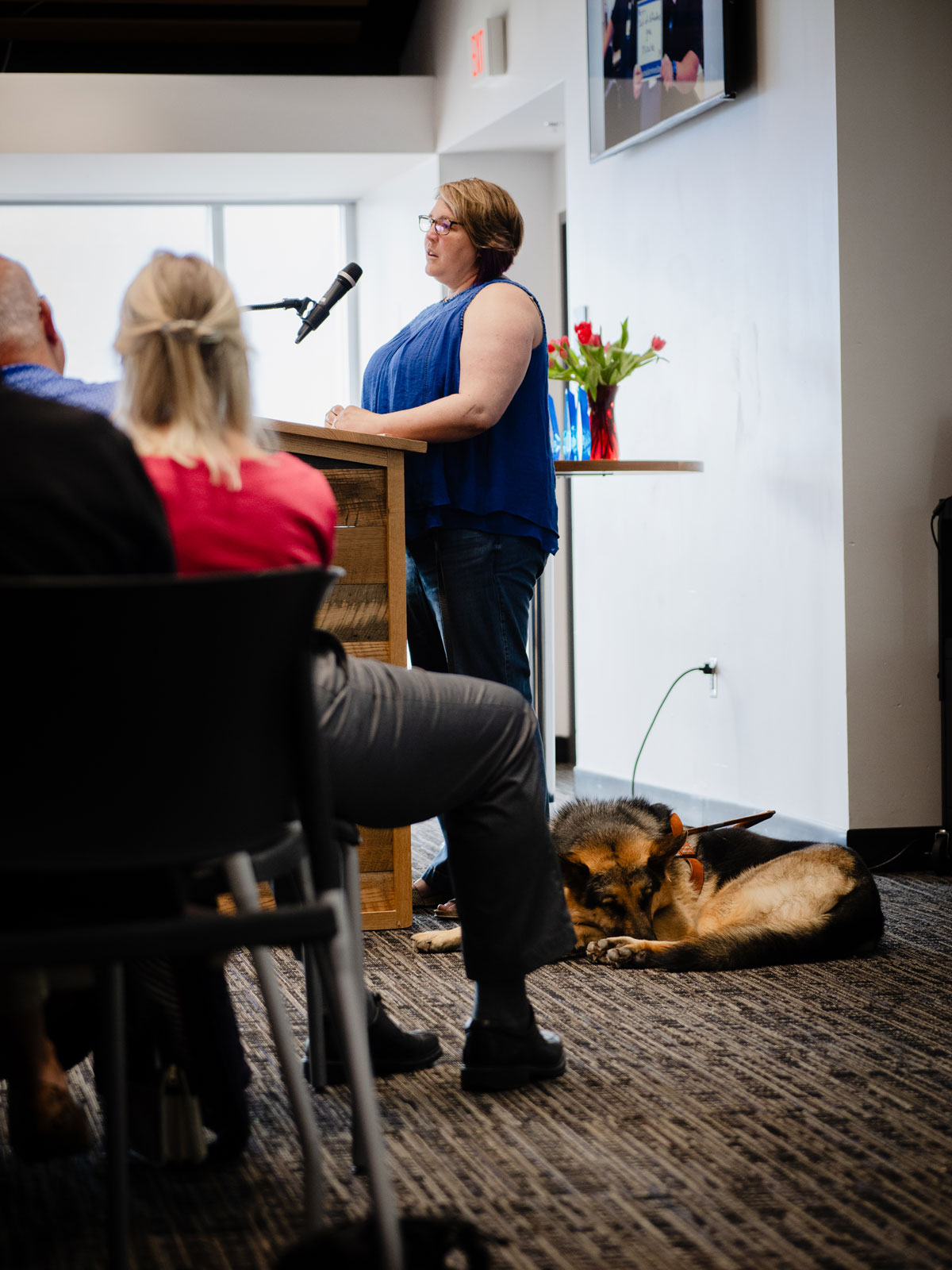
But she was determined. Kati turned to woodworking as a hobby before launching it into a business: Blind Design. She creates custom tables, cutting boards, and signs from her shop on the farm, aided by a German Shepherd named Kale. Kati uses her remaining sight and sense of touch to read wood grain and create by feel, adapting to her limitations with remarkable creativity.
“I just said, ‘Let’s see if I can make this work and not lose any more body parts,’” Kati said with a laugh.
Kati’s resilience is fueled by her deep faith and her unwavering bond with Todd, who never left her side. They married soon after the accident and together they learned how to live with blindness.
With over 40 surgeries behind her and a guide dog by her side, Kati is a powerful advocate for trauma survivors and people with disabilities.
“I wasn’t even supposed to make it to the rooftop of UK. I was supposed to be DOA,” she said. “But I’m here. And that means something.“