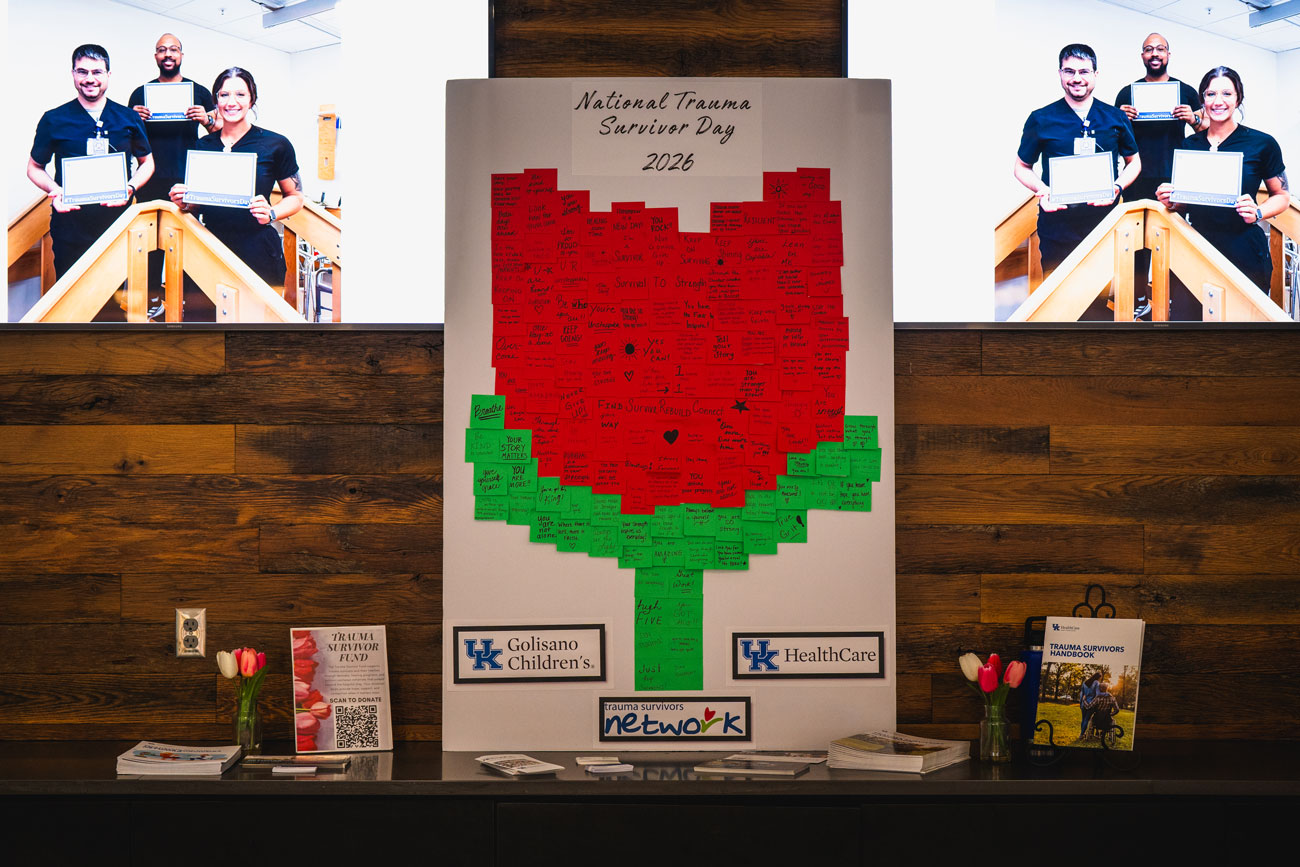
National Trauma Survivors Day 2026
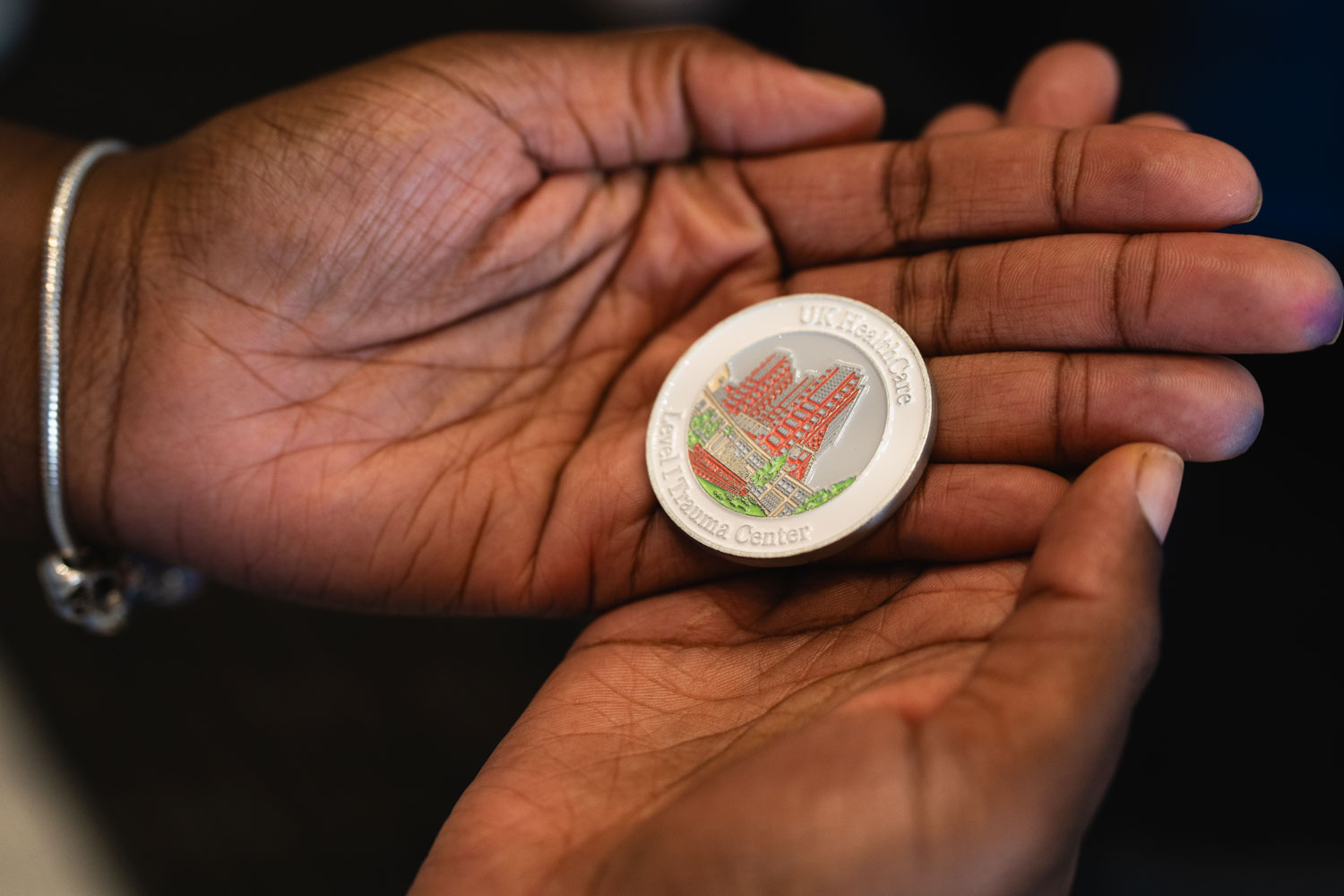
UK Albert B. Chandler Hospital is the only Level I Trauma Center dedicated to Central and Eastern Kentucky. This means the trauma program at UK HealthCare is equipped to handle the most serious emergencies.
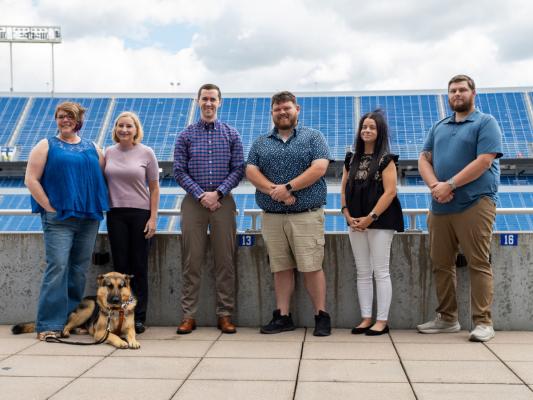
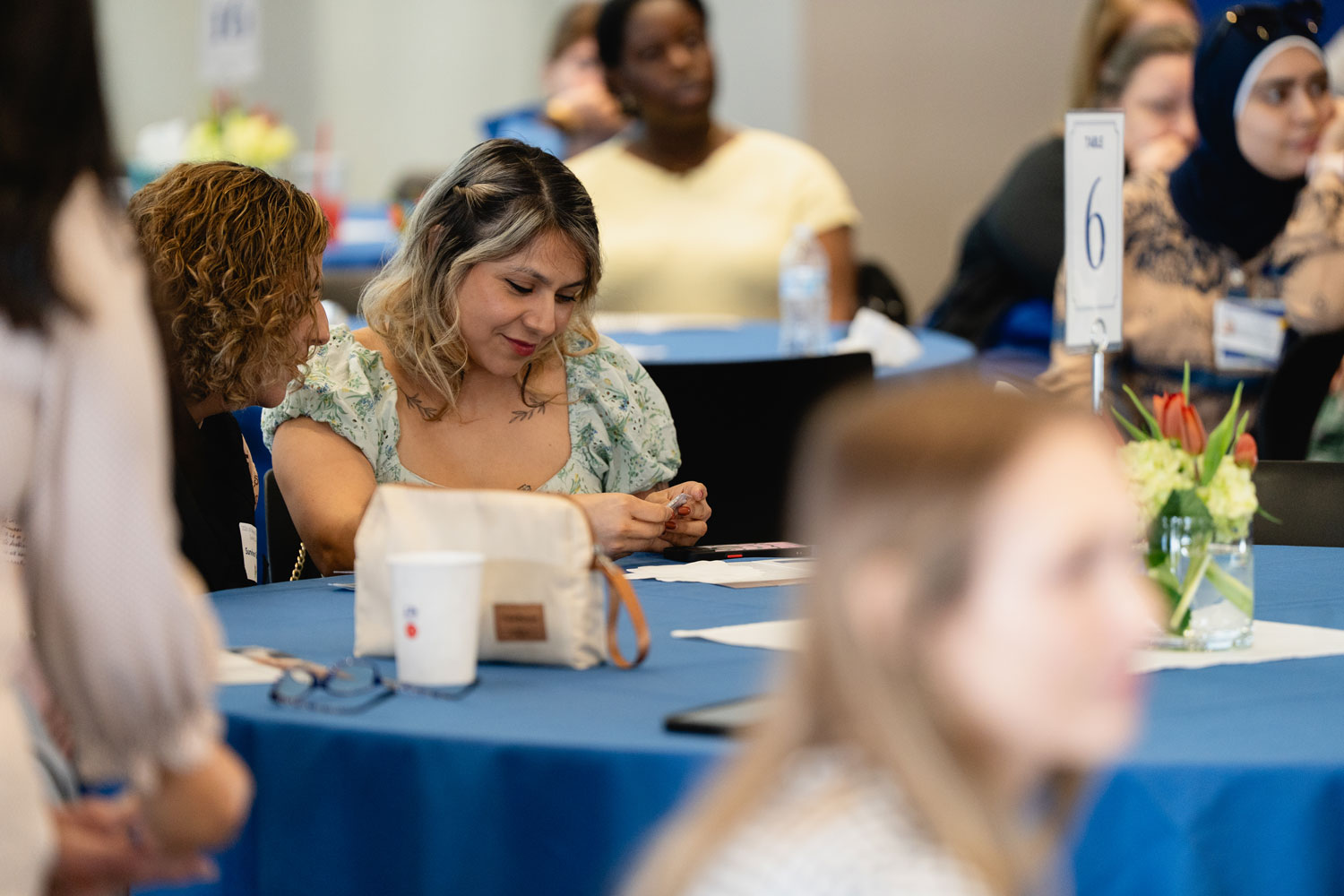
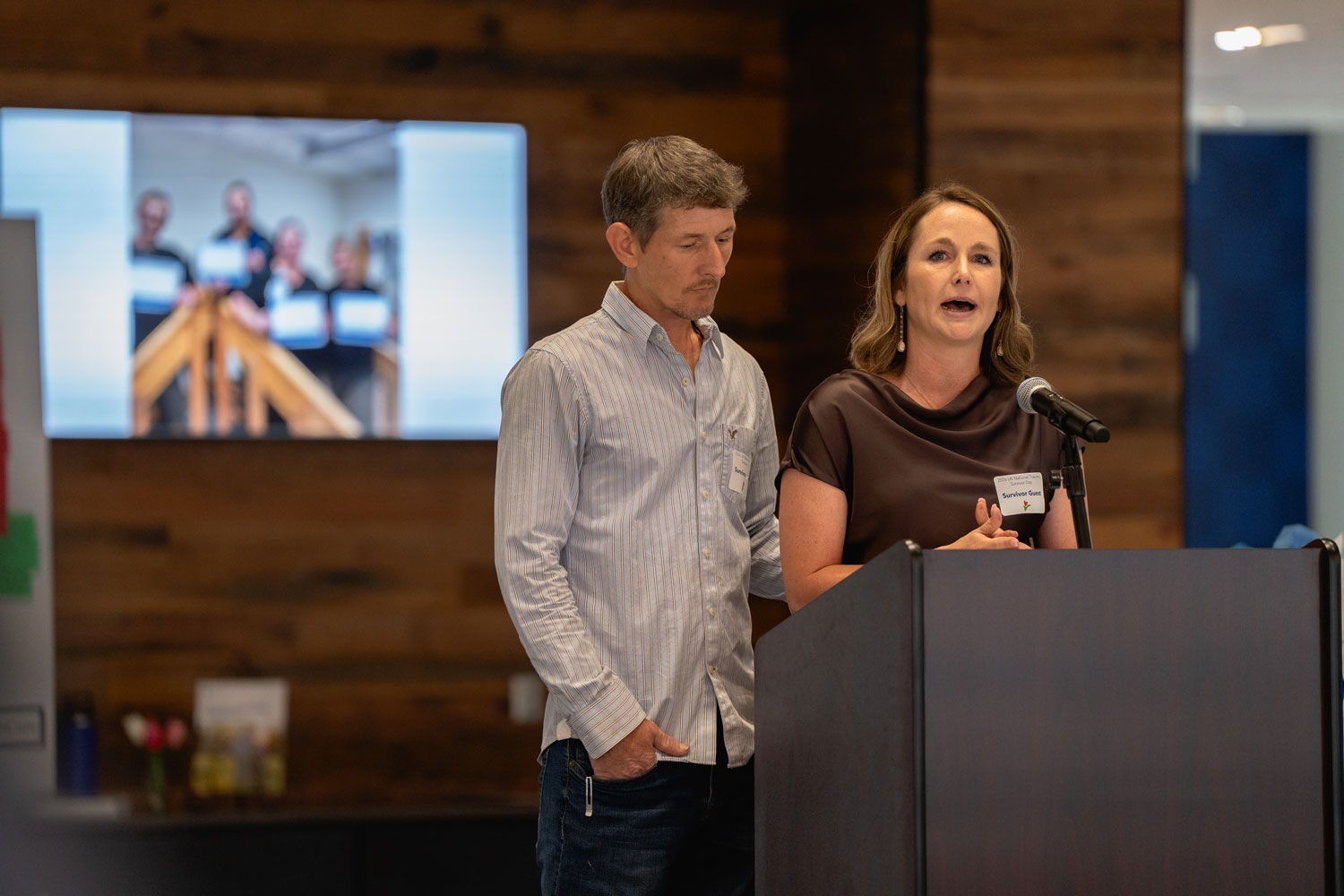
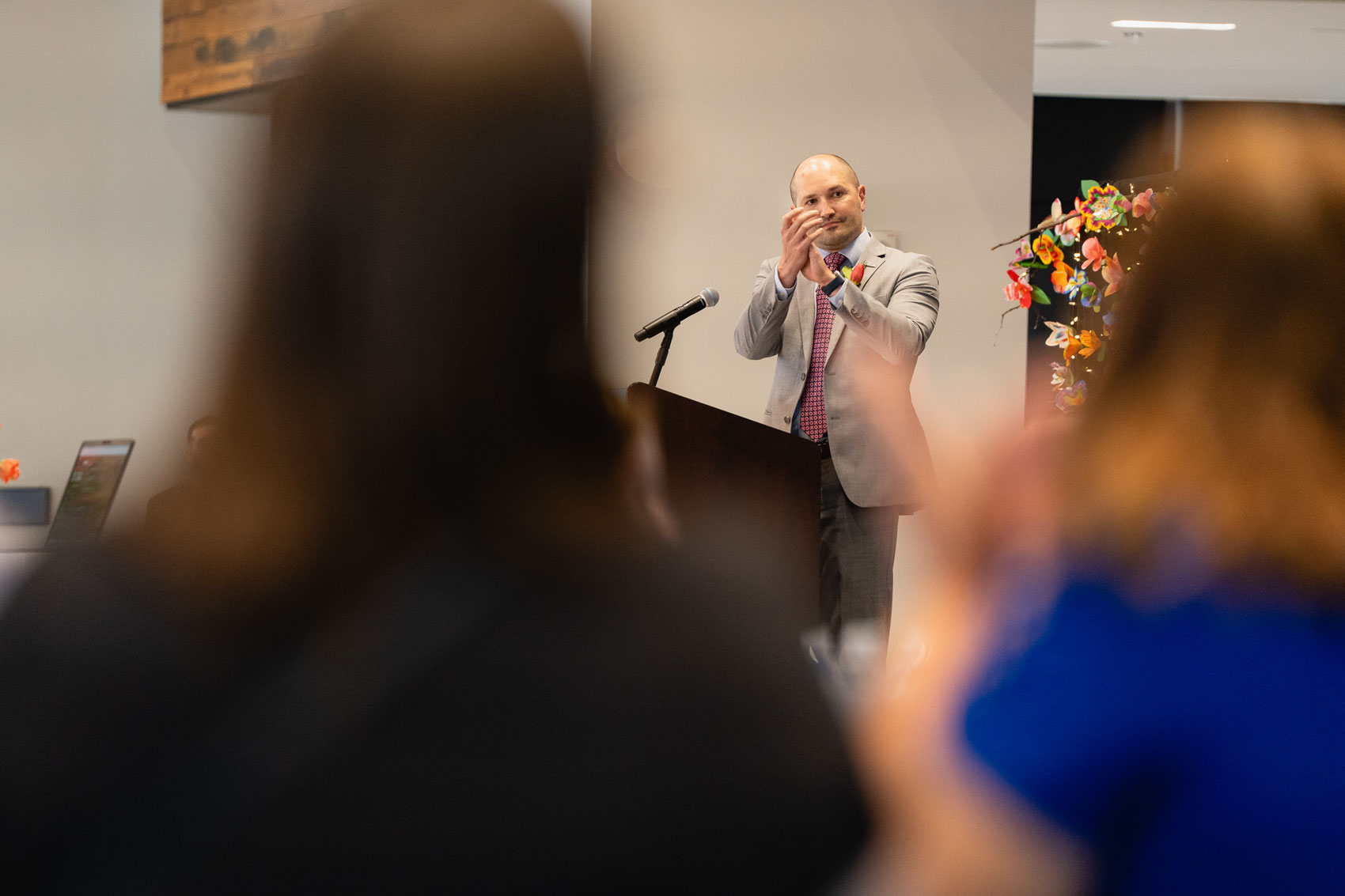
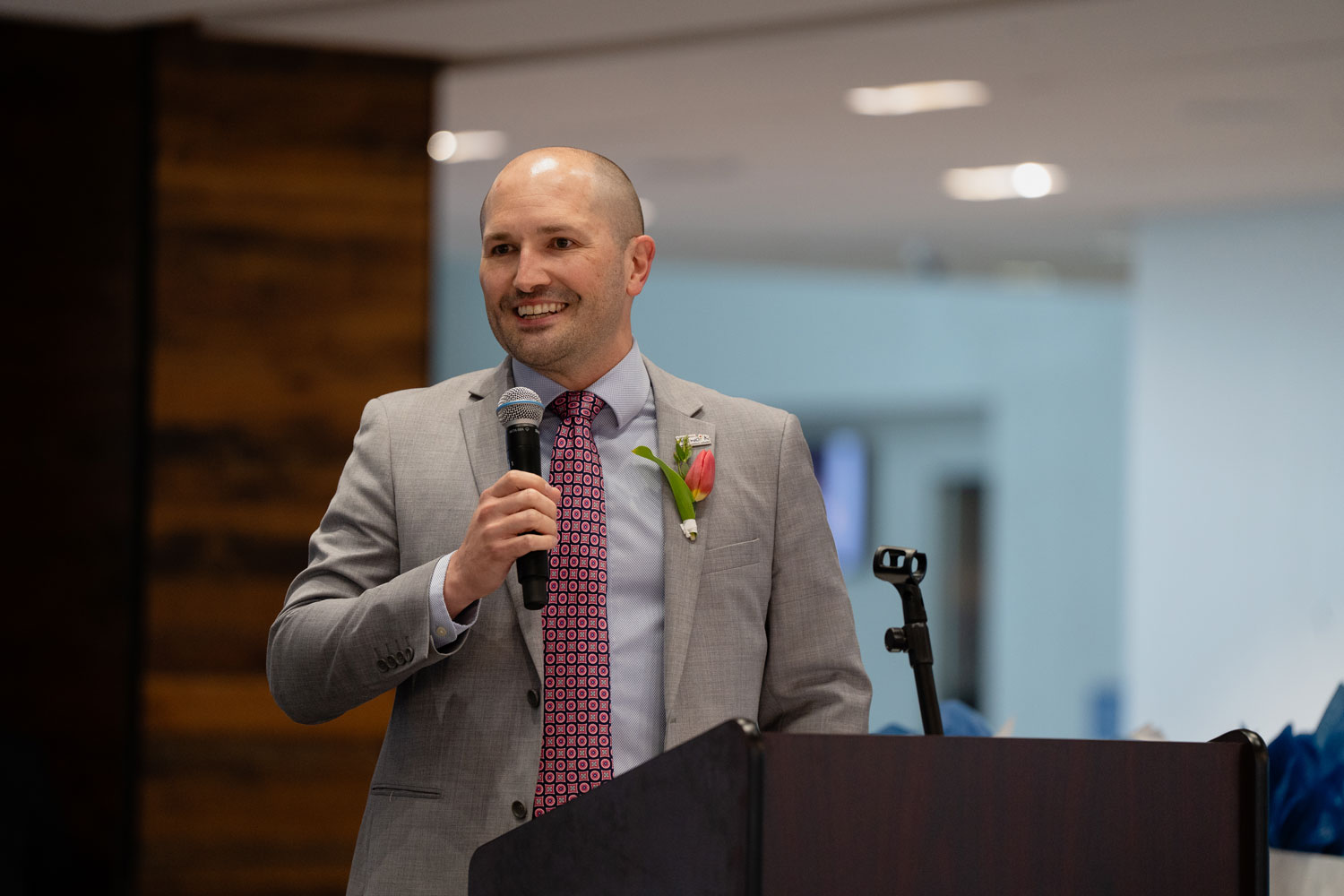
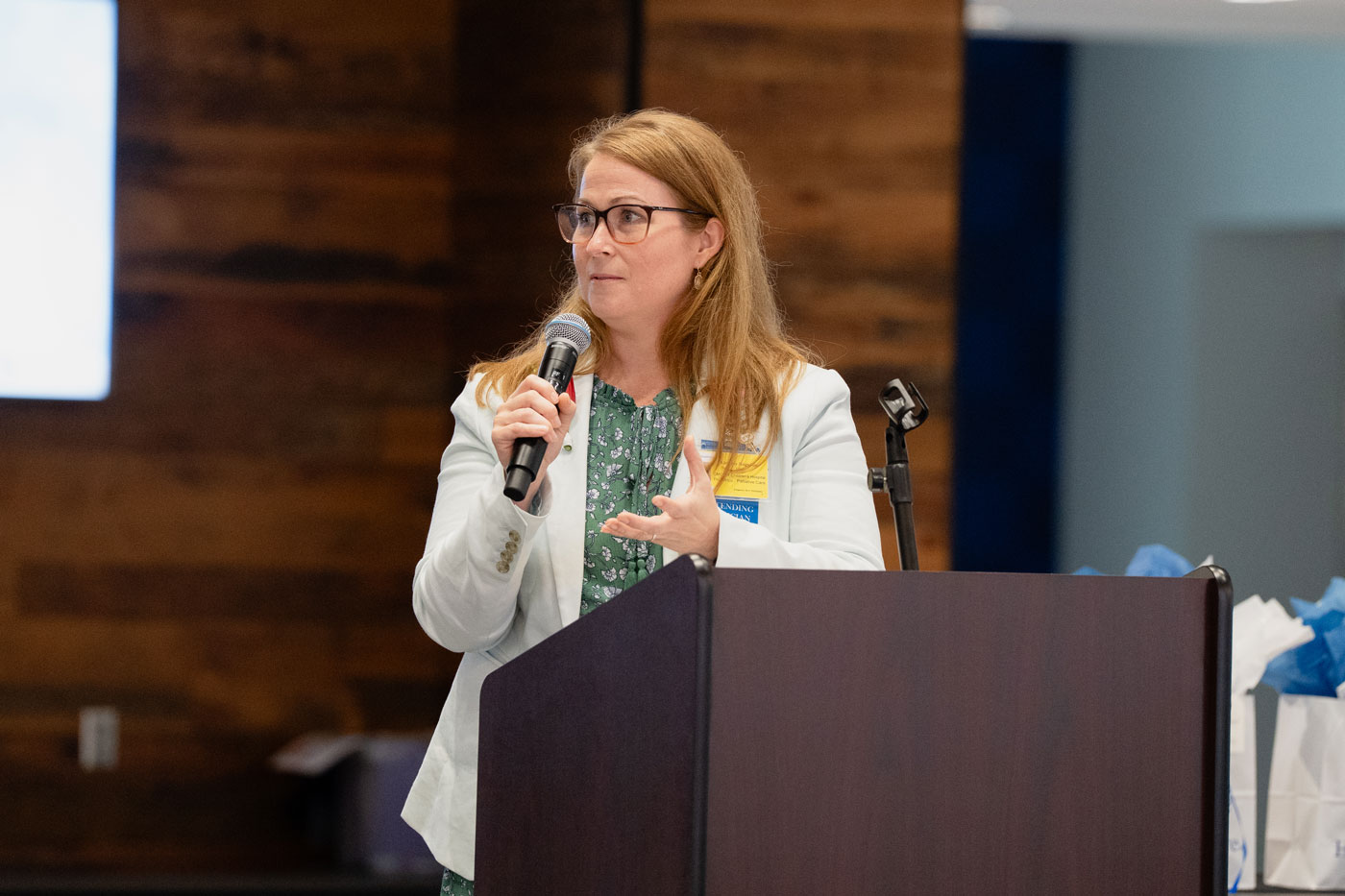
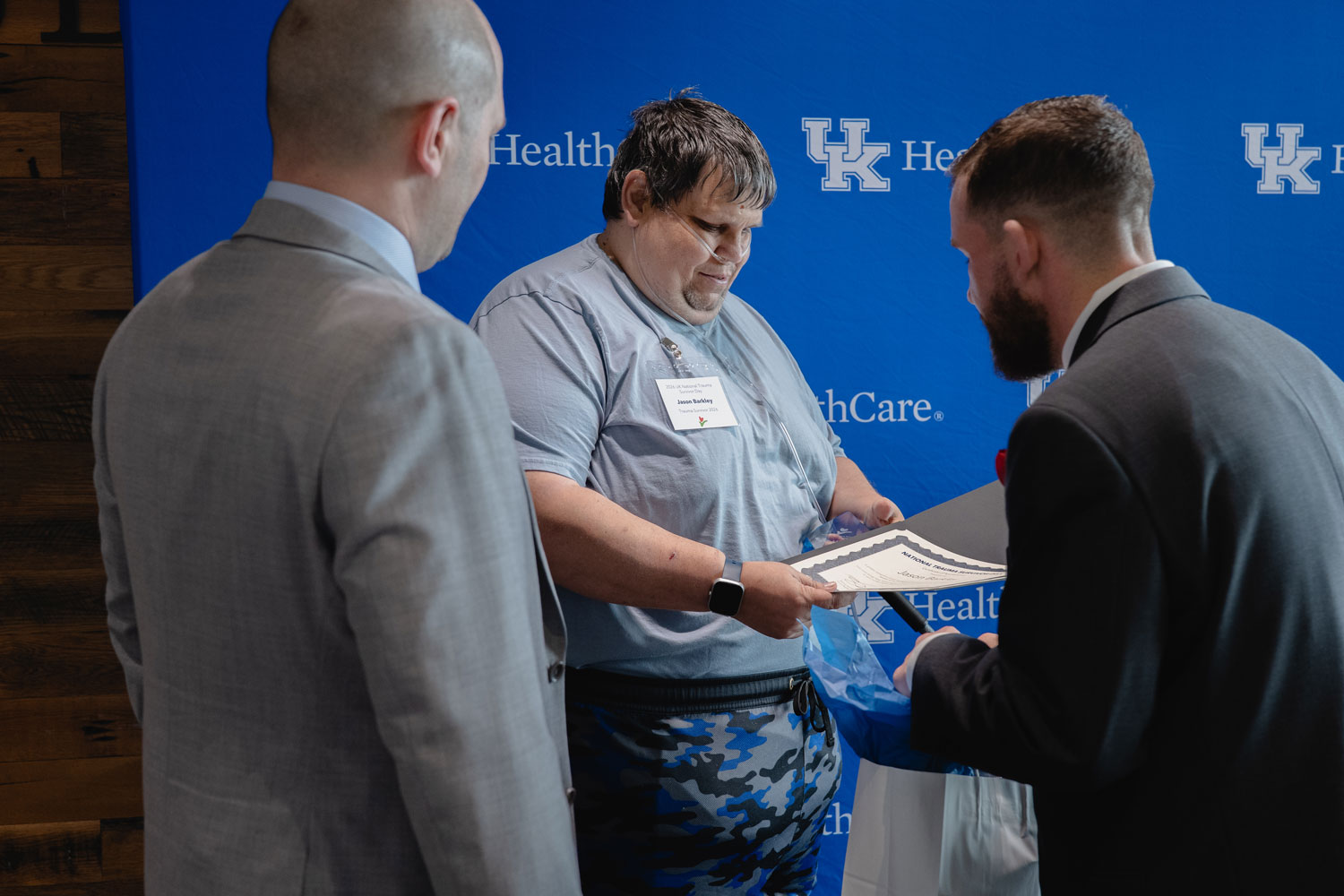
Every year in May, in conjunction with National Trauma Survivors Day, UK HealthCare invites past trauma survivors who've come through our emergency department to be honored during a special event where survivors get to:
- share their stories
- celebrate the family, friends and providers who made their survival possible
- and form a community with other survivors of trauma
In 2026, UK HealthCare expanded its celebration to include pediatric trauma patients and families alongside adult recovery stories.
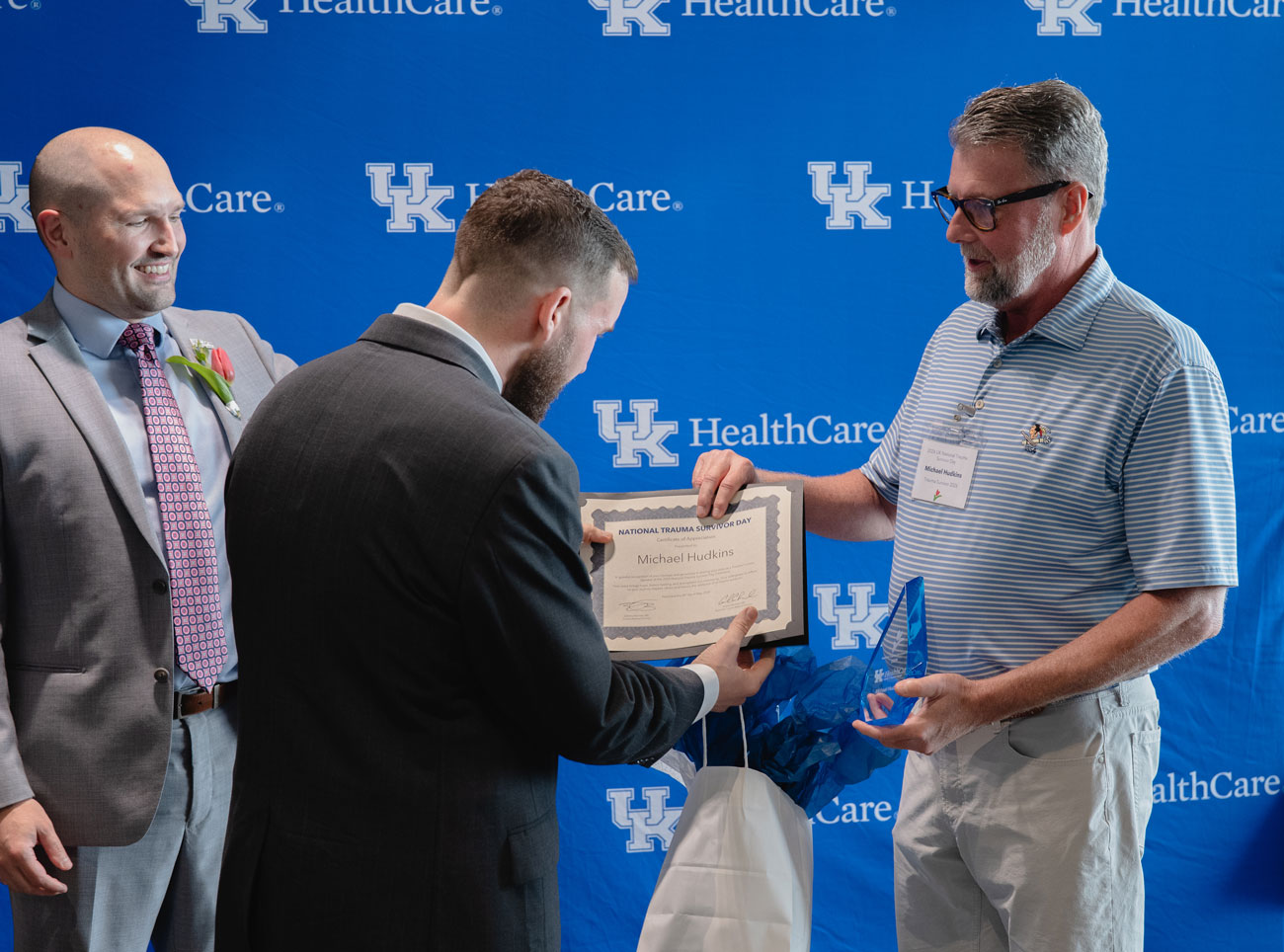
Below you'll meet five survivors — Oliver Blair, Maria Fuentes, Holly Harrison, Michael Hudkins and Jerry Gumm — who spoke with our team during this year’s event. We thank them for sharing their stories of perseverance.
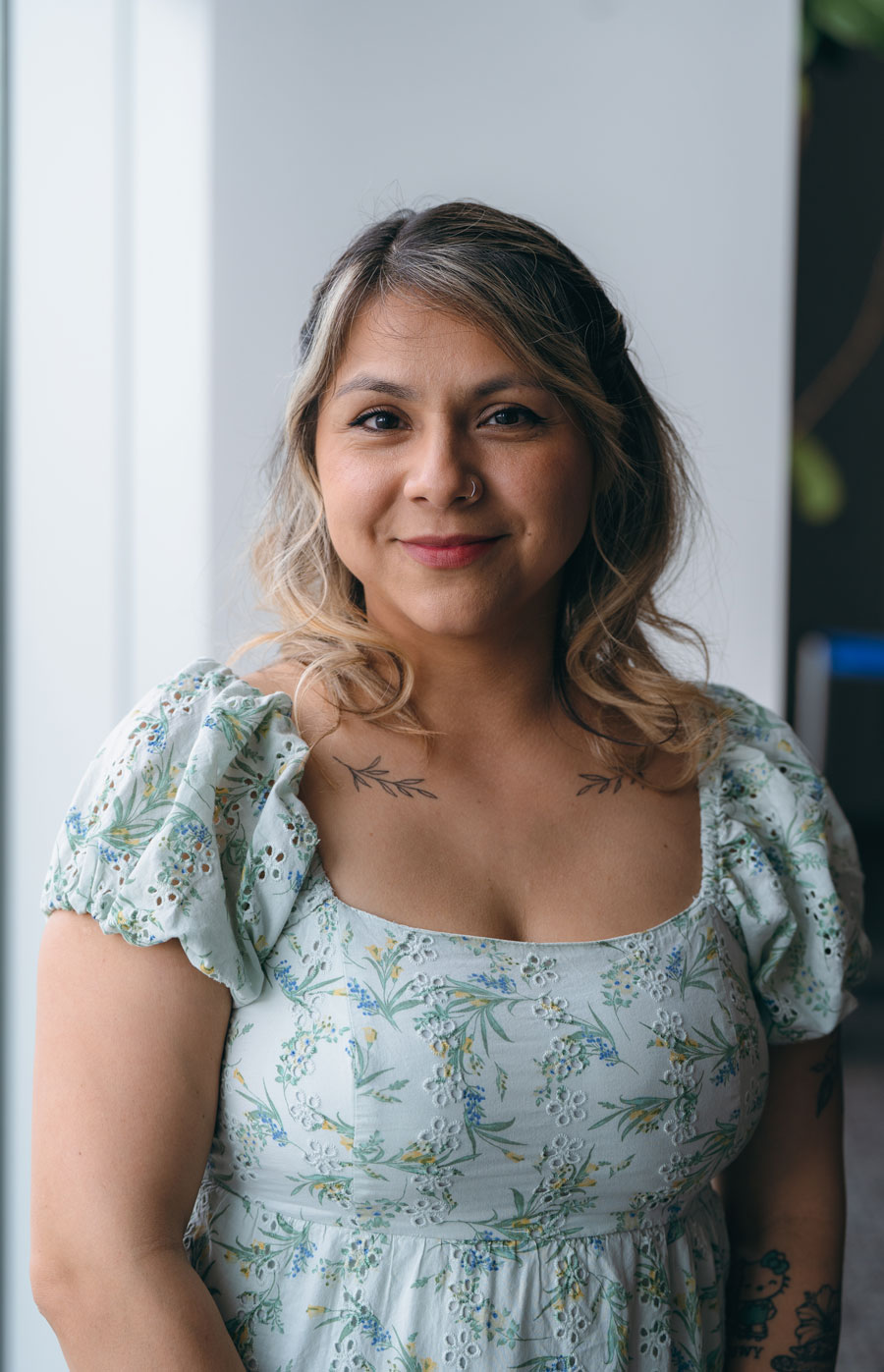
Maria Fuentes
In September 2021, a boating accident at Lake Cumberland left Maria Fuentes with a devastating injury to her left leg. She was airlifted to UK Albert B. Chandler Hospital.
In some ways, Maria's recovery was more difficult mentally and emotionally than physically. She was fitted with a prosthetic within three months, but – for a while – she struggled with the sudden loss of independence. At age 31, she had to relearn everyday tasks and adjust to changes in body image and self-esteem.
"I was very healthy and active before my accident, so I healed pretty quick because of that,” Maria said. “But it's been a tough journey getting to where I am now. I'm in a good place in life, but it's took a lot to get here."
During recovery, she rediscovered herself and a new life mission. While in the hospital, one of her nurses asked Maria to pray with her. The gesture inspired Maria, a medical assistant at the time, to become a nurse. While recovering, she earned her LPN and RN, attending school after work.
"I thought that day, 'If I could be that somebody for a patient who's going through something, I want to do that.’”
Today, Maria is a nurse at T.J. Samson Community Hospital in Glasgow, Ky., caring for many orthopedic patients. She believes her experience helps her connect with patients on a deeper level.
"I love to share my story and talk about my struggles with them," she said. "Going through this made me a better nurse. I remember those nurses that cared for me in those tough moments. And I know how much that impacted my life. So, I try to carry myself in that example."
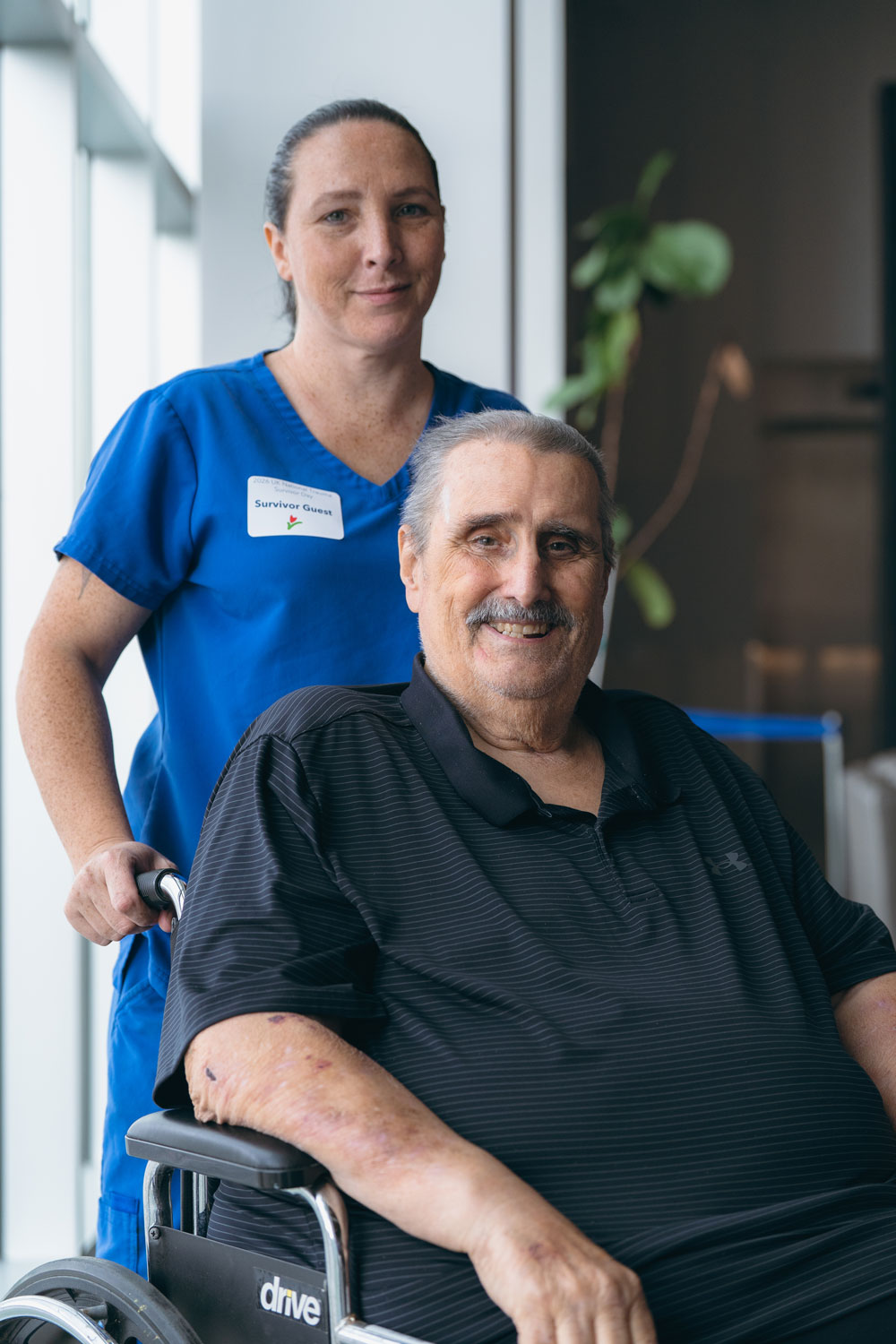
Jerry Gumm
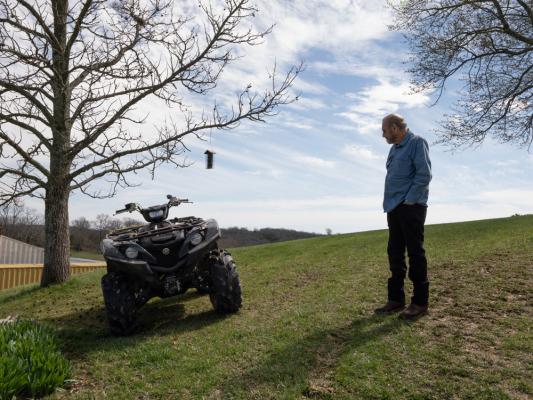
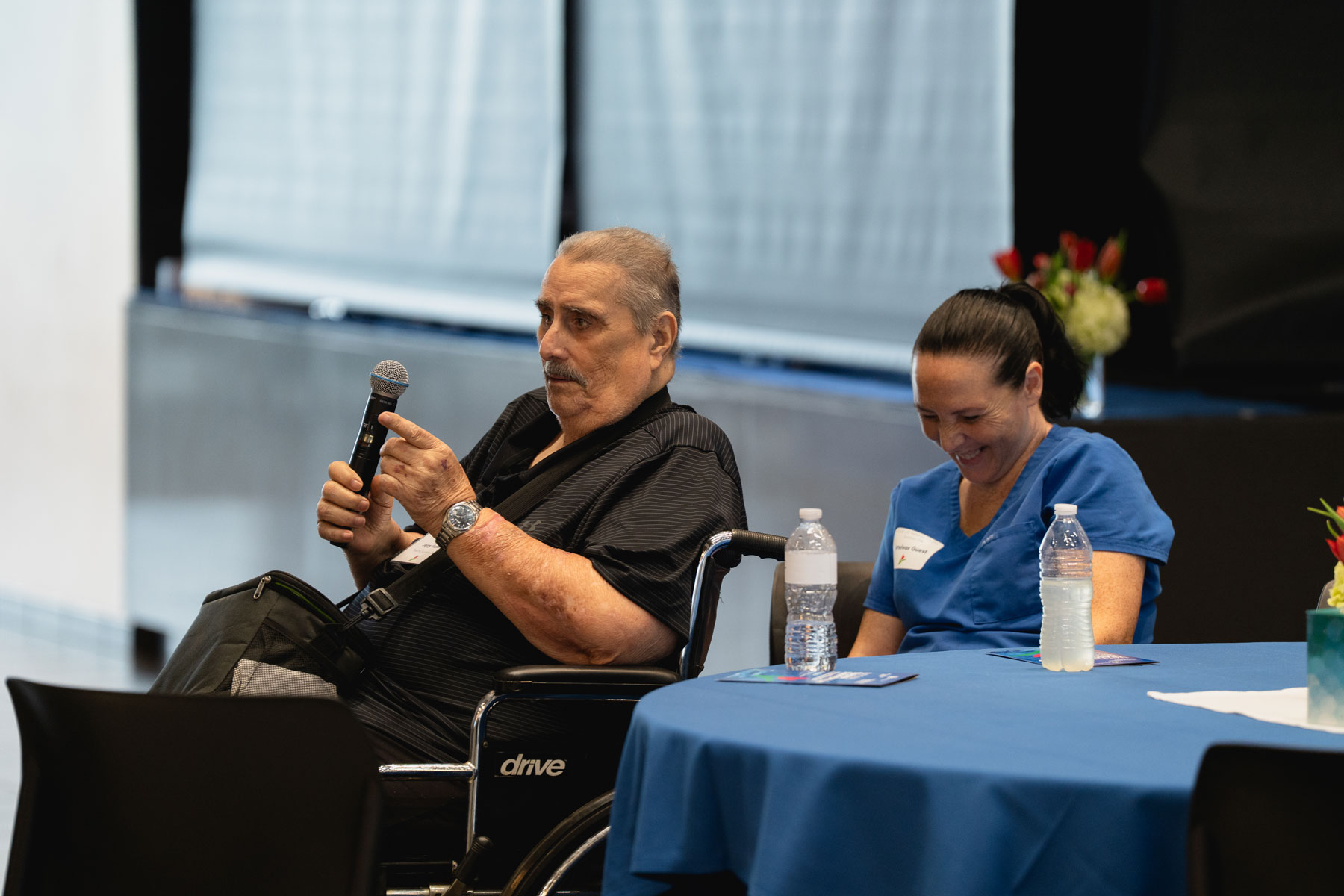
On a summer Sunday in 2025, Jerry Gumm, a pastor at Richmond Road Baptist Church in Lexington, encountered the man who had just entered his church and killed his wife, Beverly, and daughter, Christina.
"He started shooting me, cussing me and taunting me. And next thing I knew, I was off my power chair and on the ground, and the power chair was on my head," said Jerry, who survived the July 2025 shooting along with his son-in-law, Randy. “The police had to dig me out of the dirt.”
Jerry was airlifted to UK Albert B. Chandler Hospital, where he spent time in a coma. His tongue was split from a bullet wound, likely saving him from an impact that would have killed him. His vision and hearing were severely damaged.
"I can't hear and can't see, but I can speak," he said with a grin. He spent nearly five months recovering at UK Chandler Hospital and at Cardinal Hill Rehabilitation Center.
"I don't know where they could have taken me that could have done as well," Jerry said. "UK Trauma Center did the job, and I wish I could see each one of those doctors and shake their hand and thank them for what they did."
A pastor at his church for nearly 55 years, Jerry plans to keep preaching for the rest of his life. The shooting took so much from him, but not his spirit and passion – he returned to the pulpit in January 2026.
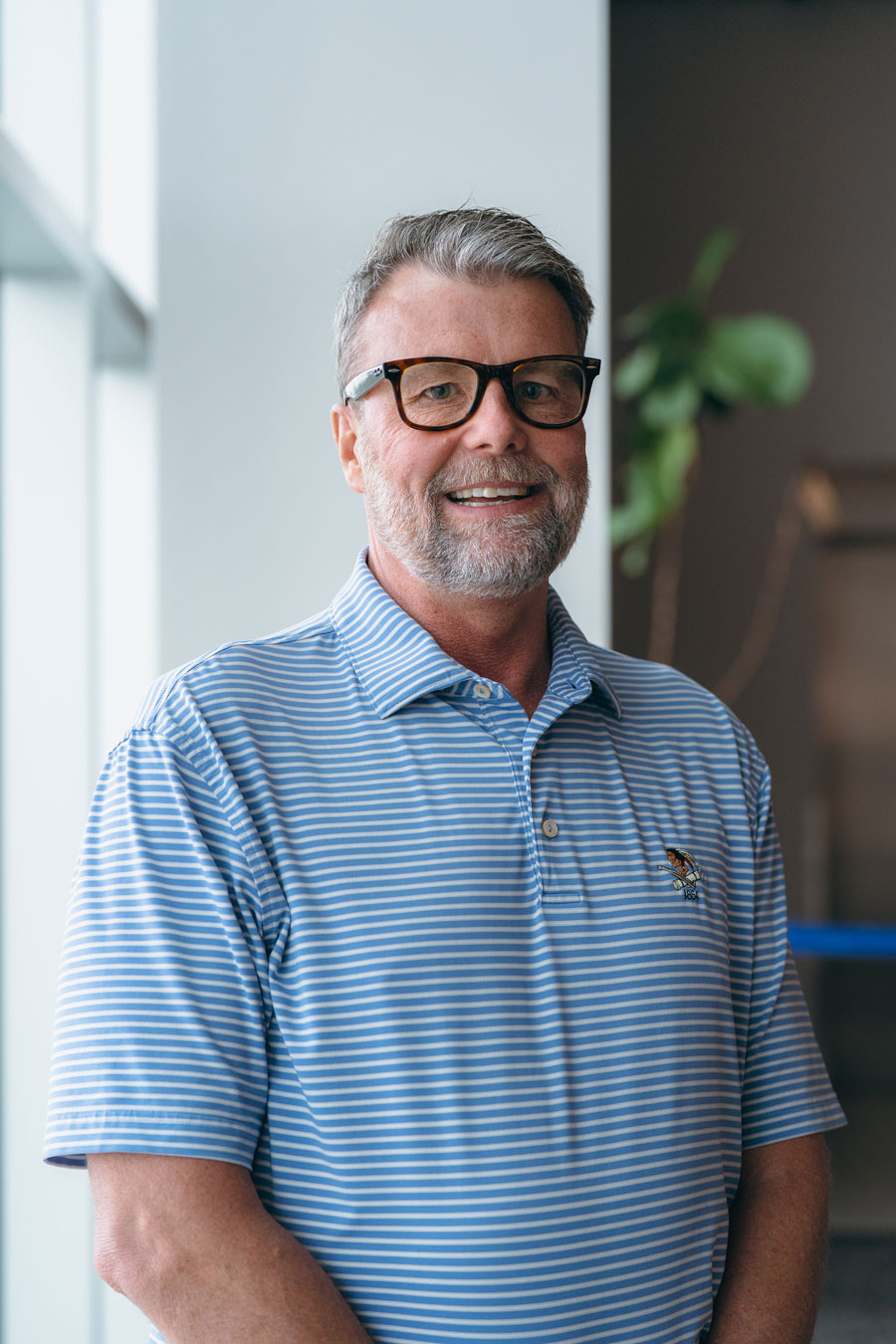
Michael Hudkins
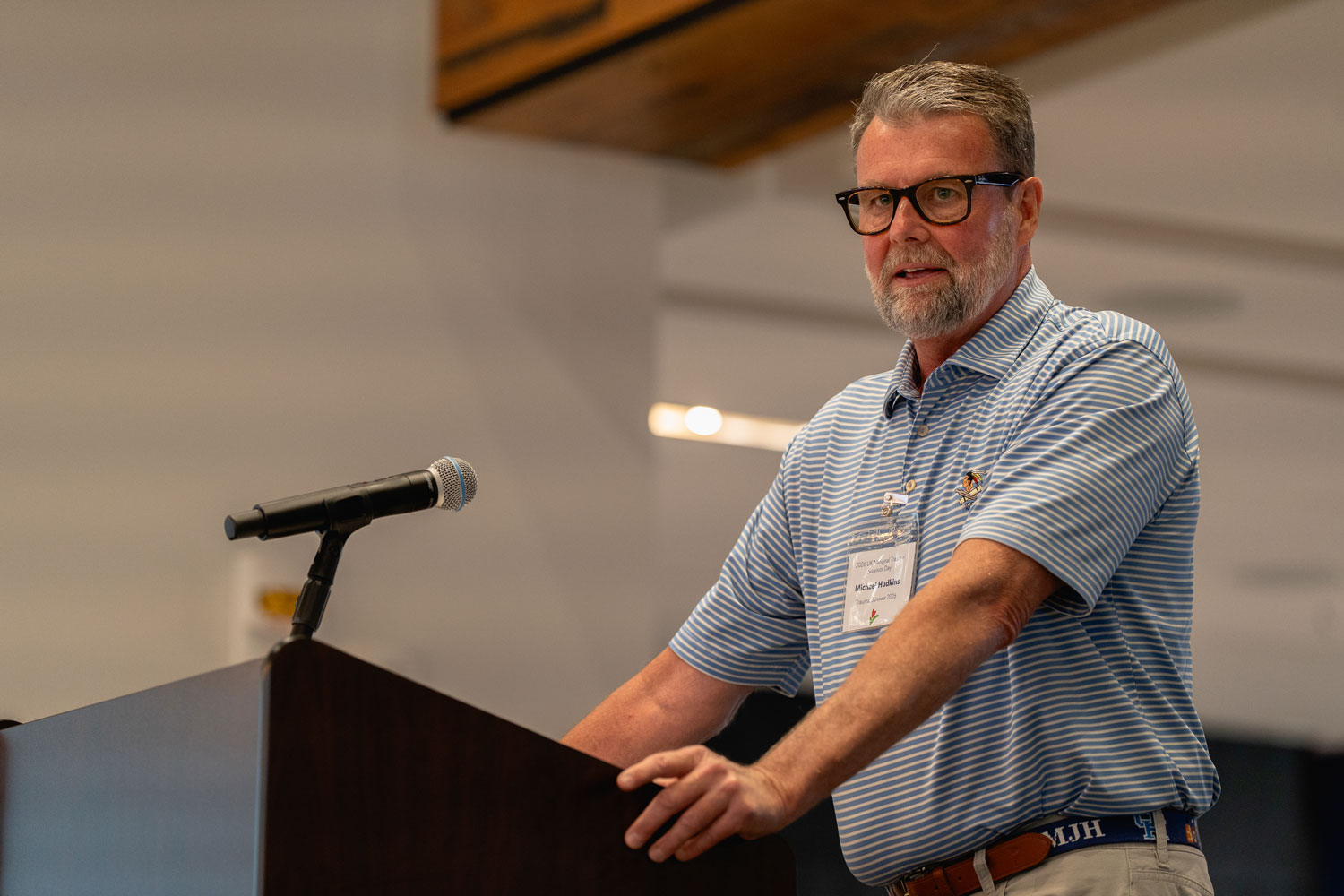
In 2001, Michael Hudkins was in a head-on car crash in Nicholasville that left him with life-threatening injuries. He was airlifted to UK, where doctors treated the 31-year-old for multiple fractures, including serious injuries to his heel, femur, kneecap, elbow and arm.
Doctors also discovered a tear in his aorta caused by the force of the crash. Surgeons placed a Dacron mesh – that remains to this day – around a quarter-size hole in the artery.
Michael faced months of rehabilitation and had to learn to walk again. Drawing on connections from his time as a student athletic trainer at UK, he started his path to recovery.
Jim Madaleno, who headed up athletics training at UK at the time, had told him to reach out if he needed anything.
"So,” Michael said, “I rolled up in a wheelchair and go, 'Hey, you remember when you said if I ever needed something to let you know?'"
For a year and a half, Michael rehabbed daily at the former Shively Training Facility at UK, undergoing more than a dozen surgeries and procedures along the way, including reconstructive work on his heel.
Today, more than two decades since the accident, Michael remains active, swimming regularly and emphasizing the importance of movement and determination in recovery. He acknowledges lingering effects from the trauma, including signs of PTSD, but says time and perseverance have helped him move forward.
"When I'm in a car, I have no fear," Michael said. "It took me about 24 years to go back on Brannon Road to the actual scene. Now, I don't even remember where it happened, just little bits and pieces. All I know is what I had and the road to recovery.
"The best advice I can give to anyone experiencing anything like this is working on mobility, your strength and your core. Get up and move."
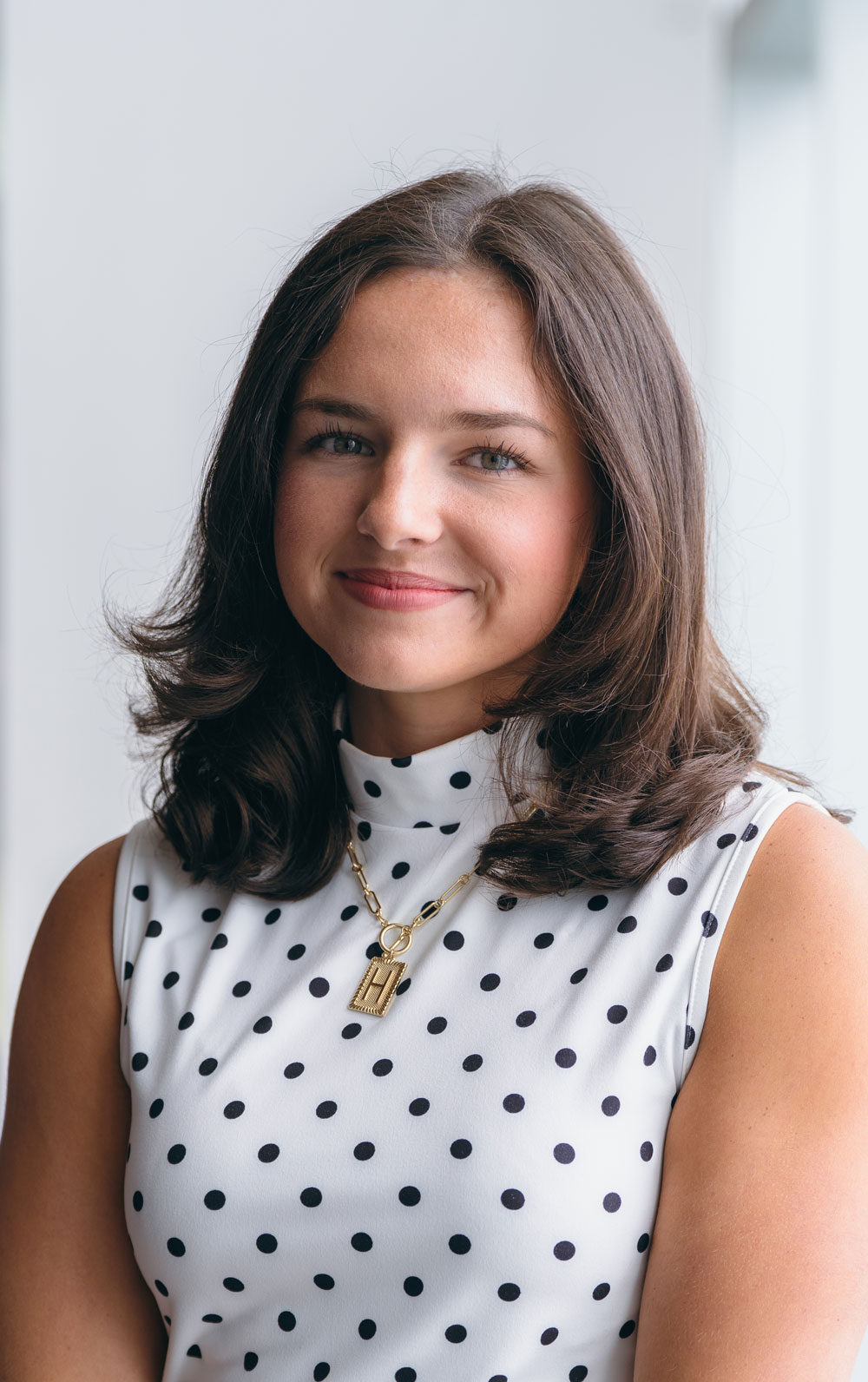
Holly Harrison
Holly Harrison and her family were told to prepare for the worst after she sustained a serious brain injury in a car crash.
Doctors at UK HealthCare were careful not to offer false hope. But they pointed to one key advantage: Holly – 16 at the time – was young, improving her chances of a strong recovery.
It wasn't easy. Holly dealt with persistent headaches and lingering effects of the injury, but she refused to let it define her. Barely a month after the accident, she pushed herself back into activities she loved, including her favorite sport: tennis.
While there were limits and precautions, she stayed determined to move forward rather than focus on what the injury had taken from her.
"As soon as they allowed me, I was doing what I normally did because I didn't want that to set me back," Holly said.
The experience also gave shape to her future. Before her injury, Holly was interested in healthcare, but the support her providers gave her affirmed her decision to become a nurse. She's currently studying at Eastern Kentucky University.
"This definitely gave me the reassurance that this is what I needed to do, giving back to people how I was poured into," Holly said. "I'd love to have an impact on someone's life like they did mine."
Oliver Blair
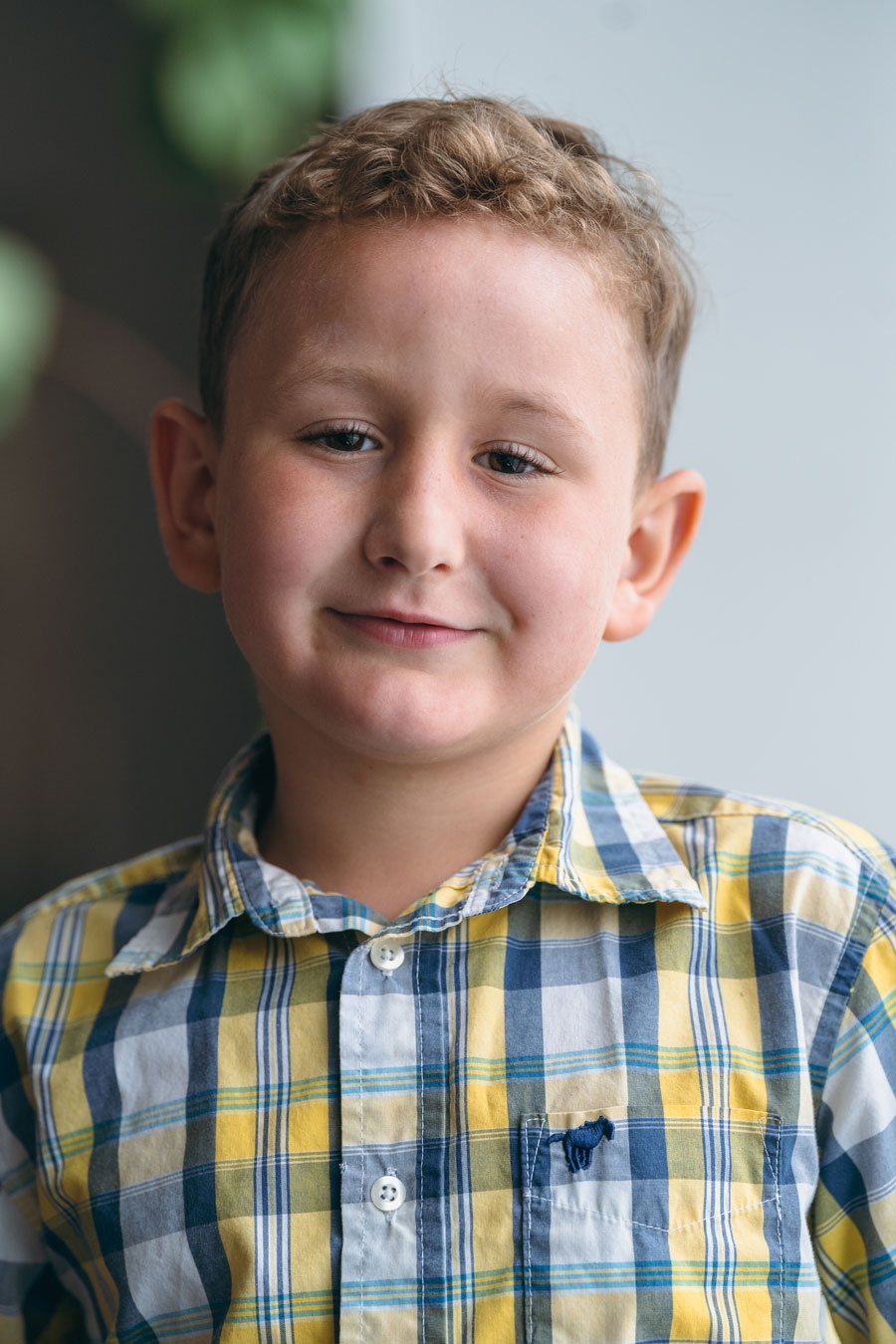
Oliver Blair was days from his sixth birthday when a speeding SUV struck him outside his home in Burkesville, Ky.
He was turning blue when his mother, Donna, scooped him from the road and began performing CPR. Oliver started taking shallow breaths before an ambulance arrived and took him to a nearby hospital. From there, he was airlifted to the Makenna David Pediatric Emergency Center at UK HealthCare.
Doctors at UK diagnosed David with a severe traumatic brain injury, a broken collarbone, fractures in both femurs, lacerations on his head and shoulder, and a punctured lung. Because of the severity of his condition, he was put in a medically induced coma for nearly two weeks in the pediatric intensive care unit (PICU).
“There was so much that was happening every single day, every minute, every hour,” Donna said. “It was a rollercoaster ride of emotions, but lots of miracles."
As the care team began lowering Oliver’s medication to bring him out of the coma, his eyes slowly opened, but he wasn’t following commands.
Providers tried different techniques to see if Oliver could give any reaction, like a thumbs up. But even though his eyes were open, there was no response.
“His big brother, who is his best friend, really wanted to talk to him,” Donna said. “... So, I allowed them to FaceTime. I put him in front of Oliver, and he said, ‘Ollie, show me your muscles.’ All of a sudden, Oliver lifted both of his arms. It was his brother that finally got him to move and react.”
From that moment on, Oliver continued making progress. He was transferred to Cincinnati Children's inpatient rehabilitation unit. While there, he worked with brain injury specialists and skilled therapy teams to get back into daily routines.
After a two-month recovery at UK and Cincinnati Children’s, Oliver finally returned home. Almost two years later, he is back to doing what he loves: being on the swim team, jumping on the trampoline and building muscles with his big brother.
“I don't think I’ve ever felt such a strong sense of community before all this," Donna said. "When something like this happens, everything stops – time stops, and it really brings you back down. I see things differently now. I feel such a deep connection of love and support. I’m so grateful.”
The Trauma Survivors Network
The Trauma Survivors Network connects, educates and empowers trauma survivors and their families throughout the recovery journey, providing support, resources, and hope after injury.
The network helps patients and loved ones build resilience, find community, and navigate the challenges of recovery. Donations to the UK Trauma Survivor Network Gift Fund directly support survivor programs, educational resources and events that promote healing and recovery. Every contribution helps ensure trauma patients and families have access to the support they need during and beyond their hospital stay.
To give, visit https://www.traumasurvivorsnetwork.org/trauma-centers-177/
For more information, email TraumaSurvivors@uky.edu or PedsTraumaSurvivors@uky.edu