
The Evans Foundation grant will fund five research labs over five years, including three labs at UK, one at Cincinnati Children's Hospital, and one at the University of Arkansas. The $1.25 million gift, given to UK through the Markey Cancer Foundation by an anonymous donor, will also fund the laboratories.
"This transformational gift from the Evans Foundation and the donor’s generous matching gift will support and further clinical and investigative research efforts which are fundamental in our goal to serve not only as a comprehensive regional cancer center but also a nationally recognized leader in cancer care," said Dr. Michael Karpf, UK executive vice president for health affairs.
A major risk factor for MDS is past exposure to chemotherapy or radiation treatments — in other words, patients who have received treatment for solid tumors, particularly breast or prostate cancers, have a much higher chance of developing this disease. Edward P. Evans, namesake of the foundation, was a Virginia businessman and thoroughbred owner who raced and sold his horses here in Lexington, Ky. He developed MDS after he received radiation treatment for prostate cancer and ultimately succumbed to the disease. In his will, he appointed four trustees to create the Edward P. Evans Foundation with the specific goal of funding MDS research.
The Edward P. Evans Foundation released the following statement in regards to awarding the research grant: “We are excited to encourage cooperation among organizations engaging in research related to diseases like myelodysplastic syndrome, leukemia and chronic fatigue syndrome. It takes professionals with significant experience in creating a process to foster the Evans Foundation’s goals in medical research. We found such a cooperation in the consortium being headed up by the University of Kentucky’s Markey Cancer Center scientists.”
"We are incredibly excited to be able to supplement the $5 million Evans grant with this generous $1.25 million gift through the Markey Cancer Foundation," said Dr. Randall Rowland, director of the Foundation. "It shows how much faith the community has in the work our researchers are doing every day. This gift will help them make major strides in preventing this terrible group of diseases."
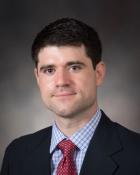
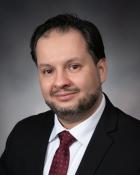
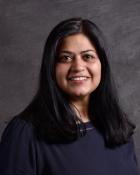
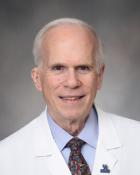
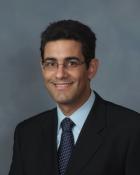
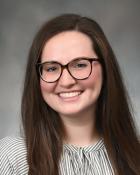
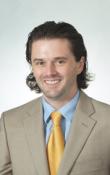
At UK, principal investigator Gary Van Zant and co-principal investigators Subbarao Bondada and Daret St. Clair lead the three research labs funded. The Cincinnati lab will be led by Hartmut Geiger and the Arkansas lab will have two co-principal investigators, Martin Hauer-Jensen and Daohong Zhou. The three medical centers have collaborated on MDS research in the past.
These researchers are the only ones who will specifically look at how to determine biomarkers for MDS prior to any type of cancer treatment. The ability to predict who may be at a higher risk for MDS will allow physicians to tailor cancer treatments to reduce the chance of developing the diseases later on in life.
"Our researchers are some of the best in the country, and receiving the Evans grant and the gift are further proof of that," said Dr. Mark Evers, director of the UK Markey Cancer Center. "The $6.25 million in funding has the potential to help us make a huge difference in the lives of those patients who are most at risk for developing myelodysplastic syndrome. As we move towards applying for National Cancer Institute Designation, leading-edge research like this will become more and more of a focus for the Markey Cancer Center."
Myelodysplastic syndrome affects the way the body produces blood cells. Normally, the bone marrow makes blood stem cells that develop into mature blood cells over time. With MDS, the blood stem cells do not mature. These immature blood cells do not function normally and either die in the bone marrow or soon after they enter the blood. With fewer blood cells available, an infection, anemia, or easy bleeding may occur. Once MDS develops, it can progress into leukemia, and it is largely untreatable.
"At UK, our research will start with basic science and progress to translational science. One of our first steps will be to figure out what can cause these changes in bone marrow that lead to myelodysplastic syndrome," said Van Zant, professor and director of the Clinical Stem Cell Laboratory for the UK Bone Marrow Transplant Program. "From there, our focus will be how we can predict which patients may be at a higher risk to get the disease if they receive chemo or radiation, and ultimately, how we can better treat those patients who have already developed myelodysplastic syndrome."
LEXINGTON, Ky. (May 15, 2012) — The University of Kentucky Markey Cancer Center will host its annual Markey Cancer Center Research Day on May 16, from 9 a.m. to 4:30 p.m. Markey's Research Day is an annual event celebrating the advances of cancer research on the University of Kentucky campus.
Held at the UK Singletary Center for the Arts, this year’s event will feature 132 posters; three student and postdoctoral fellow oral presentations; two faculty oral presentations; a special announcement by Dr. Michael Karpf, UK executive vice president for health affairs; the State of the Cancer Center Address by Dr. Mark Evers, director of the UK Markey Cancer Center; and the Susan B. Lester Memorial Lecture given by Mina Bissell.
The student and postdoctoral fellow oral presentations will begin following the welcoming remarks at 9 a.m. Presentations are:
Faculty oral presentations will commence at 1:30 p.m. Presentations are:
At 2:40 p.m., Dr. Karpf will take the stage for a special announcement, followed by the State of the Cancer Center Address by Dr. Evers. To finish up the day, Mina Bissell, Lawrence Berkeley National Laboratory, will give a presentation titled, "Why Don't We Get More Cancer? The Proposed Role of the Microenvironment in Tissue Specificity and Breast Cancer" for the Susan B. Lester Memorial Lecture.
MEDIA CONTACT: Allison Perry, (859) 323-2399 or allison.perry@uky.edu
LEXINGTON, Ky. (April 26, 2012) — The first-ever 'Meet the Researchers Day' at the University of Kentucky was held to reward the cancer fundraising efforts of two local middle schools. Students from Bourbon County Middle School (BCMS) in Paris, Ky., and Lexington Traditional Magnet School (LTMS) visited the Biomedical/Biological Sciences Research Building on UK's campus and learned more about how the money they raised for Pennies for Patients will help further cancer research.
After a formal introduction by Dr. Kathleen O'Connor, researcher and associate director of cancer education for the UK Markey Cancer Center, the students had the opportunity to rotate between presentations by Dr. John D'Orazio, pediatric hematologist/oncologist; Dr. Dennie Jones, deputy director for the UK Markey Cancer Center; and Dr. Ying Liang, assistant professor in the Department of Internal Medicine. The students were also given a tour of Markey's research lab space in the BBSRB.
"The students put a great deal of effort into raising money for cancer research, which is badly needed. It was an honor to show our appreciation for their efforts,” O'Connor said. "It was rewarding to teach them about cancer and what we are doing to improve the lives of people with cancer."
Pennies for Patients is the annual fundraiser for the School & Youth division of the Leukemia & Lymphoma Society. It encourages students to collect spare change during a set three-week time frame early in the year. Funds raised support leukemia, lymphoma and myeloma research; patient and community service; public health education; and professional education.
"All of the students who participated across our chapter’s territory were told about the importance of blood cancer research, but we felt if a few schools had the opportunity to see researchers in action, it would make the students truly engage the program," said Shelia Gustafson, School & Youth Campaign Manager of The Leukemia & Lymphoma Society. "I hope that some of these students may consider becoming cancer researchers after having firsthand experience. I would love to see this become an annual event that will encourage even more schools to hold successful Pennies for Patients programs."
Kentucky schools participating in Pennies for Patients had to raise a minimum of $1,000 to win the chance to attend Meet the Researchers Day. Out of 103 eligible schools across the state, BCMS and LTMS were chosen in a random drawing, raising $2,025 and $1,643, respectively.
"I liked it," said 13-year-old Isaiah Cordray, an 8th-grader at LTMS. "It was a nice way to get out and see how people are treating cancer."
To learn more about the Pennies for Patients program, visit www.schoolandyouth.org/ky.
MEDIA CONTACT: Allison Perry, (859) 323-2399 or allison.perry@uky.edu.
LEXINGTON, Ky. (April 24, 2012) - The following column appeared in the Lexington Herald-Leader on Sunday, April 22.
By Dr. John D'Orazio
Researchers believe most skin cancers develop because UV radiation — from natural sunlight or tanning beds — causes mutations in skin cells, which turn cancerous over time.
Who is most at risk? Skin pigmentation plays a large role. Light complexions have less melanin, while dark complexions have more. Think of melanin as a built-in sunblock — the more you have, the less UV radiation can get through to the sensitive layers of the skin and the more protected you are. However, anyone can develop skin cancer, regardless of skin color. People with previous personal or family history of skin cancer, or who are taking chemotherapy or certain immunosuppressive medications have a higher risk.
Is skin cancer really that serious? All cancers are serious, because any type can progress and ultimately hurt or kill a patient. Luckily, the majority of skin cancers — mostly those known as basal cell or squamous cell carcinomas — are easily treated with local therapies including cryotherapy (freezing) or surgery. Melanomas are a different story. More than three-fourths of skin cancer deaths come from this very serious type of cancer. Most melanomas are pigmented (look dark) and develop from moles. If a melanoma invades more than a quarter-inch into the skin, there is a good chance it has spread to other areas of the body. While researchers have made great strides in developing melanoma chemotherapy in recent years, it still cannot cure most patients with melanoma that has spread. Catching melanoma early can literally save your life.
Is it safer to use a tanning bed? No way! Tanning lamps can put out 10 times as much UV radiation as natural sunlight. Tanning bed users are 74 percent more likely to develop melanoma than those who have never used beds. Research has shown that melanoma incidence has increased six-fold in young adults over the last 40 years. Many experts believe this is partly due to the skyrocketing use of tanning beds. Tanning does give us natural endorphins and can improve appearance, but it is addictive and frequent use is dangerous.
Don’t we need sun exposure for vitamin D? UV light converts cholesterol in the skin to vitamin D, which helps strengthen bones and can protect against various cancers and multiple sclerosis. A fair-skinned person in shorts and a tank top can get sufficient exposure for vitamin D in less than 10 minutes on a sunny day. Darker-skinned people may need up to an hour to get the same levels.
Wearing sunscreen reduces the skin’s ability to create vitamin D; however, we can safely get it through many foods such as fish, liver, cheese and fortified cereals, and in multivitamins and supplements.
Dr. John D’Orazio is a pediatric hematologist/oncologist who specializes in skin cancer research.
LEXINGTON, Ky. (March 23, 2012) — Gov. Steve Beshear and the newly formed Kentucky Cancer Foundation are teaming up to form a public/private collaboration aimed at tackling Kentucky's high cancer rates. University of Kentucky faculty from the College of Medicine and College of Public Health are heavily involved in the project.
“Kentucky has the highest lung and colorectal cancer incidence rates in the nation, and we also have the highest cancer death rate in the country," said Thomas Tucker, associate director for the UK Markey Cancer Control Program. "The partnership between the Governor and the newly formed foundation is a big step toward addressing the state’s excessive cancer burden.”
The Kentucky Cancer Foundation will help fund selected portions of the state's overall Kentucky Cancer Action Plan. The KCAP outlines goals and strategies for cancer prevention, early detection, treatment and quality of life, but lack of funding has held back some of its progress.
"We have been working collaboratively to develop and implement a statewide Kentucky Cancer Action Plan for more than 10 years with insufficient federal, state and local funds to fully provide evidence-based cancer prevention and early detection strategies," said Jennifer Redmond, Kentucky Cancer Foundation board member and assistant professor in the UK College of Public Health. "As a result of the formation of the Kentucky Cancer Foundation, there will be more prevention and detection of cancer at its earliest, treatable, and most beatable stages throughout the state of Kentucky."
The initial project between the foundation and Gov. Beshear would screen 4,000 uninsured Kentuckians for colon cancer. Kentucky's incidence of colon cancer is the second highest in the nation and more than 20 percent higher than the national average. Kentucky also has the third highest colon and rectal cancer death rate in the U.S.
The Kentucky Cancer Action Plan is the responsibility of the Kentucky Cancer Consortium and was initially completed in 2001, with revisions made as needed. The consortium is a statewide comprehensive cancer control coalition of 44 organizations charged with reducing the significant cancer burden in Kentucky.
The consortium, chaired by UK College of Medicine professor of surgery and Kentucky Cancer Foundation board member Dr. Daniel Kenady, is one of the four divisions of the UK Markey Cancer Center Control Program. Other divisions are the Kentucky Cancer Registry, Kentucky Cancer Program and the UK Prevention Research Center.
These organizations combine resources from both UK — through the Colleges of Medicine and Public Health and the UK Markey Cancer Center — and cancer control specialists across the state.
"Cancer is too big and complex a problem for any one group to address efficiently," Kenady said. "Comprehensive cancer control offers the power of collaboration as a key approach to reducing cancer."
Discover the latest advances in cancer research at Markey Cancer Center Research Day on May 16, 2012.
State-of-the-art, multidisciplinary training intended to create cancer nanotechnology researchers who can translate novel laboratory findings into cancer diagnosis and treatment.
Share your cancer story or read stories >
The Markey Cancer Foundation invests in the people who are working to discover the cures and to devise new and better treatments to fight cancer.
800 Rose St.University of KentuckyLexington, KY 40536
859-257-4488 or1-866-340-4488 (toll free)Facilities | Directions >
Karina Christopher, RD, blogs tips ranging from taste changes to cancer survivorship.
As lawmakers determine fiscal priorities for 2012 and beyond, it is essential that funding for cancer and biomedical research be preserved. Read more >
Visit Markey on Facebook. Become a fan and stay up to date on new treatments, exciting research and events.